
Best SSL Certificate Providers in 2026: 11 Free and Paid CAs Compared
On March 15, 2026, the maximum life of a public TLS certificate dropped from 398 days to 200. It falls to 100 days in 2027 and 47 by 2029. That one rule, plus the 2025 collapse of Entrust's public certificate business, rewired what's actually worth paying for. Free domain-validated SSL is now table stakes. The real question is when you need more than free, and who to buy from when you do.
Quick answer: For most websites, a free certificate from Let's Encrypt (or the one your host already bundles) is all you need. Pay only when you want organization or extended validation, a real warranty, or wildcard and multi-domain convenience. SSL.com and Sectigo lead on paid value; DigiCert leads enterprise; skip GoDaddy's retail SSL unless you're already in its dashboard.
Jump to: GoDaddy · SSL.com · SSL2BUY · Sectigo (Comodo) · Let's Encrypt · ZeroSSL · Google Trust Services · Cloudflare · DigiCert · GlobalSign · Namecheap · The 2026 rule change · How to choose · Common mistakes · FAQ
Last reviewed: July 2026. Certificate prices, validity limits, and 2025-2026 policy changes verified against each provider's official pages and the CA/Browser Forum this month.
How We Selected These Providers
We started with the four names most buyers already search for: GoDaddy, SSL.com, SSL2BUY, and Comodo. Then we added what actually matters in 2026. That means the free Certificate Authorities now issuing most of the encrypted web, plus the enterprise CAs that still justify a real invoice. A Certificate Authority, or CA, is the trusted organization that issues and vouches for your certificate.
Three things did the sorting. First, is the provider a real CA with its own roots in browser trust stores, or a reseller distributing someone else's certificates? Both are valid, but you should know which you're buying. Second, price honesty: entry versus renewal, and whether the renewal quietly doubles. Third, fit for the 2026 lifespan rules: does the provider support ACME (auto issue-and-renew), or leave you renewing by hand every few months?
Some limits worth stating. We didn't run load tests on validation speed; issuance times below are the providers' own figures. Warranty numbers come from official product pages. GoDaddy's and Namecheap's storefronts block automated checks, so their prices were confirmed against each vendor's own indexed listings and cross-checked across multiple 2026 sources. Where a figure couldn't be pinned to a live page, we say so rather than guess.
SSL Certificate Types, in Plain Terms
An SSL/TLS certificate is a small file that encrypts traffic between a browser and your server. It also confirms the site is who it claims to be. That padlock is what turns HTTP into HTTPS and removes the "Not secure" label browsers slap on unencrypted pages. Every certificate below encrypts to the same standard. What you pay more for is identity checking, not stronger encryption.
There are three validation levels:
- DV (Domain Validation): proves you control the domain. Issued in minutes, often free. Fine for blogs, portfolios, and most small sites.
- OV (Organization Validation): the CA verifies your registered business too. Takes one to two days. Used by companies that want a real name behind the padlock.
- EV (Extended Validation): the deepest identity check, three to four days. Worth knowing: browsers removed the green company name from the address bar years ago, so EV's visible payoff is mostly gone.
Two coverage options cut across all three levels. A wildcard covers one domain plus every subdomain under it (blog, shop, mail, and so on). A multi-domain certificate, sometimes called SAN or UCC, covers several separate domains in one file. Pick coverage by how many names you must secure. Then match the validation level to how much visitors need to trust who runs the site.
The 2026 Rule Change That Reshapes This Decision
In April 2025 the CA/Browser Forum (the body where browsers and CAs set the rules) passed ballot SC-081, cutting how long certificates can live. The schedule is fixed and every date lands on March 15:
- Through March 14, 2026: 398 days maximum
- March 15, 2026 onward: 200 days
- March 15, 2027 onward: 100 days
- March 15, 2029 onward: 47 days
The window for reusing domain validation shrinks on the same dates, from 398 days down to 10 by 2029. Translation: by decade's end you'll re-verify and reissue certificates roughly monthly. Renewing that often by hand is how sites end up with an expired certificate and a scary browser warning on a Sunday morning. This is why automation, not brand, is the real 2026 buying decision.
The market moved too. Entrust, a CA that secured banks and governments for decades, was distrusted by Chrome. Certificates it issued after November 11, 2024 stopped being trusted, with Apple and Mozilla following. Entrust stopped issuing public TLS certificates on March 11, 2025 and handed its certificate customers to Sectigo, completing the exit in September 2025. If a guide still lists Entrust as a live SSL option, it's out of date. One more change since September 2025: every CA must now run Multi-Perspective Issuance Corroboration (MPIC). It checks domain control from several network locations, so a local network hijack can't trick a CA into issuing a bogus certificate.
| Hosting Provider | Reviews | Overall Rating | SSL Plan from |
|---|---|---|---|
1  GoDaddy GoDaddy
|
126k+ |

|
No data / mo. WB Free Trial |
2  SSL.com SSL.com
|
2.4k+ |

|
$36.75 / mo. |
3  SSL2BUY.com SSL2BUY.com
|
957 |
|
No data / mo. |
4  Comodo Comodo
|
160 |
|
$87.91 / mo. |
1. GoDaddy
 126k+
4.5
Positive
126k+
4.5
Positive
 Positive

GoDaddy – Best for existing GoDaddy customers who want hands-off install
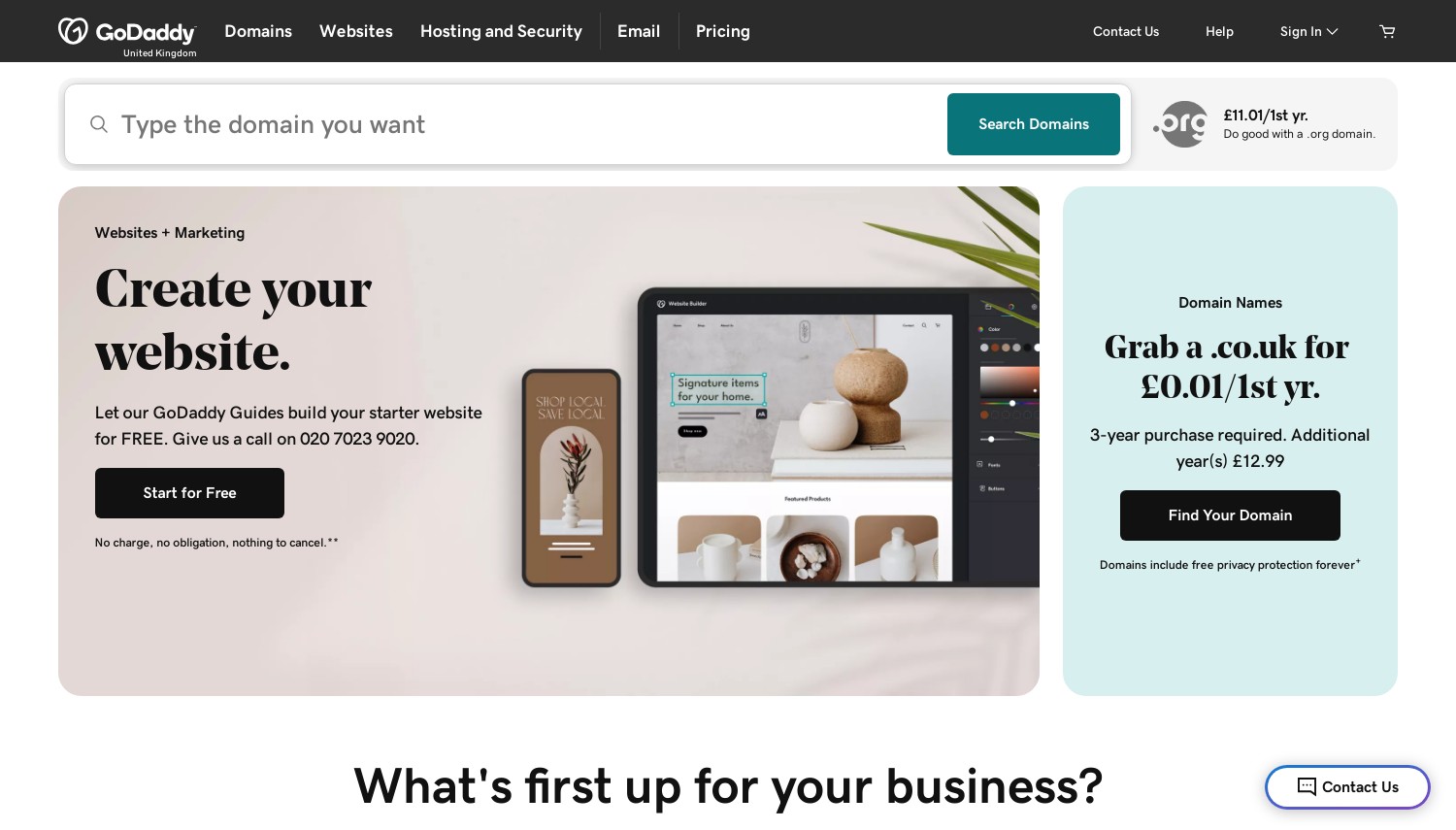
From about USD 64 first year, renewing around USD 100/year · Standard single-domain DV · 30-day money-back
Start with the price problem, because it's the whole story. GoDaddy's standard DV certificate lists around USD 64 in year one and renews at roughly USD 100 a year. That buys the exact same domain-validated encryption you can get free from Let's Encrypt, or for USD 5.99 from a Sectigo reseller. The same Sectigo-class DV validation GoDaddy charges about USD 100 to renew costs USD 5.99 at Namecheap, a 16x gap for an identical padlock.
What you're actually paying for is convenience inside GoDaddy's ecosystem. Its Managed SSL Service installs the certificate, monitors it, and auto-renews without you ever generating a CSR (the signing request a certificate normally requires). For a non-technical owner already paying GoDaddy for domains and hosting, that one-dashboard simplicity has a real, if narrow, value. Wildcard and managed-wildcard products exist too, running into the high USD 300s per year.
Pros:
- Fully managed install and auto-renew, no command line
- One vendor for domain, hosting, and certificate
- Offers DV, OV, and EV plus managed options
Cons:
- Renewal near USD 100/year for basic DV
- No free tier while rivals give DV away
- Wildcards run into the high USD 300s
Pricing: Around USD 64 first year, about USD 100 at renewal for single-domain DV. OV and EV cost more; managed wildcard tops the range. 30-day money-back.
Best for: people already living in GoDaddy's dashboard who want zero-touch SSL. Skip if: price matters at all.
Verdict: Buy GoDaddy SSL only if you're deep in its ecosystem and will pay a premium to never touch a CSR. Everyone chasing value should take free DV from Let's Encrypt, or a warrantied paid cert from Namecheap for the price of a coffee.
2. SSL.com
 2.4k+
4.9
Positive
Positive
2.4k+
4.9
Positive
Positive
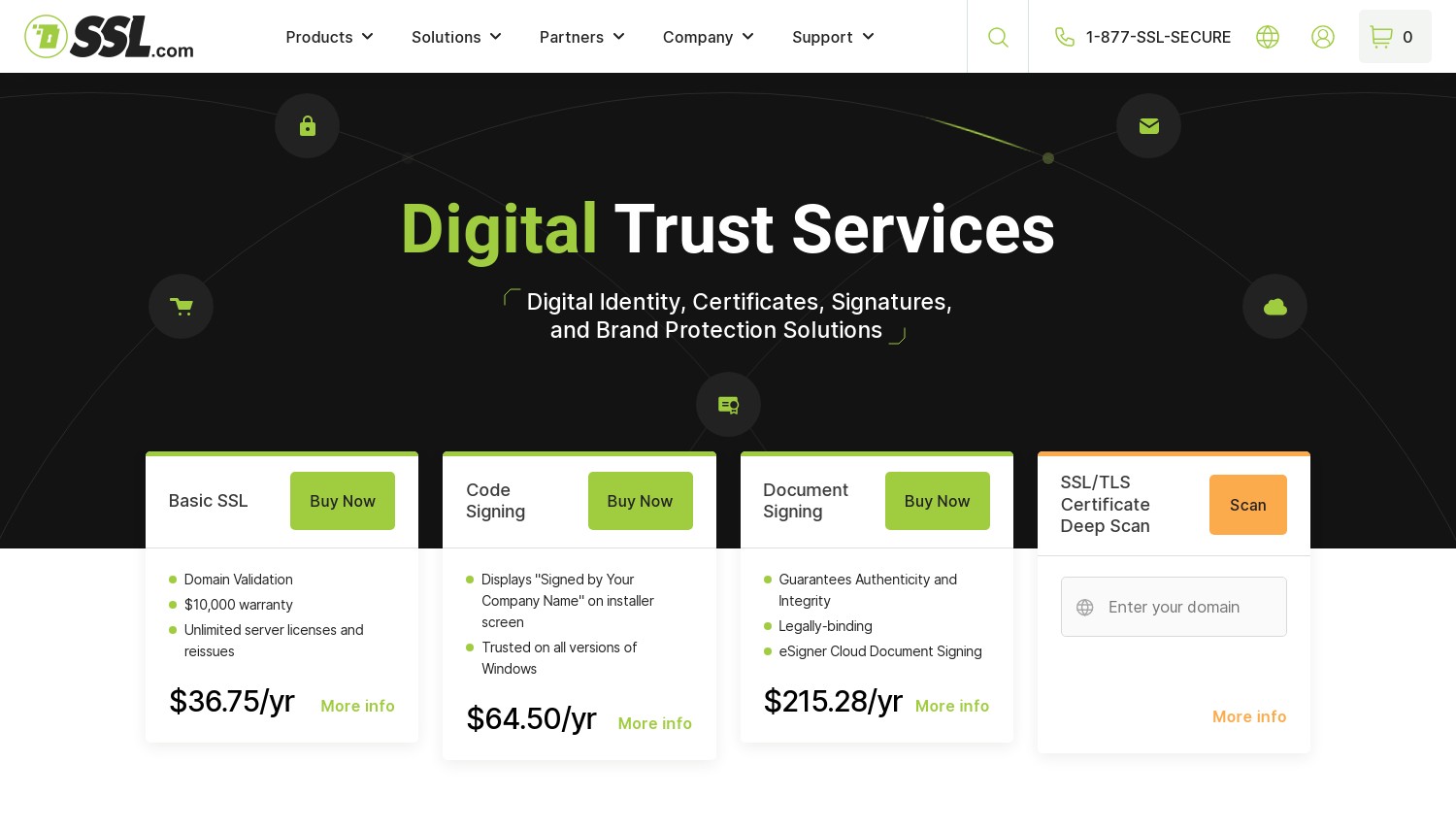
| Price | |
|---|---|
| $36.75 / mo. | View Plan |
| $48.40 / mo. | View Plan |
| $74.25 / mo. | View Plan |
SSL.com – Best for a real CA with support without enterprise pricing
DV from USD 36.75/year · Wildcard from USD 224.25 · EV USD 239.50 · 30-day money-back
SSL.com is one of the few names in this guide that is an actual Certificate Authority, with its own roots in the major browser and operating-system trust stores, rather than a storefront reselling another CA's certificates. It matters when you need someone accountable on the phone, an API for bulk issuing, or certificates beyond the web. SSL.com also sells S/MIME (certificates that sign and encrypt email) and code signing.
The trade-off is price against the discount crowd. SSL.com's own-brand DV starts at USD 36.75 a year, which is roughly 6x SSL2BUY's USD 6 entry cert for the same domain-validated job. Where SSL.com earns its keep is the middle of the market. OV starts at USD 48.40 with a USD 50,000 warranty, and EV at USD 239.50 with a USD 1.75M warranty. Both sit far below what DigiCert charges for comparable assurance. If you run business systems that also need secure email, pairing a certificate here with proper business email hosting keeps identity and encryption under one trusted root.
Pros:
- Genuine trusted root CA, not a reseller
- OV warranty USD 50,000, EV warranty USD 1.75M
- S/MIME, code signing, and API issuance
- Unconditional 30-day refund
Cons:
- DV entry (USD 36.75) far above resellers
- Wildcard at USD 224.25 is steep
Pricing: DV from USD 36.75/year, OV from USD 48.40, EV USD 239.50, wildcard from USD 224.25, multi-domain UCC from USD 141.60. Sold as subscriptions that reissue within the new validity caps. 30-day money-back.
Best for: businesses that want a trusted issuing CA, real support, and OV/EV without a five-figure contract. Skip if: you only need plain DV.
Verdict: Choose SSL.com when you need a first-party CA with support, warranties, and email or code-signing certificates in one place. If all you want is a single DV cert for a blog, this is overkill; take a free certificate or Namecheap's USD 5.99 option instead.
3. SSL2BUY.com
 957
5.0
Positive
Positive
957
5.0
Positive
Positive
SSL2BUY – Best for the cheapest brand-name certificate
DV from USD 6/year · Wildcard from USD 35 · OV from USD 40 · 30-day money-back
USD 6 a year. That's the cheapest publicly trusted certificate in this guide, a PrimeSSL DV single-domain cert, and it's the whole pitch. SSL2BUY is a reseller, not a CA. It buys certificates in bulk from Sectigo, DigiCert, GlobalSign, GeoTrust, and others, then sells them at a discount off the CA's direct price. The roots are identical to buying direct; only the price and the support desk change.
The savings are real. A PrimeSSL DV wildcard runs USD 35 a year here versus SSL.com's USD 224.25 for its own wildcard, and a Sectigo PositiveSSL sits at USD 8. For a small business that wants a warranty and a paid support contact but not a premium logo, that's a fair deal. The risk is the middleman: validation, reissue, and revocation all happen upstream at the real CA, while your account, refund, and support sit with the reseller.
Pros:
- Cheapest paid DV here at USD 6/year
- Brand-name roots (Sectigo, DigiCert, GlobalSign)
- Wildcards from USD 35, EV from around USD 70
- 30-day refund window
Cons:
- Reseller, so no first-party CA support
- Refund and service quality depend on the middleman
Pricing: PrimeSSL DV USD 6/year, Sectigo PositiveSSL USD 8, AlphaSSL USD 12, wildcard from USD 35, OV from USD 40, EV from around USD 70. No separate renewal markup published. 30-day money-back.
Best for: buyers who want a warrantied brand-name cert at the lowest price and don't need hand-holding. Skip if: you want the CA itself accountable for support.
Verdict: Pick SSL2BUY when the goal is a cheap paid certificate with a recognizable root and you're comfortable with reseller support. If you'd rather deal with the CA directly, buy Sectigo or SSL.com first-party; if you can automate, skip paid DV entirely for Let's Encrypt.
4. Comodo

 160
2.0
Negative
160
2.0
Negative
 Negative
| Price |
|---|
| $87.91 / mo. |
| $227.91 / mo. |
| $268.46 / mo. |
Sectigo (Comodo) – Best for a warrantied DV cert at pocket-change prices
PositiveSSL DV from USD 5.99/year · Wildcard from around USD 128 · 2nd-largest paid CA
Comodo the certificate brand and Comodo the company parted ways in 2018. The CA business rebranded to Sectigo, and the certificate you still see sold as "Comodo SSL" or "PositiveSSL" is issued from Sectigo's roots today. Same encryption, same trust store presence, new name. Sectigo is the second-largest publicly trusted CA among paid providers, so its certificates carry near-universal browser and device trust.
Because Sectigo sells mostly through resellers, price depends on where you buy. A PositiveSSL DV runs USD 5.99 at Namecheap and about USD 7.66 through other resellers. Compare that to GoDaddy's roughly USD 100 renewal for an equivalent DV cert. That's the same certificate class at a 16x price spread, driven entirely by storefront, not security. Wildcards sit higher, around USD 128 a year for PositiveSSL Wildcard, still well under SSL.com's USD 224.25. DV carries a USD 50,000 warranty.
Pros:
- Near-universal browser and device trust
- DV from USD 5.99/year via resellers
- Issued in about five minutes
- DV warranty USD 50,000
Cons:
- Brand confusion (Comodo vs Sectigo)
- No single official storefront; refund windows vary
Pricing: PositiveSSL DV USD 5.99 to USD 7.66/year depending on reseller, wildcard from around USD 128. Refund windows run 15 to 30 days by seller. OV and EV available through the same channels.
Best for: anyone who wants a trusted, warrantied DV cert for a few dollars and a static (non-automated) setup. Skip if: you can run ACME.
Verdict: Buy a Sectigo cert through a reputable reseller when you want a paid, warrantied DV certificate with near-universal trust and no scripting. If you can automate renewal, Let's Encrypt does the same encryption free; if you need enterprise validation and support, step up to DigiCert.
Let's Encrypt – Best for almost everyone
Free · DV only · 90-day certificates (6-day option) · No support desk
Let's Encrypt issues certificates for hundreds of millions of sites and charges nothing. It's a nonprofit CA, fully trusted, and it exists to make encryption the default. Certificates last 90 days and renew automatically through ACME, so once your host or client is set up you never think about it again. Against GoDaddy's roughly USD 100 annual renewal for the same domain-validated cert, "free and automatic" is hard to argue with.
The 2026 story lives here. Let's Encrypt shut down OCSP (an older way browsers checked revocation) on August 6, 2025, and stopped sending expiration-reminder emails in June 2025. It also shipped ~6-day short-lived certificates on January 15, 2026, with a path to 45-day certs by 2028. All of it assumes automation works. The limits are clear too: DV only, no OV or EV, no warranty, no human to call, and wildcards require the DNS-01 validation method. Most managed hosts already bundle Let's Encrypt, which is why buyers on typical shared hosting plans rarely need to buy a certificate at all.
Pros:
- Free, forever, fully trusted
- Automated issue and renew via ACME
- Powers most of the encrypted web
Cons:
- DV only, no OV/EV, no warranty
- No support; broken automation means outages
- No expiry emails since June 2025
Pricing: Free. Wildcards free via DNS-01. Short-lived 6-day profile available for high-automation setups.
Best for: any site whose host or platform supports ACME, which is nearly all of them. Skip if: you need OV/EV, a warranty, or a support contract.
Verdict: Use Let's Encrypt unless you have a specific reason not to. If you need verified organization identity, a warranty, or someone to phone when issuance breaks, that's your cue to buy SSL.com or DigiCert instead; for pure encryption, nothing here beats free and automatic.
ZeroSSL – Best free option for people who won't touch a terminal
Free tier (3 dashboard certs) · Paid from USD 9.99/month · 90-day DV
If you want free certificates but the command line makes you nervous, ZeroSSL is the answer Let's Encrypt never really gave. It's a trusted CA with a friendly web dashboard where you can request and download a DV certificate by clicking, no ACME client required. That's a genuine gap-filler for one-off certs on servers you configure by hand. ZeroSSL has been owned by security firm HID Global since January 2024.
The free tier caps you at three 90-day certificates through the dashboard, though issuing via the ACME API is effectively unlimited, the same as Let's Encrypt. Paid plans start at USD 9.99 a month billed yearly, roughly USD 120 a year, which is where the math turns odd: that's far more than Namecheap's USD 5.99 for a comparable warrantied DV cert. ZeroSSL's value is the dashboard and multi-domain management, not the price of a single certificate.
Pros:
- Point-and-click issuance, no ACME needed
- Trusted CA, free 90-day DV certs
- REST API and ACME both supported
Cons:
- Free dashboard capped at 3 certificates
- Paid entry (USD 120/year) beats buying a single cert elsewhere
Pricing: Free for up to three dashboard certs (unlimited via ACME). Paid Basic USD 9.99/month billed yearly, or USD 13.99 month to month.
Best for: admins who want free certs without scripting and don't mind the three-cert dashboard cap. Skip if: you'll automate anyway.
Verdict: Reach for ZeroSSL when a graphical dashboard beats a config file and you need a handful of free certs. If you're going to automate regardless, Let's Encrypt has fewer limits; if you want a paid warrantied cert, Namecheap costs a fraction of ZeroSSL's USD 120 plan.
Google Trust Services – Best free certs for Google Cloud and IP addresses
Free · DV via ACME · IP-address certs · Requires EAB setup
Google runs a free, publicly trusted Certificate Authority, and almost nobody outside Google Cloud uses it. That's a missed opportunity for the right setup. Google Trust Services issues DV certificates through ACME at no cost to anyone, not just Google customers, and it does two things Let's Encrypt is cautious about: certificates for raw IP addresses, and certificate redistribution. Against DigiCert's USD 218 enterprise entry, free with those extras is compelling if you need them.
The friction is setup. You need an ACME client that supports External Account Binding (EAB), an extra credential step that Let's Encrypt skips, so it's a touch more work to wire up. It also leans naturally toward users already inside Google Cloud, where it plugs straight into Certificate Manager. For everyone else it's a capable free CA that few people reach for.
Pros:
- Free, Google-operated, fully trusted
- Issues IP-address certificates
- Native Google Cloud integration
Cons:
- EAB adds a setup step vs Let's Encrypt
- DV only; oriented toward Google Cloud users
Pricing: Free via ACME for all users. No paid tiers for public web certificates.
Best for: Google Cloud users, or anyone needing free IP-address certificates or redistribution rights. Skip if: you want the simplest possible free path.
Verdict: Choose Google Trust Services if you're on Google Cloud or specifically need IP-address certs at zero cost. If you just want free HTTPS with the least fuss, Let's Encrypt's no-EAB setup is the easier door.
Cloudflare – Best free certificate you might already have
Free Universal SSL · DV · Apex plus first-level subdomains · Requires proxied DNS
You may already own a free certificate you never bought. Any site routed through Cloudflare's network gets Universal SSL free on every plan, including the free one. Cloudflare provisions and renews it automatically behind the scenes, pulling the underlying certificate from Google Trust Services or Let's Encrypt, so there's nothing to install or track. For a site that already uses Cloudflare, buying a separate certificate for the edge is redundant.
Two conditions decide whether it fits. Universal SSL only works when your DNS record is set to "Proxied," meaning traffic actually flows through Cloudflare; a DNS-only record still needs a certificate on your origin server. Coverage is the domain apex plus first-level subdomains only. Deeper subdomains or true wildcards require Advanced Certificate Manager, a paid add-on. Free covers the common case; the paid add-on handles the edges. For a typical apex-plus-www site that's zero cost, where even a basic Namecheap DV cert starts at USD 5.99 a year.
Pros:
- Free on every Cloudflare plan
- Zero-config issue and auto-renew
- No origin certificate management at the edge
Cons:
- Only works with proxied (not DNS-only) records
- Apex plus first-level subdomains only
- Deep subdomains need paid Advanced Certificate Manager
Pricing: Free Universal SSL on all plans. Advanced Certificate Manager is a paid add-on for custom hostnames and deeper coverage.
Best for: sites already proxying traffic through Cloudflare. Skip if: you run DNS-only, or need many deep subdomains without paying for ACM.
Verdict: Use Cloudflare's free SSL if your site already sits behind its proxy; it's the least effort possible. If you're DNS-only or need broad wildcard coverage without the paid add-on, issue a Let's Encrypt wildcard via DNS-01 instead.
DigiCert – Best for enterprises that need maximum assurance
Basic OV from USD 218/year · EV from USD 344 · Warranties up to USD 2M
USD 218 a year, and that's the cheapest certificate DigiCert will sell you. There is no budget DV tier here on purpose. DigiCert is the premium end of the market, the CA that absorbed Symantec's certificate business (including Thawte, GeoTrust, and RapidSSL) back in 2017, and it sells assurance, lifecycle tooling, and warranties rather than cheap padlocks. Its CertCentral platform manages certificates at fleet scale, which is exactly what the coming 47-day renewal cadence demands from large organizations.
The numbers are enterprise numbers. Basic OV starts at USD 218 with a USD 1.25M warranty, Basic EV at USD 344, and Secure Site Pro EV reaches USD 1,495 a year with a USD 2M warranty, the highest here. That Basic OV entry is roughly 4.5x SSL.com's USD 48.40 OV cert for a similar validation level; you're paying for the brand, the priority validation, and the management platform, not stronger encryption. Businesses running their own dedicated server infrastructure across many hostnames are the natural fit.
Pros:
- Highest warranties here, up to USD 2M
- CertCentral lifecycle management at scale
- Premium brand trust and priority validation
Cons:
- No cheap DV; entry starts at USD 218
- Overkill and overpriced for small sites
Pricing: Basic OV USD 218/year, Basic EV USD 344, Secure Site OV USD 399, Secure Site EV USD 995, Secure Site Pro EV USD 1,495. Wildcards are add-ons. Sold through CertCentral.
Best for: enterprises needing top warranties, priority validation, and certificate management across many hosts. Skip if: you're a small or mid-size site.
Verdict: Buy DigiCert when the certificate is a compliance and risk decision and you need CertCentral to manage a fleet at the new short lifespans. If you want OV or EV without enterprise pricing, SSL.com and GlobalSign deliver the same validation levels for a fraction of the invoice.
GlobalSign – Best single vendor from cheap DV to enterprise PKI
AlphaSSL wildcard USD 149/year · DV warranty USD 10,000 · OV/EV up to USD 1.5M warranty
One vendor, from a USD 12 DV certificate to enterprise device identity. GlobalSign's reach is the pitch. Warranties climb with validation: USD 10,000 for DomainSSL (DV), USD 1.25M for OrganizationSSL (OV), and USD 1.5M for ExtendedSSL (EV). Add managed PKI, IoT device certificates, and S/MIME email signing, all under one roof. Its budget brand, AlphaSSL, sells fast DV and wildcard certs through resellers, with the AlphaSSL wildcard listed at USD 149 a year.
That USD 149 AlphaSSL wildcard sits neatly between the two extremes in this guide: well above Namecheap's USD 39.99 PositiveSSL wildcard, but well below SSL.com's USD 224.25. GlobalSign's weak spots are honesty issues, not capability. Its main storefront hides prices behind region and currency selection, which makes comparison shopping a chore, and like all CAs its EV certificates can't be wildcards (an industry-wide rule, not a GlobalSign limit). Every certificate includes free unlimited reissues and an unlimited server license.
Pros:
- Full range: DV, OV, EV, S/MIME, IoT, PKI
- AlphaSSL wildcard at USD 149/year
- Free unlimited reissues and server licenses
Cons:
- Main-brand pricing hidden behind region gates
- Lower top warranty than DigiCert
Pricing: AlphaSSL wildcard USD 149/year (official). Main-brand DomainSSL, OrganizationSSL, and ExtendedSSL are quoted dynamically by region rather than as fixed public USD prices, so confirm in-cart for your country.
Best for: organizations wanting one CA across web, email, and device certificates, or AlphaSSL's mid-priced wildcard. Skip if: you need one cheap DV cert.
Verdict: Pick GlobalSign when you want a single trusted vendor spanning budget certs through enterprise PKI and secure email. If you only need one DV certificate, Namecheap or free wins on price; if you need the absolute highest warranty, DigiCert's USD 2M tier still leads.
Namecheap – Best value for a paid, warrantied DV certificate
PositiveSSL from USD 5.99/year (renews ~USD 9.86) · Wildcard from USD 39.99 · 15-day money-back
Where GoDaddy renews DV at about USD 100, Namecheap holds near USD 10. Namecheap resells Sectigo certificates through a clean dashboard, and its pricing is the reason it's the default paid pick for small sites. A PositiveSSL DV cert starts at USD 5.99 the first year and renews around USD 9.86, so unlike most retail SSL there's no renewal trap waiting in year two. That's the same Sectigo root SSL2BUY sells at USD 8, edged out here by roughly 25% in year one.
The wider range covers most small-business needs: a PositiveSSL wildcard from USD 39.99 (renewing near USD 59.88), multi-domain certs from USD 19.50, and Sectigo OV and EV for buyers who want verified identity. It's still a reseller, so first-party CA support isn't the draw. The draw is a warrantied certificate, a simple dashboard, and flat renewals, which is exactly what a store that wants a paid cert for a checkout page usually wants. Sites selling online should read our guide to WordPress eCommerce hosting for how SSL fits the wider payment stack.
Pros:
- DV from USD 5.99/year, flat renewals
- Wildcard from USD 39.99, multi-domain from USD 19.50
- Clean dashboard, Sectigo roots
Cons:
- Reseller, not first-party CA support
- Shorter 15-day refund window
Pricing: PositiveSSL DV USD 5.99 first year, about USD 9.86 renewal. Wildcard USD 39.99 first year, near USD 59.88 renewal. Multi-domain from USD 19.50. 15-day money-back.
Best for: small sites and stores that want a cheap warrantied DV cert with predictable renewals. Skip if: you can automate free certs, or need enterprise validation.
Verdict: Buy Namecheap when you want a paid, warrantied DV certificate at the lowest honest price and a dashboard over a config file. If you can run ACME, Let's Encrypt does the encryption free; if you need OV/EV at scale with lifecycle tooling, DigiCert is the enterprise answer.
10 Most Reviewed SSL Certificate Providers in Poland (Jul 2026)
| Hosting Name | User Satisfaction In % | Number of Reviews | Promotions |
|---|---|---|---|
 SSL.com SSL.com |
97% | 1329 | Visit Site |
 SSL2BUY.com SSL2BUY.com |
99% | 936 | |
 Amen.fr Amen.fr |
69% | 408 | |
 Host2Go Host2Go |
97% | 152 | |
 Da-Manager Da-Manager |
95% | 104 | |
 Comodo Comodo |
40% | 186 | |
 KINGHOST WEB SOLUTIONS KINGHOST WEB SOLUTIONS |
97% (less than 25 reviews) |
24 | |
 PTisp PTisp |
53% | 37 | |
 UniWebHosting UniWebHosting |
64% (less than 25 reviews) |
9 | |
 Easy.gr Easy.gr |
66% (less than 25 reviews) |
7 |
How to Choose an SSL Certificate in 2026
Forget the brand first. Answer two questions: can your setup automate renewal, and does anyone need to trust who runs the site, not just that it's encrypted? Those two answers pick your provider faster than any feature table. Here are the scenarios that cover most buyers.
Blog or brochure site: free DV, any budget. Use Let's Encrypt through your host, or Cloudflare's Universal SSL if you already proxy through it. There is no reason to pay. If your host bundles free SSL (most do), you're already done. Skip GoDaddy's USD 100 renewal entirely; you'd be buying identical encryption at a 100x markup over free.
Small store, under USD 15/year: want a warranty and a support contact? Namecheap PositiveSSL (USD 5.99, renews ~USD 9.86) is a warrantied Sectigo cert with flat renewals and a dashboard. Skip SSL.com's USD 36.75 own-brand DV here; you're paying 6x for a warranty a small store rarely claims. Use the hosting finder tool if you're still choosing where the site itself will live.
Verified business name: get an OV cert, and buy it from a real CA. SSL.com's OV at USD 48.40 (USD 50,000 warranty) beats GoDaddy's OV on price and beats a reseller on support. Reserve DigiCert for when compliance or a security team specifically requires its warranty and CertCentral tooling; at USD 218 entry it's 4.5x the SSL.com equivalent.
Many subdomains: buy a wildcard, and shop the spread. Free via Let's Encrypt (DNS-01) if you automate; Namecheap at USD 39.99 if you want it warrantied and static; AlphaSSL at USD 149 or SSL.com at USD 224.25 only if you need that CA's brand or support. The 5x price gap is storefront, not security.
Enterprise, dozens of certs: buy automation and lifecycle tooling, not a single cert. With the 47-day lifespan arriving in 2029, manual renewal is a future outage. DigiCert CertCentral or GlobalSign managed PKI exist for this; the certificate price is almost beside the point next to renewal automation.
Common SSL Mistakes That Cost Buyers Money
The same errors show up again and again in buyer reviews and support threads. Dodge these five and you keep money in your pocket.
- Overpaying for DV. A GoDaddy DV cert at about USD 100 renewal encrypts no better than a free Let's Encrypt one. Unless you need a warranty or a support line, that's money burned.
- Buying EV for a green bar. Browsers dropped the company-name display in 2019. EV still verifies your business, but visitors won't see a visual badge, so don't pay EV prices expecting one.
- Forgetting wildcards need DNS-01. Free Let's Encrypt wildcards require DNS validation, not the simpler HTTP method. No access to your DNS records means no easy free wildcard.
- Expecting a multi-year certificate. Since March 2026 nothing lasts beyond 200 days. A "three-year" purchase just reissues within that cap, so automation matters more than the term you bought.
- Letting a manual cert lapse. With Let's Encrypt's expiry emails gone and validity windows shrinking, an un-automated certificate is the top cause of surprise "Not secure" outages.
Frequently Asked Questions
Do I need to pay for an SSL certificate, or is free enough?
For most sites, free is enough. A free Let's Encrypt or ZeroSSL certificate encrypts exactly as well as a paid one and is trusted by every major browser. You only need to pay when you want organization or extended validation (a verified business identity), a financial warranty, or the convenience of a dashboard and support desk. If your host already includes SSL, which most do, you don't need to buy anything.
Is a free SSL certificate as secure as a paid one?
Yes, for encryption. A free DV certificate from Let's Encrypt uses the same encryption strength as a USD 1,495 DigiCert certificate; browsers show the same padlock. The difference is identity assurance and warranty, not security. Paid OV and EV certificates prove a real business stands behind the site, which matters for banks and large stores, but they don't make the connection more encrypted.
Do I really have to renew my certificate every 200 days now?
Effectively yes, and it gets shorter. Since March 15, 2026 the maximum certificate life is 200 days, dropping to 100 in 2027 and 47 in 2029. If you use Let's Encrypt or any ACME-based provider, renewal is automatic and you won't notice. If you buy static certificates and install them by hand, plan for reissues two or more times a year, or move to an automated provider before the deadlines bite.
Which SSL certificate is best for an online store?
For a small store, a Namecheap PositiveSSL (USD 5.99, renewing ~USD 9.86) gives you a warranty and clean renewals, and free Let's Encrypt works fine if your platform automates it. For a larger store that wants a verified business name and higher warranty, an OV certificate from SSL.com (USD 48.40) is the value pick, with DigiCert reserved for enterprise compliance needs.
Final Verdict
The honest 2026 recommendation is anticlimactic: most readers should not buy an SSL certificate at all. Let's Encrypt (or the free cert your host already bundles) covers blogs, portfolios, and the majority of small business sites, and its automation is exactly what the shrinking lifespans reward. Pay only when the job changes.
When you do pay, match the spend to the need. Namecheap is the value pick for a warrantied DV cert at USD 5.99 with flat renewals. SSL.com is the sweet spot for OV and EV from a real CA without enterprise pricing. DigiCert earns its USD 218-and-up invoices only when warranties, compliance, and fleet management are the actual requirement, while GlobalSign wins for one vendor across web, email, and device certificates. SSL2BUY and Sectigo resellers cover cheap brand-name certs. ZeroSSL, Google Trust Services, and Cloudflare round out the free options for specific setups. As for GoDaddy, it earns a place only if you're already inside its dashboard and refuse to shop around.
Securing the certificate is one layer of a safe site. If you're still choosing where it lives, our roundups of the most secure web hosting providers and top cloud hosting companies flag which hosts bundle free SSL, auto-renewal, and hardened defenses by default, so encryption is handled before you ever think about a Certificate Authority. Get the hosting right and the certificate often takes care of itself.