
Beste SSL-Zertifikatanbieter in 2026: 11 Kostenlose und kostenpflichtige CAs im Vergleich - DEUTSCH
Im März 15, 2026, Die maximale Lebensdauer eines öffentlichen TLS-Zertifikats ist gesunken 398 Tage bis 200. Es fällt auf 100 Tage in 2027 und 47 durch 2029. Diese eine Regel, plus die 2025 Zusammenbruch des öffentlichen Zertifikatsgeschäfts von Entrust, neu verkabelt, wofür es sich tatsächlich lohnt zu bezahlen. Kostenloses, domänenvalidiertes SSL ist jetzt unverzichtbar. Die eigentliche Frage ist, wann Sie mehr als nur kostenlos brauchen, und bei wem Sie dann einkaufen können.
Schnelle Antwort: Für die meisten Websites, ein kostenloses Zertifikat von Lassen Sie uns verschlüsseln (oder die, die Ihr Host bereits im Paket bereitstellt) ist alles was Sie brauchen. Zahlen Sie nur, wenn Sie eine Organisation oder eine erweiterte Validierung wünschen, eine echte Garantie, oder Wildcard- und Multi-Domain-Komfort. SSL.com und Sectigo Vorsprung auf bezahlten Wert; DigiCert leitet Unternehmen; überspringen Los Papaist SSL für den Einzelhandel, es sei denn, Sie befinden sich bereits im Dashboard.
Springe zu: Los Papa · · SSL.com · · SSL2BUY · · Sectigo (Komodo) · · Lassen Sie uns verschlüsseln · · ZeroSSL · · Google Trust Services · · Cloudflare · · DigiCert · · GlobalSign · · Namecheap · · Das 2026 Regeländerung · · So wählen Sie aus · · Häufige Fehler · · FAQ
Zuletzt überprüft: Juli 2026. Zertifikatspreise, Gültigkeitsgrenzen, und 2025-2026 Richtlinienänderungen wurden diesen Monat anhand der offiziellen Seiten jedes Anbieters und des CA/Browser-Forums überprüft.
Wie wir diese Anbieter ausgewählt haben
Wir haben mit den vier Namen begonnen, nach denen die meisten Käufer bereits suchen: Los Papa, SSL.com, SSL2BUY, und Comodo. Dann haben wir hinzugefügt, worauf es wirklich ankommt 2026. Das bedeutet, dass die kostenlosen Zertifizierungsstellen mittlerweile den Großteil des verschlüsselten Webs ausstellen, plus die Unternehmenszertifizierungsstellen, die immer noch eine echte Rechnung rechtfertigen. Eine Zertifizierungsstelle, oder CA, ist die vertrauenswürdige Organisation, die Ihr Zertifikat ausstellt und bürgt.
Drei Dinge sorgten für die Sortierung. Zuerst, Ist der Anbieter eine echte CA mit eigenen Wurzeln in Browser-Truststores?, oder ein Wiederverkäufer, der die Zertifikate einer anderen Person vertreibt? Beides ist gültig, Aber Sie sollten wissen, was Sie kaufen. Zweite, Preisehrlichkeit: Eintritt versus Erneuerung, und ob sich die Erneuerung stillschweigend verdoppelt. Dritte, fit für die 2026 Lebensspanne Regeln: Unterstützt der Anbieter ACME? (Automatische Ausgabe und Verlängerung), Oder lassen Sie es alle paar Monate von Hand erneuern?
Einige Grenzen, die es wert sind, erwähnt zu werden. Wir haben keine Lasttests zur Validierungsgeschwindigkeit durchgeführt; Bei den nachstehenden Ausstellungszeiten handelt es sich um eigene Angaben der Anbieter. Garantienummern stammen von offiziellen Produktseiten. Die Storefronts von GoDaddy und Namecheap blockieren automatische Überprüfungen, Daher wurden ihre Preise anhand der indizierten Angebote jedes Anbieters bestätigt und bei mehreren Anbietern abgeglichen 2026 Quellen. Wo eine Figur nicht an eine Live-Seite angeheftet werden konnte, Wir sagen es, anstatt es zu erraten.
SSL-Zertifikattypen, im Klartext
Ein SSL/TLS-Zertifikat ist eine kleine Datei, die den Datenverkehr zwischen einem Browser und Ihrem Server verschlüsselt. Es bestätigt auch, dass die Website die ist, für die sie sich ausgibt. Dieses Vorhängeschloss verwandelt HTTP in HTTPS und entfernt das "Nicht sicher" Etikettenbrowser schlagen auf unverschlüsselte Seiten. Jedes unten aufgeführte Zertifikat verschlüsselt nach demselben Standard. Wofür Sie mehr bezahlen, ist die Identitätsprüfung, keine stärkere Verschlüsselung.
Es gibt drei Validierungsstufen:
- DV (Domain-Validierung): beweist, dass Sie die Domain kontrollieren. In wenigen Minuten ausgestellt, oft kostenlos. Gut für Blogs, Portfolios, und die meisten kleinen Websites.
- OV (Organisationsvalidierung): Die Zertifizierungsstelle überprüft auch Ihr registriertes Unternehmen. Dauert ein bis zwei Tage. Wird von Unternehmen verwendet, die einen echten Namen hinter dem Vorhängeschloss haben möchten.
- EV (Erweiterte Validierung): die tiefste Identitätsprüfung, drei bis vier Tage. Wissenswertes: Browser haben den grünen Firmennamen schon vor Jahren aus der Adressleiste entfernt, Daher ist der sichtbare Nutzen von EV größtenteils weg.
Zwei Deckungsoptionen erstrecken sich über alle drei Ebenen. EIN Platzhalter deckt eine Domain und alle darunter liegenden Subdomains ab (Blog, Geschäft, Mail, und so weiter). EIN Multi-Domain Zertifikat, manchmal auch SAN oder UCC genannt, deckt mehrere separate Domänen in einer Datei ab. Wählen Sie die Abdeckung danach aus, wie viele Namen Sie sichern müssen. Passen Sie dann die Validierungsstufe daran an, wie sehr Besucher dem Betreiber der Website vertrauen müssen.
Das 2026 Regeländerung, die diese Entscheidung neu gestaltet
Im April 2025 das CA/Browser-Forum (der Körper, in dem Browser und Zertifizierungsstellen die Regeln festlegen) Stimmzettel SC bestanden-081, Verkürzung der Gültigkeitsdauer von Zertifikaten. Der Zeitplan ist festgelegt und jeder Termin fällt auf März 15:
- Bis März 14, 2026: 398 Tage maximal
- März 15, 2026 weiter: 200 Tage
- März 15, 2027 weiter: 100 Tage
- März 15, 2029 weiter: 47 Tage
Das Zeitfenster für die Wiederverwendung der Domänenvalidierung schrumpft zu denselben Terminen, von 398 Tage bis 10 durch 2029. Übersetzung: Bis zum Ende des Jahrzehnts werden Sie die Zertifikate etwa monatlich erneut überprüfen und ausstellen. Eine so häufige manuelle Erneuerung führt dazu, dass Websites an einem Sonntagmorgen ein abgelaufenes Zertifikat und eine beängstigende Browserwarnung erhalten. Deshalb Automatisierung, keine Marke, ist das Echte 2026 Kaufentscheidung.
Auch der Markt bewegte sich. Anvertrauen, eine CA, die Banken und Regierungen jahrzehntelang abgesichert hat, wurde von Chrome misstraut. Zertifikate, die nach November ausgestellt wurden 11, 2024 man hörte auf, zu vertrauen, gefolgt von Apple und Mozilla. Entrust hat im März die Ausstellung öffentlicher TLS-Zertifikate eingestellt 11, 2025 und übergab seine Zertifikatskunden an Sectigo, Abschluss des Ausstiegs im September 2025. Wenn ein Leitfaden Entrust immer noch als Live-SSL-Option auflistet, es ist veraltet. Eine weitere Änderung seit September 2025: Jede Zertifizierungsstelle muss nun eine multiperspektivische Ausstellungsbestätigung durchführen (MPIC). Es überprüft die Domänenkontrolle von mehreren Netzwerkstandorten aus, Daher kann ein lokaler Netzwerk-Hijack eine Zertifizierungsstelle nicht dazu verleiten, ein gefälschtes Zertifikat auszustellen.
| Hosting-Anbieter | Bewertungen | Gesamtbewertung | SSL-Plan von |
|---|---|---|---|
1  Los Papa Los Papa
|
126k+ |

|
Keine Daten / mo. Kostenlose WB-Testversion |
2  SSL.com SSL.com
|
2.4k+ |

|
$36.75 / mo. |
3  SSL2BUY.com SSL2BUY.com
|
957 |
|
Keine Daten / mo. |
4  Komodo Komodo
|
160 |
|
$87.91 / mo. |
1. GoDaddy
 126k+
4.5
Positiv
126k+
4.5
Positiv
 Positiv

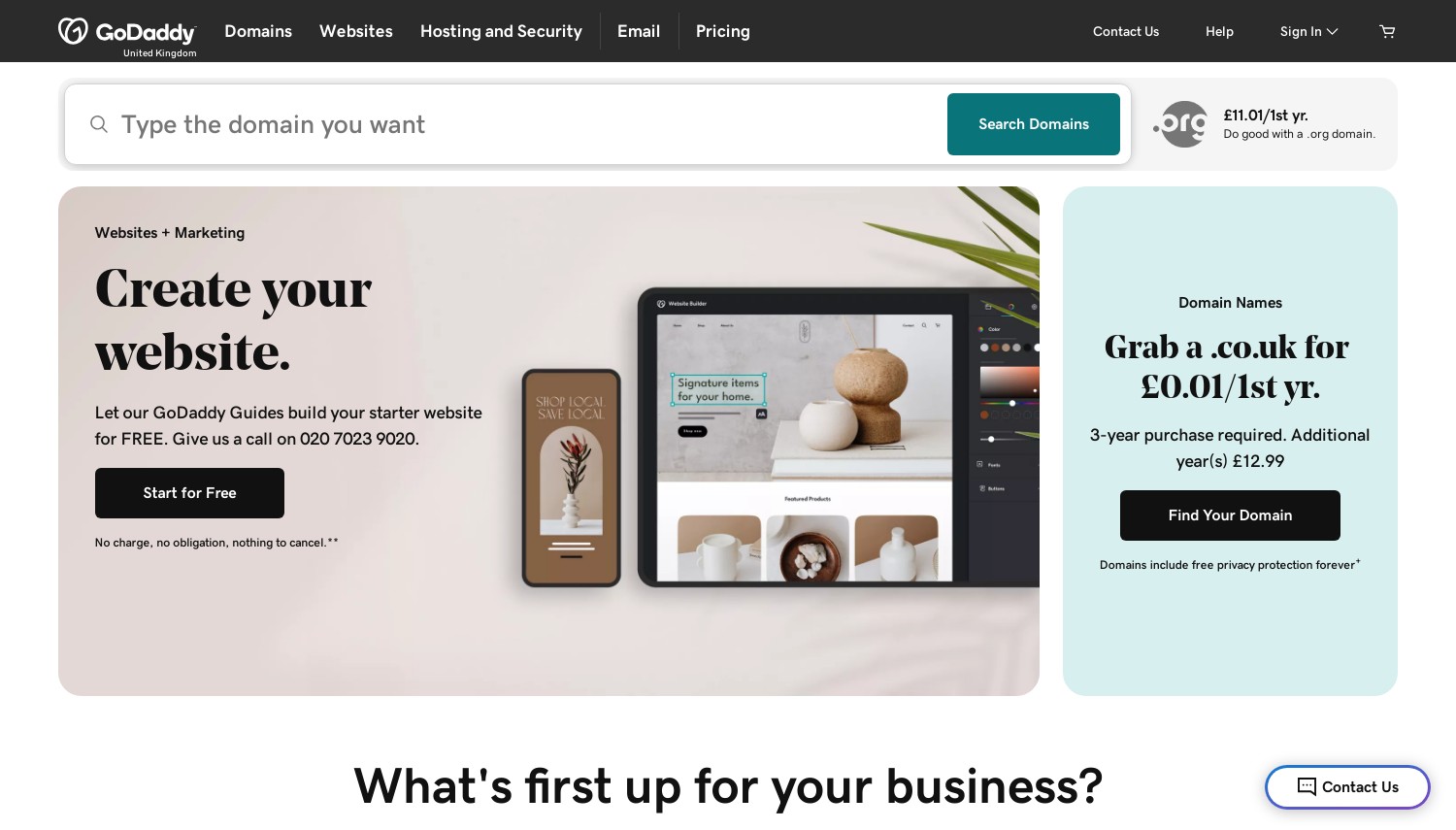
GoDaddy – Am besten für bestehende GoDaddy-Kunden geeignet, die eine unkomplizierte Installation wünschen
Ab etwa USD 64 erstes Jahr, Verlängerung ca. 100 USD/Jahr · Standard-Einzeldomain-DV · 30-tägige Geld-zurück-Garantie
Beginnen Sie mit dem Preisproblem, weil es die ganze Geschichte ist. Das Standard-DV-Zertifikat von GoDaddy listet etwa USD auf 64 im ersten Jahr und verlängert sich für etwa USD 100 ein Jahr. Dadurch wird genau die gleiche domänenvalidierte Verschlüsselung erworben, die Sie kostenlos bei Let's Encrypt erhalten, oder für USD 5.99 von einem Sectigo-Händler. Für die DV-Validierung der Sectigo-Klasse berechnet GoDaddy etwa USD 100 Die Erneuerung kostet USD 5.99 und Namecheap, eine 16-fache Lücke für ein identisches Vorhängeschloss.
Was Sie tatsächlich bezahlen, ist die Bequemlichkeit innerhalb des GoDaddy-Ökosystems. Sein Managed SSL Service installiert das Zertifikat, überwacht es, und verlängert sich automatisch, ohne dass Sie jemals eine CSR erstellen müssen (Die Signaturanforderung, die ein Zertifikat normalerweise erfordert). Für einen technisch nicht versierten Besitzer, der GoDaddy bereits für Domains und Hosting bezahlt, Diese Ein-Dashboard-Einfachheit hat eine echte Wirkung, wenn schmal, Wert. Es gibt auch Wildcard- und Managed-Wildcard-Produkte, bis hin zu hohen 300 USD pro Jahr.
Vorteile:
- Vollständig verwaltete Installation und automatische Verlängerung, keine Kommandozeile
- Ein Anbieter für die Domain, Hosting, und Zertifikat
- Bietet DV, OV, und EV plus verwaltete Optionen
Nachteile:
- Erneuerung in der Nähe 100 USD/Jahr für einfaches DV
- Kein kostenloses Kontingent, während Konkurrenten DV verschenken
- Wildcards laufen in die hohe 300 USD
Preisgestaltung: Etwa USD 64 erstes Jahr, etwa USD 100 bei Verlängerung für Single-Domain-DV. OV und EV kosten mehr; Der verwaltete Platzhalter ist der Spitzenreiter. 30-Tag Geld zurück.
Beste für: Personen, die bereits im GoDaddy-Dashboard leben und Zero-Touch-SSL wünschen. Überspringen Sie, wenn: Der Preis ist überhaupt wichtig.
Urteil: Kaufen Sie GoDaddy SSL nur, wenn Sie tief in das Ökosystem von GoDaddy eingebunden sind und einen Aufpreis zahlen, um niemals einen CSR anzufassen. Jeder, der Wert sucht, sollte sich die kostenlose DV von Let's Encrypt holen, oder ein garantiert bezahltes Zertifikat von Namecheap zum Preis eines Kaffees.
2. SSL.com
 2.4k+
4.9
Positiv
Positiv
2.4k+
4.9
Positiv
Positiv
| Preis | |
|---|---|
| $36.75 / mo. | Plan anzeigen |
| $48.40 / mo. | Plan anzeigen |
| $74.25 / mo. | Plan anzeigen |
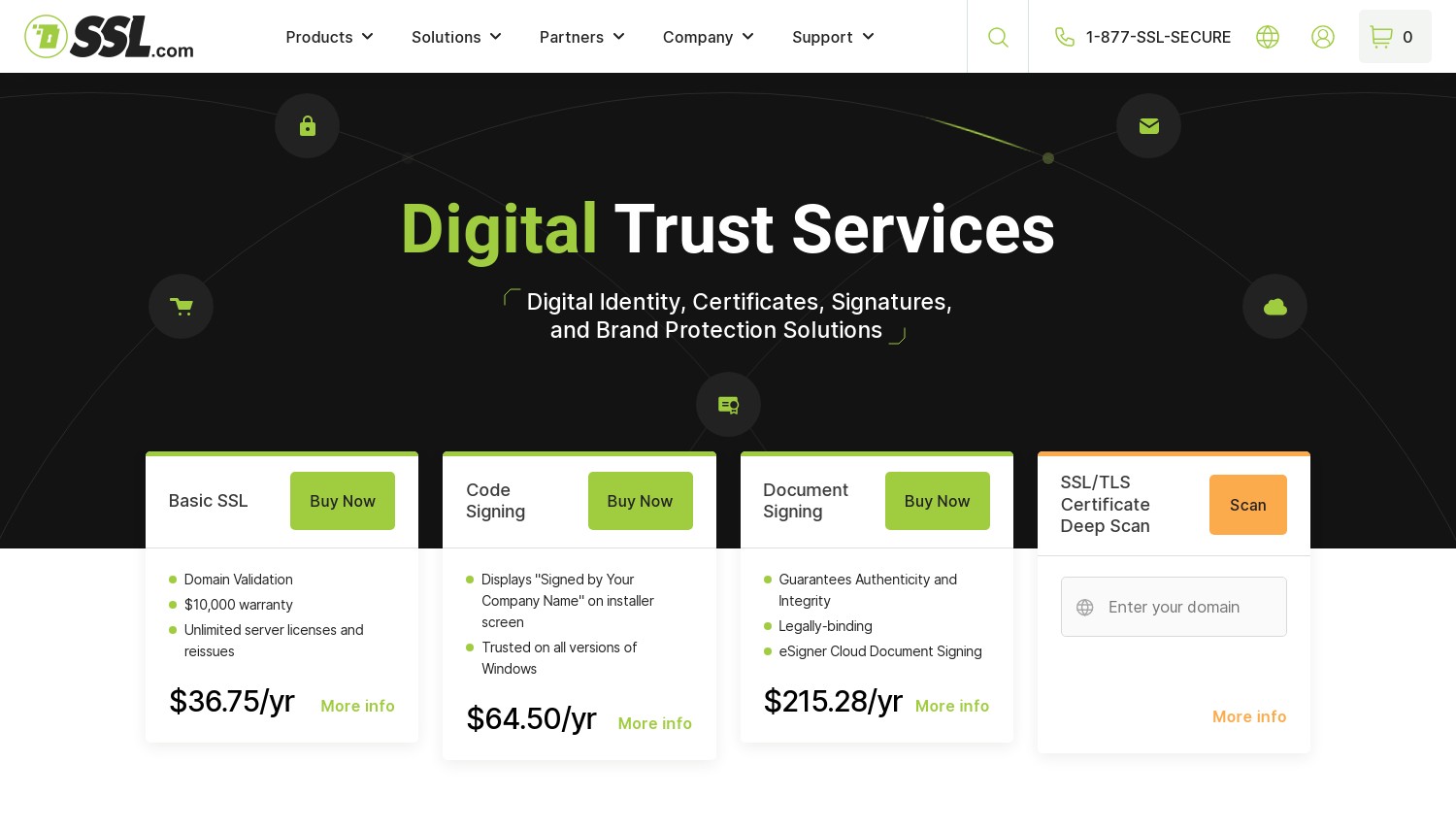
SSL.com – Am besten für eine echte Zertifizierungsstelle mit Support ohne Unternehmenspreise
DV ab 36,75 USD/Jahr · Wildcard ab USD 224.25 · EV USD 239.50 · 30 Tage Geld-zurück-Garantie
SSL.com ist einer der wenigen Namen in diesem Handbuch, bei denen es sich um eine tatsächliche Zertifizierungsstelle handelt, mit eigenen Wurzeln in den großen Browser- und Betriebssystem-Trust Stores, anstatt dass ein Ladengeschäft die Zertifikate einer anderen Zertifizierungsstelle weiterverkauft. Es ist wichtig, wenn Sie jemanden brauchen, der am Telefon verantwortlich ist, eine API für die Massenausgabe, oder Zertifikate außerhalb des Webs. SSL.com verkauft auch S/MIME (Zertifikate, die E-Mails signieren und verschlüsseln) und Codesignatur.
Der Kompromiss besteht darin, den Preis gegenüber der Rabattmenge zu vergleichen. Der DV der Eigenmarke von SSL.com beginnt bei USD 36.75 ein Jahr, Das entspricht etwa dem 6-fachen des USD von SSL2BUY 6 Eintrittszertifikat für denselben domänenvalidierten Job. SSL.com verdient seinen Lebensunterhalt im Mittelfeld. OV beginnt bei USD 48.40 mit einem USD 50,000 Garantie, und EV bei USD 239.50 mit einer Garantie von 1,75 Mio. USD. Beide liegen weit unter dem, was DigiCert für vergleichbare Sicherheit verlangt. Wenn Sie Geschäftssysteme betreiben, die auch sichere E-Mails benötigen, hier ein Zertifikat mit richtig koppeln E-Mail-Hosting für Unternehmen Hält Identität und Verschlüsselung unter einem vertrauenswürdigen Root.
Vorteile:
- Echte vertrauenswürdige Stammzertifizierungsstelle, kein Wiederverkäufer
- OV-Garantie US Dollar 50,000, EV-Garantie 1,75 Mio. USD
- S/MIME, Codesignatur, und API-Ausgabe
- Bedingungslose 30-tägige Rückerstattung
Nachteile:
- DV-Eintrag (US Dollar 36.75) weit über Wiederverkäufern
- Platzhalter bei US Dollar 224.25 ist steil
Preisgestaltung: DV ab 36,75 USD/Jahr, OV von USD 48.40, Dieser USD 239.50, Platzhalter von USD 224.25, Multi-Domain-UCC von USD 141.60. Wird als Abonnement verkauft, das innerhalb der neuen Gültigkeitsgrenzen erneut ausgestellt wird. 30-Tag Geld zurück.
Beste für: Unternehmen, die eine vertrauenswürdige ausstellende Zertifizierungsstelle wünschen, echte Unterstützung, und OV/EV ohne fünfstelligen Vertrag. Überspringen Sie, wenn: Du brauchst nur einfaches DV.
Urteil: Wählen Sie SSL.com, wenn Sie eine Erstanbieter-CA mit Support benötigen, Garantien, und E-Mail- oder Codesignaturzertifikate an einem Ort. Wenn Sie nur ein einziges DV-Zertifikat für einen Blog benötigen, Das ist übertrieben; Nehmen Sie ein kostenloses Zertifikat oder den USD von Namecheap 5.99 Option stattdessen.
3. SSL2BUY.com
 957
5.0
Positiv
Positiv
957
5.0
Positiv
Positiv
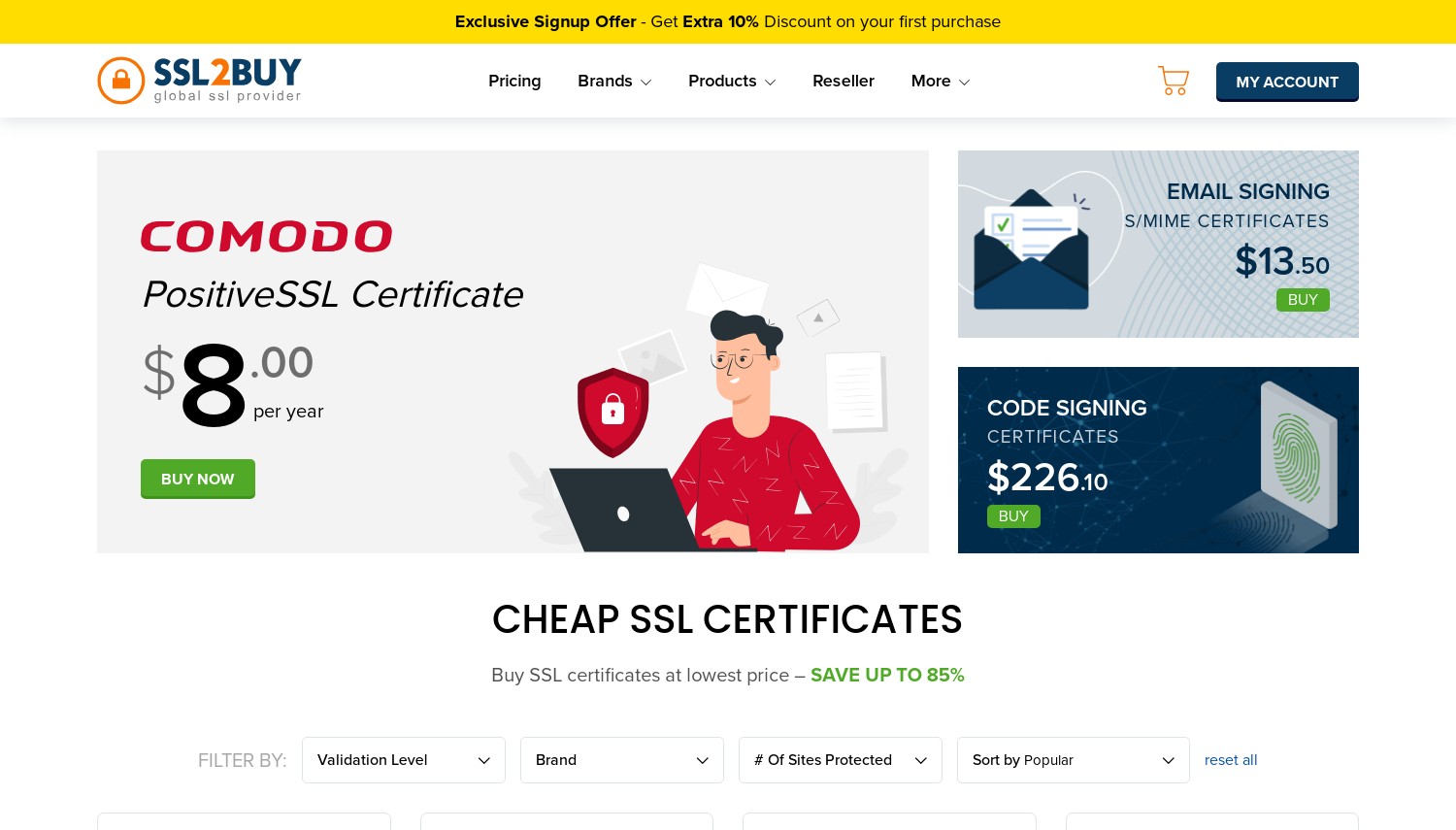
SSL2BUY – Am besten für das günstigste Markenzertifikat
DV ab 6 USD/Jahr · Wildcard ab USD 35 · OV von USD 40 · 30 Tage Geld-zurück-Garantie
US Dollar 6 ein Jahr. Das ist das günstigste öffentlich vertrauenswürdige Zertifikat in diesem Handbuch, ein PrimeSSL DV-Einzeldomänenzertifikat, und es ist das ganze Spielfeld. SSL2BUY ist ein Wiederverkäufer, keine CA. Es kauft Zertifikate in großen Mengen von Sectigo, DigiCert, GlobalSign, GeoTrust, und andere, verkauft sie dann mit einem Rabatt auf den Direktpreis der CA. Die Wurzeln sind identisch mit dem Direktkauf; Lediglich der Preis und der Support-Desk ändern sich.
Die Einsparungen sind real. Ein PrimeSSL DV-Wildcard läuft in USD 35 pro Jahr hier im Vergleich zum USD von SSL.com 224.25 für einen eigenen Platzhalter, und ein Sectigo PositiveSSL liegt bei USD 8. Für ein kleines Unternehmen, das eine Garantie und einen kostenpflichtigen Support-Kontakt, aber kein Premium-Logo wünscht, Das ist ein fairer Deal. Das Risiko liegt beim Mittelsmann: Validierung, Neuausgabe, und Widerruf erfolgen alle vorgelagert bei der echten Zertifizierungsstelle, während Ihr Konto, Erstattung, und Support wenden Sie sich an den Wiederverkäufer.
Vorteile:
- Günstigstes kostenpflichtiges DV hier bei 6 USD/Jahr
- Markenwurzeln (Sectigo, DigiCert, GlobalSign)
- Wildcards von USD 35, EV ab etwa USD 70
- 30-Rückerstattungsfrist von einem Tag
Nachteile:
- Wiederverkäufer, Daher gibt es keinen Erstanbieter-CA-Support
- Rückerstattung und Servicequalität hängen vom Mittelsmann ab
Preisgestaltung: PrimeSSL DV 6 USD/Jahr, Sectigo PositiveSSL USD 8, AlphaSSL USD 12, Platzhalter von USD 35, OV von USD 40, EV ab etwa USD 70. Kein separater Verlängerungsaufschlag veröffentlicht. 30-Tag Geld zurück.
Beste für: Käufer, die ein garantiertes Markenzertifikat zum niedrigsten Preis wünschen und keine Handhaltung benötigen. Überspringen Sie, wenn: Sie möchten, dass die Zertifizierungsstelle selbst für den Support verantwortlich ist.
Urteil: Wählen Sie SSL2BUY, wenn das Ziel ein günstiges, kostenpflichtiges Zertifikat mit einem erkennbaren Stamm ist und Sie mit dem Reseller-Support vertraut sind. Wenn Sie sich lieber direkt an die Zertifizierungsstelle wenden möchten, Kaufen Sie Sectigo oder SSL.com als Erstanbieter; wenn Sie automatisieren können, Überspringen Sie kostenpflichtiges DV vollständig für Let's Encrypt.
4. Comodo

 160
2.0
Negativ
160
2.0
Negativ
 Negativ
| Preis |
|---|
| $87.91 / mo. |
| $227.91 / mo. |
| $268.46 / mo. |
Sectigo (Komodo) – Am besten für ein garantiertes DV-Zertifikat zum Taschengeldpreis
PositiveSSL DV ab 5,99 USD/Jahr · Wildcard ab ca. USD 128 · Zweitgrößte bezahlte CA
Comodo, die Zertifikatsmarke, und Comodo, das Unternehmen, trennten sich 2018. Das CA-Geschäft wurde in Sectigo umbenannt, und das Zertifikat, das Sie immer noch sehen, wird verkauft "Bequemes SSL" oder "PositivSSL" ist aus den heutigen Wurzeln von Sectigo hervorgegangen. Gleiche Verschlüsselung, gleiche Trust Store-Präsenz, neuer Name. Sectigo ist die zweitgrößte öffentlich vertrauenswürdige Zertifizierungsstelle unter den kostenpflichtigen Anbietern, Daher verfügen die Zertifikate über eine nahezu universelle Browser- und Gerätevertrauenswürdigkeit.
Weil Sectigo hauptsächlich über Wiederverkäufer verkauft, Der Preis hängt davon ab, wo Sie kaufen. Ein PositiveSSL DV läuft in USD 5.99 bei Namecheap und etwa USD 7.66 über andere Wiederverkäufer. Vergleichen Sie das mit den ungefähren USD von GoDaddy 100 Erneuerung für ein gleichwertiges DV-Zertifikat. Das ist die gleiche Zertifikatsklasse mit einer 16-fachen Preisspanne, wird vollständig von der Storefront gesteuert, nicht Sicherheit. Wildcards liegen höher, rund USD 128 pro Jahr für PositiveSSL Wildcard, immer noch deutlich unter dem USD von SSL.com 224.25. DV trägt einen USD 50,000 Garantie.
Vorteile:
- Nahezu universelle Browser- und Gerätevertrauen
- DV von 5,99 USD/Jahr über Wiederverkäufer
- Ausgestellt in etwa fünf Minuten
- DV-Garantie USD 50,000
Nachteile:
- Markenverwirrung (Comodo gegen Sectigo)
- Kein einziges offizielles Schaufenster; Die Rückerstattungsfristen variieren
Preisgestaltung: PositiveSSL DV USD 5.99 bis zu 7,66 USD/Jahr, je nach Wiederverkäufer, Wildcard ab etwa USD 128. Rückerstattungsfenster laufen 15 zu 30 Tage nach Verkäufer. OV und EV sind über dieselben Kanäle verfügbar.
Beste für: Jeder, der eine vertrauenswürdige Person möchte, Garantiertes DV-Zertifikat für ein paar Dollar und ein Statik (nicht automatisiert) installieren. Überspringen Sie, wenn: Sie können ACME ausführen.
Urteil: Kaufen Sie ein Sectigo-Zertifikat über einen seriösen Wiederverkäufer, wenn Sie ein kostenpflichtiges Zertifikat wünschen, garantiertes DV-Zertifikat mit nahezu universeller Vertrauenswürdigkeit und ohne Skripting. Wenn Sie die Verlängerung automatisieren können, Let's Encrypt führt die gleiche Verschlüsselung kostenlos durch; wenn Sie Unternehmensvalidierung und -unterstützung benötigen, Steigen Sie auf DigiCert um.
Let's Encrypt – Das Beste für fast jeden
Kostenlos · Nur DV · 90-Tage-Zertifikate (6-Tagesoption) · Kein Support-Desk
Let's Encrypt stellt Zertifikate für Hunderte Millionen Websites aus und erhebt keine Gebühren. Es ist eine gemeinnützige CA, volles Vertrauen, und es existiert, um die Verschlüsselung zum Standard zu machen. Zertifikate gelten zuletzt 90 Tage und erneuern sich automatisch über ACME, Wenn Ihr Host oder Client einmal eingerichtet ist, denken Sie also nie wieder darüber nach. Im Vergleich zu GoDaddys ungefähr USD 100 jährliche Verlängerung für dasselbe domänenvalidierte Zertifikat, "kostenlos und automatisch" ist schwer zu bestreiten.
Das 2026 Geschichte lebt hier. Let's Encrypt hat OCSP heruntergefahren (Eine ältere Methode, mit der Browser den Widerruf überprüften) im August 6, 2025, und hat im Juni den Versand von Ablauferinnerungs-E-Mails eingestellt 2025. Im Januar wurden auch kurzlebige Zertifikate mit einer Laufzeit von ca. 6 Tagen versandt 15, 2026, mit einem Weg zu 45-Tage-Zertifikaten von 2028. Alles setzt voraus, dass die Automatisierung funktioniert. Auch die Grenzen sind klar: Nur DV, kein OV oder EV, keine Garantie, Kein Mensch zum Anrufen, und Platzhalter erfordern den DNS-01 Validierungsmethode. Die meisten verwalteten Hoster bieten Let's Encrypt bereits im Paket an, weshalb Käufer auf typisch sind Shared Hosting-Pläne Es ist selten notwendig, überhaupt ein Zertifikat zu kaufen.
Vorteile:
- Kostenlos, für immer, volles Vertrauen
- Automatisierte Ausstellung und Verlängerung über ACME
- Betreibt den Großteil des verschlüsselten Webs
Nachteile:
- Nur DV, kein OV/EV, keine Garantie
- Keine Unterstützung; Defekte Automatisierung bedeutet Ausfälle
- Keine Ablauf-E-Mails seit Juni 2025
Preisgestaltung: Kostenlos. Wildcards kostenlos über DNS-01. Kurzlebiges 6-Tage-Profil für hochautomatisierte Setups verfügbar.
Beste für: jede Site, deren Host oder Plattform ACME unterstützt, Das sind fast alle. Überspringen Sie, wenn: Du brauchst OV/EV, eine Garantie, oder einen Supportvertrag.
Urteil: Verwenden Sie Let's Encrypt, es sei denn, Sie haben einen bestimmten Grund, dies nicht zu tun. Wenn Sie eine verifizierte Organisationsidentität benötigen, eine Garantie, oder jemanden, der anruft, wenn die Ausgabe unterbrochen wird, Das ist Ihr Anreiz, stattdessen SSL.com oder DigiCert zu kaufen; für reine Verschlüsselung, Hier gibt es nichts Besseres als kostenlos und automatisch.
ZeroSSL – Beste kostenlose Option für Leute, die kein Terminal anfassen möchten
Kostenloses Kontingent (3 Dashboard-Zertifikate) · Bezahlt ab 9,99 USD/Monat · 90-Tage-DV
Wenn Sie kostenlose Zertifikate wünschen, die Befehlszeile Sie aber nervös macht, ZeroSSL ist die Antwort, die Let's Encrypt nie wirklich gegeben hat. Es handelt sich um eine vertrauenswürdige Zertifizierungsstelle mit einem benutzerfreundlichen Web-Dashboard, über das Sie per Klick ein DV-Zertifikat anfordern und herunterladen können, kein ACME-Client erforderlich. Das ist ein echter Lückenfüller für einmalige Zertifikate auf manuell konfigurierten Servern. ZeroSSL ist seit Januar im Besitz des Sicherheitsunternehmens HID Global 2024.
Mit dem kostenlosen Kontingent erhalten Sie über das Dashboard eine Obergrenze von drei 90-Tage-Zertifikaten, Die Ausgabe über die ACME-API ist jedoch praktisch unbegrenzt, das gleiche wie Let's Encrypt. Bezahlte Pläne beginnen bei USD 9.99 ein Monat, der jährlich abgerechnet wird, ungefähr USD 120 ein Jahr, Da wird die Mathematik seltsam: Das ist weit mehr als der USD von Namecheap 5.99 für ein vergleichbares garantiertes DV-Zertifikat. Der Wert von ZeroSSL liegt im Dashboard und der Multi-Domain-Verwaltung, nicht der Preis eines einzelnen Zertifikats.
Vorteile:
- Point-and-Click-Ausgabe, kein ACME erforderlich
- Vertrauenswürdige Zertifizierungsstelle, kostenlose 90-Tage-DV-Zertifikate
- REST API und ACME werden beide unterstützt
Nachteile:
- Kostenloses Dashboard begrenzt auf 3 Zertifikate
- Bezahlter Eintritt (120 USD/Jahr) Es ist besser, ein einzelnes Zertifikat woanders zu kaufen
Preisgestaltung: Kostenlos für bis zu drei Dashboard-Zertifikate (unbegrenzt über ACME). Kostenpflichtiger Basispreis: 9,99 USD/Monat, jährliche Abrechnung, oder USD 13.99 Monat für Monat.
Beste für: Administratoren, die kostenlose Zertifikate ohne Skripting wünschen und denen die Dashboard-Obergrenze von drei Zertifikaten nichts ausmacht. Überspringen Sie, wenn: Sie werden sowieso automatisieren.
Urteil: Greifen Sie zu ZeroSSL, wenn ein grafisches Dashboard eine Konfigurationsdatei übertrifft und Sie eine Handvoll kostenloser Zertifikate benötigen. Wenn Sie trotzdem automatisieren möchten, Let's Encrypt hat weniger Grenzen; wenn Sie ein kostenpflichtiges Garantiezertifikat wünschen, Namecheap kostet einen Bruchteil der USD von ZeroSSL 120 planen.
Google Trust Services – Beste kostenlose Zertifikate für Google Cloud und IP-Adressen
Kostenlos · DV über ACME · IP-Adresszertifikate · Erfordert EAB-Setup
Google betreibt ein kostenloses, öffentlich vertrauenswürdige Zertifizierungsstelle, und fast niemand außerhalb von Google Cloud nutzt es. Das ist eine verpasste Chance für das richtige Setup. Google Trust Services stellt DV-Zertifikate über ACME kostenlos für jedermann aus, nicht nur Google-Kunden, und es bewirkt zwei Dinge, bei denen Let's Encrypt vorsichtig ist: Zertifikate für Roh-IP-Adressen, und Zertifikatsumverteilung. Gegen den USD von DigiCert 218 Unternehmenseintrag, Kostenlos mit diesen Extras ist überzeugend, wenn Sie sie brauchen.
Die Reibung ist eingestellt. Sie benötigen einen ACME-Client, der die externe Kontobindung unterstützt (EAB), ein zusätzlicher Anmeldeinformationsschritt, den Let's Encrypt überspringt, Daher ist die Verkabelung etwas aufwändiger. Es richtet sich natürlich auch an Benutzer, die bereits in Google Cloud sind, wo es direkt in den Zertifikatsmanager eingebunden wird. Für alle anderen ist es eine leistungsfähige kostenlose Zertifizierungsstelle, nach der nur wenige Menschen greifen.
Vorteile:
- Kostenlos, Von Google betrieben, volles Vertrauen
- Stellt IP-Adresszertifikate aus
- Native Google Cloud-Integration
Nachteile:
- EAB fügt gegenüber Let's Encrypt einen Einrichtungsschritt hinzu
- Nur DV; richtet sich an Google Cloud-Nutzer
Preisgestaltung: Kostenlos über ACME für alle Benutzer. Keine kostenpflichtigen Stufen für öffentliche Webzertifikate.
Beste für: Google Cloud-Nutzer, oder jeder, der kostenlose IP-Adresszertifikate oder Weiterverbreitungsrechte benötigt. Überspringen Sie, wenn: Sie wollen den einfachsten freien Weg.
Urteil: Wählen Sie Google Trust Services, wenn Sie Google Cloud nutzen oder speziell IP-Adresszertifikate zum Nulltarif benötigen. Wenn Sie einfach nur kostenloses HTTPS mit möglichst wenig Aufwand wünschen, Das No-EAB-Setup von Let's Encrypt ist der einfachere Weg.
Cloudflare – Das beste kostenlose Zertifikat, das Sie möglicherweise bereits haben
Kostenloses Universal SSL · DV · Apex plus Subdomains der ersten Ebene · Erfordert Proxy-DNS
Möglicherweise besitzen Sie bereits ein kostenloses Zertifikat, das Sie nie gekauft haben. Jede Site, die über das Cloudflare-Netzwerk weitergeleitet wird, erhält Universal SSL in jedem Plan kostenlos, einschließlich des kostenlosen. Cloudflare stellt es automatisch im Hintergrund bereit und erneuert es, Ziehen Sie das zugrunde liegende Zertifikat von Google Trust Services oder Let's Encrypt, Es gibt also nichts zu installieren oder zu verfolgen. Für eine Website, die Cloudflare bereits verwendet, Der Kauf eines separaten Zertifikats für den Edge ist überflüssig.
Ob es passt, entscheiden zwei Bedingungen. Universal SSL funktioniert nur, wenn Ihr DNS-Eintrag auf eingestellt ist "Stellvertretend," Das bedeutet, dass der Datenverkehr tatsächlich über Cloudflare fließt; Für einen Nur-DNS-Eintrag ist weiterhin ein Zertifikat auf Ihrem Ursprungsserver erforderlich. Die Abdeckung umfasst nur den Domänen-Apex sowie Subdomänen der ersten Ebene. Für tiefere Subdomains oder echte Platzhalter ist der Advanced Certificate Manager erforderlich, ein kostenpflichtiges Add-on. Kostenlos deckt den allgemeinen Fall ab; Das kostenpflichtige Add-on kümmert sich um die Kanten. Für eine typische Apex-plus-www-Site sind das keine Kosten, wo sogar ein einfaches Namecheap DV-Zertifikat bei USD beginnt 5.99 ein Jahr.
Vorteile:
- Kostenlos auf jedem Cloudflare-Plan
- Kein Konfigurationsproblem und automatische Verlängerung
- Keine Verwaltung von Ursprungszertifikaten am Edge
Nachteile:
- Funktioniert nur mit Proxy (nicht nur DNS) Aufzeichnungen
- Nur Apex plus Subdomains der ersten Ebene
- Für tiefe Subdomains ist ein kostenpflichtiger Advanced Certificate Manager erforderlich
Preisgestaltung: Kostenloses Universal SSL für alle Pläne. Advanced Certificate Manager ist ein kostenpflichtiges Add-on für benutzerdefinierte Hostnamen und eine umfassendere Abdeckung.
Beste für: Websites leiten den Datenverkehr bereits über Cloudflare weiter. Überspringen Sie, wenn: Sie führen nur DNS aus, oder viele tiefe Subdomains benötigen, ohne für ACM zu bezahlen.
Urteil: Verwenden Sie das kostenlose SSL von Cloudflare, wenn sich Ihre Website bereits hinter ihrem Proxy befindet; Es ist der geringstmögliche Aufwand. Wenn Sie nur DNS verwenden oder eine breite Wildcard-Abdeckung ohne das kostenpflichtige Add-on benötigen, Erteilen Sie über DNS einen Let's Encrypt-Platzhalter-01 stattdessen.
DigiCert – Am besten für Unternehmen, die maximale Sicherheit benötigen
Basis-OV ab 218 USD/Jahr · EV ab USD 344 · Garantien bis zu 2 Mio. USD
US Dollar 218 ein Jahr, und das ist das günstigste Zertifikat, das Ihnen DigiCert verkaufen wird. Es gibt hier bewusst keine Budget-DV-Stufe. DigiCert ist das Premium-Ende des Marktes, die CA, die das Zertifikatsgeschäft von Symantec übernommen hat (einschließlich Thawte, GeoTrust, und RapidSSL) zurück in 2017, und es verkauft Sicherheit, Lebenszyklus-Werkzeuge, und Garantien statt billiger Vorhängeschlösser. Seine CertCentral-Plattform verwaltet Zertifikate im Flottenmaßstab, Das ist genau das, was der kommende 47-tägige Erneuerungsrhythmus von großen Unternehmen verlangt.
Bei den Nummern handelt es sich um Unternehmensnummern. Basis-OV beginnt bei USD 218 mit einer Garantie von 1,25 Mio. USD, Basis-EV bei USD 344, und Secure Site Pro EV erreicht USD 1,495 ein Jahr mit einer Garantie von 2 Mio. USD, hier am höchsten. Dieser Basic OV-Eintrag kostet ungefähr das 4,5-fache des USD von SSL.com 48.40 OV-Zertifikat für eine ähnliche Validierungsstufe; Sie zahlen für die Marke, die Prioritätsvalidierung, und die Managementplattform, keine stärkere Verschlüsselung. Unternehmen, die ihre eigenen betreiben dedizierte Server-Infrastruktur über viele Hostnamen hinweg sind die natürliche Passform.
Vorteile:
- Höchste Garantien hier, bis zu 2 Mio. USD
- CertCentral-Lebenszyklusmanagement im großen Maßstab
- Premium-Markenvertrauen und Prioritätsvalidierung
Nachteile:
- Kein Billig-DV; Der Eintrag beginnt um US Dollar 218
- Übertrieben und überteuert für kleine Websites
Preisgestaltung: Basis-OV 218 USD/Jahr, Basis-EV USD 344, Sichere Site OV USD 399, Secure Site EV USD 995, Secure Site Pro EV USD 1,495. Platzhalter sind Add-ons. Verkauft über CertCentral.
Beste für: Unternehmen, die Top-Garantien benötigen, Prioritätsvalidierung, und Zertifikatsverwaltung über viele Hosts hinweg. Überspringen Sie, wenn: Sie sind eine kleine oder mittelgroße Website.
Urteil: Kaufen Sie DigiCert, wenn es sich bei dem Zertifikat um eine Compliance- und Risikoentscheidung handelt und Sie CertCentral benötigen, um eine Flotte mit den neuen kurzen Lebensdauern zu verwalten. Wenn Sie OV oder EV ohne Enterprise-Preise wünschen, SSL.com und GlobalSign bieten die gleichen Validierungsstufen für einen Bruchteil der Rechnung.
GlobalSign – Bester Einzelanbieter vom günstigen DV bis zur Unternehmens-PKI
AlphaSSL-Wildcard 149 USD/Jahr · DV-Garantie USD 10,000 · OV/EV-Garantie bis zu 1,5 Mio. USD
Ein Anbieter, von einem USD 12 DV-Zertifikat zur Geräteidentität des Unternehmens. Die Reichweite von GlobalSign ist entscheidend. Die Garantien steigen mit der Validierung: US Dollar 10,000 für DomainSSL (DV), 1,25 Mio. USD für OrganizationSSL (OV), und 1,5 Mio. USD für ExtendedSSL (EV). Fügen Sie verwaltete PKI hinzu, IoT-Gerätezertifikate, und S/MIME-E-Mail-Signierung, alles unter einem Dach. Seine Budgetmarke, AlphaSSL, verkauft schnelle DV- und Wildcard-Zertifikate über Wiederverkäufer, mit der AlphaSSL-Wildcard, die bei USD aufgeführt ist 149 ein Jahr.
Dieser USD 149 AlphaSSL-Wildcard liegt in diesem Handbuch genau zwischen den beiden Extremen: deutlich über dem USD von Namecheap 39.99 PositiveSSL-Platzhalter, aber deutlich unter dem USD von SSL.com 224.25. Die Schwachstellen von GlobalSign sind Ehrlichkeitsprobleme, nicht Fähigkeit. Das Hauptgeschäft verbirgt die Preise hinter der Regions- und Währungsauswahl, was den Vergleichseinkauf zu einer lästigen Pflicht macht, Und wie bei allen Zertifizierungsstellen können die EV-Zertifikate keine Platzhalter sein (eine branchenweite Regel, kein GlobalSign-Limit). Jedes Zertifikat beinhaltet kostenlose, unbegrenzte Neuausstellungen und eine unbegrenzte Serverlizenz.
Vorteile:
- Volles Sortiment: DV, OV, EV, S/MIME, IoT, PKI
- AlphaSSL-Wildcard bei 149 USD/Jahr
- Kostenlose unbegrenzte Neuauflagen und Serverlizenzen
Nachteile:
- Die Preise der Hauptmarken werden hinter den Toren der Region verborgen
- Geringere Top-Garantie als bei DigiCert
Preisgestaltung: AlphaSSL-Wildcard 149 USD/Jahr (offiziell). DomainSSL der Hauptmarke, OrganisationSSL, und ExtendedSSL werden dynamisch nach Region notiert und nicht als feste öffentliche USD-Preise, Bestätigen Sie daher im Warenkorb die Angaben für Ihr Land.
Beste für: Organisationen, die eine zentrale Zertifizierungsstelle im gesamten Web wünschen, Email, und Gerätezertifikate, oder die preisgünstige Wildcard von AlphaSSL. Überspringen Sie, wenn: Sie benötigen ein günstiges DV-Zertifikat.
Urteil: Wählen Sie GlobalSign, wenn Sie einen einzigen vertrauenswürdigen Anbieter suchen, der Budgetzertifikate über Unternehmens-PKI und sichere E-Mails abdeckt. Wenn Sie nur ein DV-Zertifikat benötigen, Namensgünstige oder kostenlose Gewinne beim Preis; wenn Sie die absolut höchste Garantie benötigen, Die 2-Millionen-Dollar-Stufe von DigiCert liegt immer noch vorne.
Namecheap – Bestes Preis-Leistungs-Verhältnis, garantiertes DV-Zertifikat
PositiveSSL ab 5,99 USD/Jahr (erneuert ~USD 9.86) · Wildcard von USD 39.99 · 15 Tage Geld-zurück-Garantie
Wo GoDaddy DV für etwa USD verlängert 100, Namecheap hält sich in der Nähe des USD 10. Namecheap verkauft Sectigo-Zertifikate über ein übersichtliches Dashboard weiter, und seine Preisgestaltung ist der Grund dafür, dass es die standardmäßige kostenpflichtige Wahl für kleine Websites ist. Ein PositiveSSL DV-Zertifikat beginnt bei USD 5.99 im ersten Jahr und verlängert sich um ca. USD 9.86, Im Gegensatz zu den meisten Einzelhandels-SSLs gibt es also im zweiten Jahr keine Erneuerungsfalle. Das ist derselbe Sectigo-Root, den SSL2BUY für USD verkauft 8, hier knapp überholt 25% im ersten Jahr.
Das breitere Sortiment deckt die meisten Bedürfnisse kleiner Unternehmen ab: ein PositiveSSL-Wildcard von USD 39.99 (Erneuerung in der Nähe von USD 59.88), Multi-Domain-Zertifikate von USD 19.50, und Sectigo OV und EV für Käufer, die eine verifizierte Identität wünschen. Es ist immer noch ein Wiederverkäufer, Der Erstanbieter-CA-Support ist also nicht das A und O. Bei der Auslosung handelt es sich um ein garantiertes Zertifikat, ein einfaches Dashboard, und Wohnungsverlängerungen, Das ist genau das, was ein Geschäft normalerweise möchte, das ein kostenpflichtiges Zertifikat für eine Checkout-Seite benötigt. Websites, die online verkaufen, sollten unseren Leitfaden lesen WordPress-E-Commerce-Hosting wie SSL zum breiteren Zahlungsstapel passt.
Vorteile:
- DV von 5,99 USD/Jahr, Wohnungserneuerungen
- Wildcard von USD 39.99, Multi-Domain von USD 19.50
- Sauberes Armaturenbrett, Sectigo-Wurzeln
Nachteile:
- Wiederverkäufer, Kein Erstanbieter-CA-Support
- Kürzeres Rückerstattungsfenster von 15 Tagen
Preisgestaltung: PositiveSSL DV USD 5.99 erstes Jahr, etwa USD 9.86 Erneuerung. Wildcard-USD 39.99 erstes Jahr, nahe USD 59.88 Erneuerung. Multi-Domain von USD 19.50. 15-Tag Geld zurück.
Beste für: Kleine Websites und Geschäfte, die ein günstiges DV-Zertifikat mit Garantie und vorhersehbaren Verlängerungen wünschen. Überspringen Sie, wenn: Sie können kostenlose Zertifikate automatisieren, oder eine Unternehmensvalidierung benötigen.
Urteil: Kaufen Sie Namecheap, wenn Sie eine kostenpflichtige Lösung wünschen, garantiertes DV-Zertifikat zum niedrigsten ehrlichen Preis und ein Dashboard über eine Konfigurationsdatei. Wenn Sie ACME ausführen können, Let's Encrypt führt die Verschlüsselung kostenlos durch; wenn Sie OV/EV im großen Maßstab mit Lifecycle-Tools benötigen, DigiCert ist die Antwort für Unternehmen.
10 Am meisten bewertete SSL-Zertifikatsanbieter in Polen (Juli 2026)
| Hosting-Name | Benutzerzufriedenheit In % | Anzahl der Bewertungen | Werbeaktionen |
|---|---|---|---|
 SSL.com SSL.com |
97% | 1329 | Besucherseite |
 SSL2BUY.com SSL2BUY.com |
99% | 936 | |
 Amen.fr Amen.fr |
69% | 408 | |
 Host2Go Host2Go |
97% | 152 | |
 Da-Manager Da-Manager |
95% | 104 | |
 Komodo Komodo |
40% | 186 | |
 KINGHOST WEB-LÖSUNGEN KINGHOST WEB-LÖSUNGEN |
97% (weniger als 25 Bewertungen) |
24 | |
 PTisp PTisp |
53% | 37 | |
 UniWebHosting UniWebHosting |
64% (weniger als 25 Bewertungen) |
9 | |
 Easy.gr Easy.gr |
66% (weniger als 25 Bewertungen) |
7 |
So wählen Sie ein SSL-Zertifikat aus 2026
Vergessen Sie zuerst die Marke. Beantworten Sie zwei Fragen: Kann Ihr Setup die Erneuerung automatisieren?, Und muss irgendjemand dem Betreiber der Website vertrauen?, nicht nur, dass es verschlüsselt ist? Diese beiden Antworten ermitteln Ihren Anbieter schneller als jede Funktionstabelle. Hier sind die Szenarien, die die meisten Käufer abdecken.
Blog- oder Broschürenseite: kostenloses DV, jedes Budget. Nutzen Sie Let's Encrypt über Ihren Hoster, oder Cloudflares Universal SSL, wenn Sie es bereits als Proxy nutzen. Es gibt keinen Grund zu zahlen. Wenn Ihr Host kostenloses SSL bündelt (die meisten tun es), Du bist schon fertig. Überspringen Sie GoDaddys USD 100 völlige Erneuerung; Sie würden die gleiche Verschlüsselung zu einem 100-fachen Aufschlag gegenüber der kostenlosen Verschlüsselung kaufen.
Kleiner Laden, unter 15 USD/Jahr: Ich möchte eine Garantie und einen Support-Kontakt? Namecheap PositiveSSL (US Dollar 5.99, erneuert ~USD 9.86) ist ein garantiertes Sectigo-Zertifikat mit Pauschalverlängerungen und einem Dashboard. Überspringen Sie den USD von SSL.com 36.75 Eigenmarken-DV hier; Sie zahlen das Sechsfache für eine Garantie, die ein kleiner Laden selten in Anspruch nimmt. Verwenden Sie die Hosting-Finder-Tool wenn Sie immer noch entscheiden, wo die Site selbst leben soll.
Verifizierter Firmenname: Holen Sie sich ein OV-Zertifikat, und kaufen Sie es bei einer echten CA. OV von SSL.com in USD 48.40 (US Dollar 50,000 Garantie) übertrifft GoDaddys OV im Preis und übertrifft einen Wiederverkäufer im Support. Reservieren Sie DigiCert für den Fall, dass Compliance oder ein Sicherheitsteam ausdrücklich seine Garantie und CertCentral-Tools benötigt; bei USD 218 Eintrag ist das 4,5-fache des SSL.com-Äquivalents.
Viele Subdomains: Kaufen Sie eine Wildcard, und kaufen Sie den Aufstrich. Kostenlos über Let's Encrypt (DNS-01) wenn Sie automatisieren; Namecheap bei USD 39.99 wenn Sie es garantiert und statisch wünschen; AlphaSSL in USD 149 oder SSL.com für USD 224.25 nur, wenn Sie die Marke oder den Support dieser Zertifizierungsstelle benötigen. Der 5-fache Preisunterschied liegt im Schaufenster, nicht Sicherheit.
Unternehmen, Dutzende Zertifikate: Kaufen Sie Automatisierungs- und Lifecycle-Tools, kein einziges Zertifikat. Mit der Ankunft der 47-tägigen Lebensdauer 2029, Die manuelle Erneuerung ist ein zukünftiger Ausfall. Hierfür gibt es DigiCert CertCentral oder GlobalSign Managed PKI; Der Zertifikatspreis ist neben der Erneuerungsautomatisierung fast nebensächlich.
Häufige SSL-Fehler, die Käufer Geld kosten
In Käuferrezensionen und Support-Threads tauchen immer wieder die gleichen Fehler auf. Vermeiden Sie diese fünf und Sie behalten Geld in Ihrer Tasche.
- Für DV zu viel bezahlen. Ein GoDaddy DV-Zertifikat für etwa USD 100 Die Verlängerung verschlüsselt nicht besser als ein kostenloses Let's Encrypt. Es sei denn, Sie benötigen eine Garantie oder eine Support-Hotline, Das ist verbranntes Geld.
- Kauf eines Elektrofahrzeugs für einen grünen Balken. Browser haben die Anzeige des Firmennamens eingestellt 2019. EV überprüft Ihr Unternehmen weiterhin, Besucher sehen jedoch kein visuelles Abzeichen, Zahlen Sie also nicht die Preise für Elektrofahrzeuge, indem Sie eines erwarten.
- Das Vergessen von Platzhaltern erfordert DNS-01. Kostenlose Let's Encrypt-Wildcards erfordern eine DNS-Validierung, nicht die einfachere HTTP-Methode. Kein Zugriff auf Ihre DNS-Einträge bedeutet, dass es keinen einfachen kostenlosen Platzhalter gibt.
- Erwarte ein mehrjähriges Zertifikat. Seit März 2026 nichts hält darüber hinaus 200 Tage. EIN "dreijährig" Der Kauf erfolgt nur innerhalb dieser Obergrenze für Neuauflagen, Daher ist Automatisierung wichtiger als der von Ihnen gekaufte Begriff.
- Ein manuelles Zertifikat verfallen lassen. Da es bei Let's Encrypt keine Ablauf-E-Mails mehr gibt und die Gültigkeitsfenster kleiner werden, Ein nicht automatisiertes Zertifikat ist der häufigste Grund für Überraschungen "Nicht sicher" Ausfälle.
Häufig gestellte Fragen
Muss ich für ein SSL-Zertifikat bezahlen?, oder ist frei genug?
Für die meisten Websites, kostenlos ist genug. Ein kostenloses Let's Encrypt- oder ZeroSSL-Zertifikat verschlüsselt genauso gut wie ein kostenpflichtiges und wird von jedem gängigen Browser als vertrauenswürdig eingestuft. Sie müssen nur bezahlen, wenn Sie eine Organisation oder eine erweiterte Validierung wünschen (eine verifizierte Geschäftsidentität), eine finanzielle Garantie, oder den Komfort eines Dashboards und Support-Desks. Wenn Ihr Host bereits SSL enthält, was die meisten tun, Sie müssen nichts kaufen.
Ist ein kostenloses SSL-Zertifikat genauso sicher wie ein kostenpflichtiges??
Ja, zur Verschlüsselung. Ein kostenloses DV-Zertifikat von Let's Encrypt verwendet die gleiche Verschlüsselungsstärke wie ein USD 1,495 DigiCert-Zertifikat; Browser zeigen das gleiche Vorhängeschloss an. Der Unterschied besteht in der Identitätssicherung und der Gewährleistung, nicht Sicherheit. Bezahlte OV- und EV-Zertifikate beweisen, dass hinter der Website ein echtes Unternehmen steht, was für Banken und große Geschäfte wichtig ist, aber sie machen die Verbindung nicht stärker verschlüsselt.
Muss ich mein Zertifikat wirklich jedes Jahr erneuern? 200 Tage jetzt?
Tatsächlich ja, und es wird kürzer. Seit März 15, 2026 Die maximale Lebensdauer des Zertifikats beträgt 200 Tage, fallen zu 100 im 2027 und 47 im 2029. Wenn Sie Let's Encrypt oder einen anderen ACME-basierten Anbieter verwenden, Die Verlängerung erfolgt automatisch und Sie werden es nicht bemerken. Wenn Sie statische Zertifikate kaufen und diese manuell installieren, Planen Sie Neuauflagen zwei- oder mehrmals pro Jahr ein, oder wechseln Sie zu einem automatisierten Anbieter, bevor die Fristen ablaufen.
Welches SSL-Zertifikat eignet sich am besten für einen Online-Shop??
Für einen kleinen Laden, ein Namecheap PositiveSSL (US Dollar 5.99, Erneuerung von ~USD 9.86) gibt Ihnen eine Garantie und saubere Verlängerungen, und das kostenlose Let's Encrypt funktioniert gut, wenn Ihre Plattform es automatisiert. Für ein größeres Geschäft, das einen verifizierten Firmennamen und eine höhere Garantie wünscht, ein OV-Zertifikat von SSL.com (US Dollar 48.40) ist die Wertauswahl, wobei DigiCert für Compliance-Anforderungen von Unternehmen reserviert ist.
Endgültiges Urteil
Der Ehrliche 2026 Empfehlung ist enttäuschend: Die meisten Leser sollten überhaupt kein SSL-Zertifikat kaufen. Lassen Sie uns verschlüsseln (oder das kostenlose Zertifikat, das Ihr Host bereits im Paket bereitstellt) deckt Blogs ab, Portfolios, und die meisten Websites für kleine Unternehmen, und seine Automatisierung ist genau das, was die kürzer werdende Lebensdauer belohnt. Zahlen Sie nur, wenn sich der Job ändert.
Wenn Sie bezahlen, Passen Sie die Ausgaben an den Bedarf an. Namecheap ist die preiswerte Wahl für ein garantiertes DV-Zertifikat in USD 5.99 mit Wohnungserneuerungen. SSL.com ist der Sweet Spot für OV und EV von einer echten Zertifizierungsstelle ohne Unternehmenspreise. DigiCert verdient seine Rechnungen über 218 USD und mehr nur, wenn Garantien vorliegen, Einhaltung, und Flottenmanagement sind die eigentlichen Anforderungen, während GlobalSign gewinnt für einen Anbieter im gesamten Web, Email, und Gerätezertifikate. SSL2BUY und Sectigo Wiederverkäufer bieten günstige Markenzertifikate an. ZeroSSL, Google Trust Services, und Cloudflare runden die kostenlosen Optionen für bestimmte Setups ab. Wie für Los Papa, Es verdient nur dann einen Platz, wenn Sie sich bereits in seinem Dashboard befinden und sich weigern, herumzustöbern.
Die Sicherung des Zertifikats ist eine Ebene einer sicheren Website. Wenn Sie immer noch entscheiden, wo es lebt, unsere Zusammenfassungen der sichersten Webhosting-Anbieter und Top-Cloud-Hosting-Unternehmen Flag, welche Hosts kostenloses SSL bündeln, automatische Verlängerung, und standardmäßig gehärtete Abwehrkräfte, Die Verschlüsselung wird also erledigt, bevor Sie jemals an eine Zertifizierungsstelle denken. Wenn Sie das Hosting richtig machen, erledigt sich das Zertifikat oft von selbst.