
Best SaaS Hosting Providers (2026): 8 Platforms for Scalable Applications
SaaS applications fail for hosting reasons more often than code reasons. A brilliant product with 500ms response times loses to a mediocre competitor loading in 80ms. Infrastructure that can't scale during user spikes creates the exact downtime your paying customers will remember forever. The hosting decision shapes everything from your monthly burn rate to whether investors take your performance claims seriously.
Quick answer: DigitalOcean provides the best balance of developer experience and SaaS-ready infrastructure with 99.99% uptime SLA and $200 in free credits to prove it. For startups needing instant scalability without DevOps overhead, Cloudways layers management tools over major cloud providers at reasonable premiums. Budget-conscious founders should look at Vultr's $2.50/mo entry point with 32 global data centers. Below, we compare 8 providers with verified January 2026 pricing and honest assessments for SaaS workloads.
Jump to: Kamatera | Cloudways | DigitalOcean | Vultr | Linode (Akamai) | InMotion Hosting | OVHcloud | Hostinger | How to Choose | FAQ
Last reviewed: January 2026. Prices and features verified.
This comparison covers infrastructure suitable for production SaaS deployments, from early-stage MVPs to scaling applications with thousands of users. We've prioritized providers offering genuine scalability, not just marketing claims about "unlimited growth."
How We Selected These Providers
SaaS hosting requires specific capabilities: horizontal scaling during traffic spikes, predictable latency for API endpoints, and uptime guarantees that matter contractually. We evaluated providers on infrastructure flexibility, billing granularity (critical for usage-based SaaS economics), and documented performance under load. User ratings required minimum 4.0/5 from aggregated reviews, with pricing verified from official sources in January 2026.
| Hosting Provider | Reviews | Overall Rating | Cloudways starts from |
|---|---|---|---|
1  Kamatera Kamatera
|
320 |

|
$4.00 / mo. 30 Days free |
2  Cloudways Cloudways
|
3.4k+ |

|
$11.00 / mo. |
3  Digital Ocean Digital Ocean
|
1.9k+ |

|
$5.00 / mo. |
4  Linode Linode
|
242 |

|
$5.00 / mo. |
5  InMotion Hosting InMotion Hosting
|
2.8k+ |
|
$6.00 / mo. -75% |
6  OVHcloud OVHcloud
|
6.7k+ |

|
No data / mo. |
7  Hostinger Hostinger
|
63.2k+ |
|
$7.59 / mo. 80% Off |
1. Kamatera
 320
4.2
Positive
Positive
320
4.2
Positive
Positive










| Storage | Cpu | Ram | Bandwidth | |
|---|---|---|---|---|
| 20 GB | 1 x 2.6GHz | 1 GB | 5 TB | View Plan |
| 50 GB | 4 cores | 4 GB | Unlimited | View Plan |
Kamatera: Best for Resource-Precise Scaling
Starting at $4/mo | Fully customizable specs | 30-day free trial with $100 credit
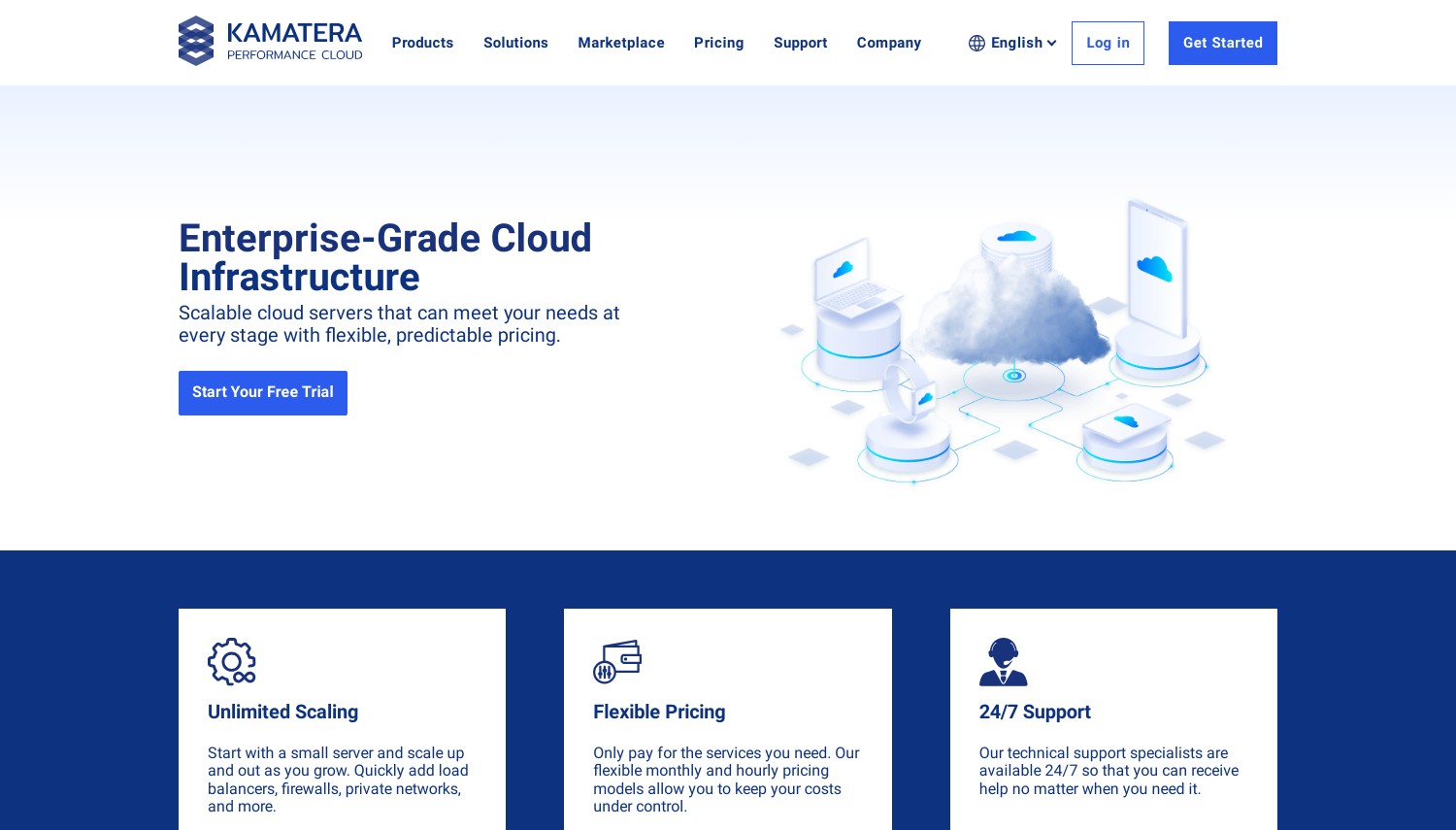
SaaS applications have weird resource profiles. Your API server might need 16GB RAM for caching but only 2 CPU cores. Your background worker crunches data and needs 8 cores but barely touches memory. Standard hosting tiers force you to buy resources you'll never use. Kamatera solves this with a configuration slider approach: pick exact vCPUs (1-104), RAM (1GB-512GB), and storage independently. Your monthly bill reflects only what you spec'd.
The per-minute billing granularity makes Kamatera particularly suited to SaaS with variable compute needs. Spin up batch processing servers for an hour, destroy them, pay for exactly 60 minutes. The infrastructure runs Intel Ice Lake processors with NVMe storage (a faster SSD type) across 24 data centers on 4 continents. US coverage is extensive with 8 locations including Atlanta, Chicago, Dallas, and both coasts.
What separates Kamatera from commodity cloud is the 30-day trial with $100 actual credit. That's enough to run a realistic production test, not just spin up a demo. The 99.95% uptime guarantee and 24/7 human support (not chatbots) matter when your SaaS revenue depends on availability. Against general cloud hosting, Kamatera trades interface polish for configuration precision.
Pros
- Configure exact CPU, RAM, storage independently (no wasted resources)
- $100 credit provides genuine production testing runway
- Per-minute billing for short-lived compute tasks
- 24 data centers spanning Americas, Europe, Asia-Pacific
Cons
- Unmanaged infrastructure requires server administration knowledge
- Interface works but feels utilitarian compared to DigitalOcean
- Smaller ecosystem means fewer third-party integrations
Pricing: Entry at $4/mo for 1 vCPU, 1GB RAM, 20GB SSD. Production example: 4 vCPU, 8GB RAM, 100GB NVMe runs $35-50/mo depending on options. Additional bandwidth at $0.01/GB. Hourly servers billed per-minute with no minimum commitment.
Best for: SaaS teams with DevOps capability who need precise resource allocation to match specific workload profiles.
Skip if: You want managed services or prefer polished interfaces over configuration flexibility.
Kamatera's value shows up in your AWS bill comparison. When you're paying exactly for 8GB RAM instead of the 16GB tier AWS forces, the math works out over time. The trial period lets you validate performance with real data.
2. Cloudways

 3.4k+
4.5
Positive
Positive
3.4k+
4.5
Positive
Positive




| Storage | Cpu | Ram | Bandwidth | |
|---|---|---|---|---|
| 25 GB | 1 x 1GHz | 1 GB | 1 TB | View Plan |
| 25 GB | 1 core | 1 GB | 1 TB | View Plan |
| 32 GB | 1 core | 1 GB | 1 TB | View Plan |
Cloudways: Best Managed Platform for SaaS Teams
Starting at $11/mo | Multiple cloud backends | 3-day free trial
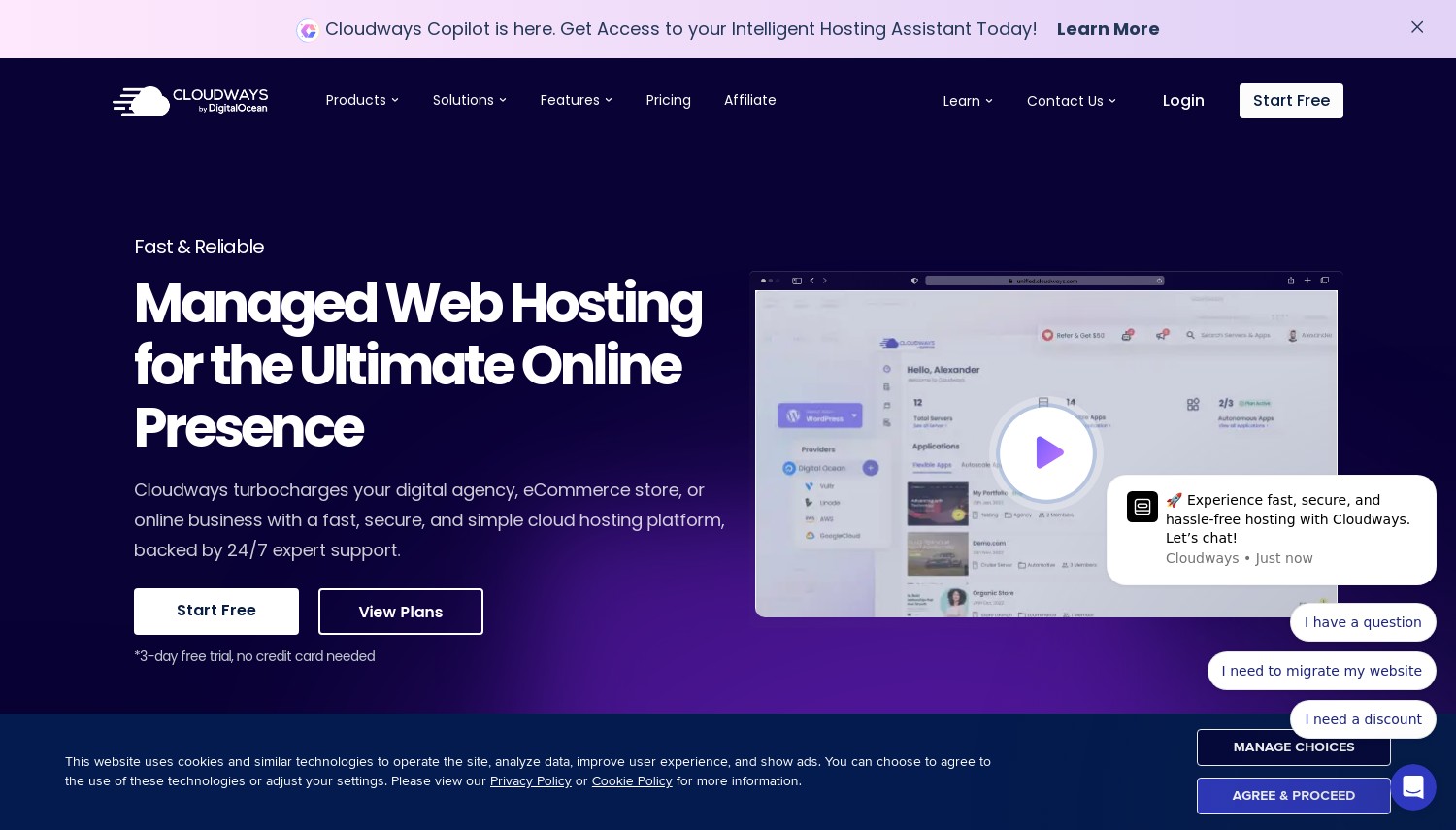
Your SaaS startup has limited runway. Spending it on DevOps when you should be building product kills companies. Cloudways removes this tradeoff by providing a management layer over serious infrastructure. Pick your backend (DigitalOcean, Vultr, AWS, or Google Cloud), and Cloudways handles server hardening, automated backups, security patches, and SSL provisioning. You keep SSH access when needed, but most days you won't touch a terminal.
The platform excels at deployment workflows that SaaS teams actually need. One-click staging environments let you test before pushing to production. Git integration automates deployment on push. Their Object Cache Pro (typically $95/mo elsewhere) comes free on 4GB+ servers, accelerating PHP and WordPress-based SaaS dashboards. For agencies building client SaaS products, team collaboration features and white-label options add practical value.
Pricing transparency matters here. A 1GB DigitalOcean server through Cloudways costs $11/mo versus $4/mo directly. The $7/mo premium covers management, support, and the simplified interface. AWS-backed servers start at $36+/mo, making economic sense primarily for compliance-driven enterprises. Compared to managing your own infrastructure, the question is whether your hourly rate exceeds $7/mo worth of server maintenance. For most SaaS teams, it does.
Pros
- Choose infrastructure backend from 5 major cloud providers
- Pay-as-you-go with no long-term contracts (suits SaaS cash flow)
- Object Cache Pro included free on 4GB+ servers
- Built-in staging and Git deployment workflows
Cons
- Management premium adds $7+/mo over direct cloud pricing
- Only 3-day trial (tight for production testing)
- No email hosting included (need third-party service)
Pricing: DigitalOcean 1GB at $11/mo, 2GB at $24/mo. Vultr 1GB at $14/mo. AWS Small at $36.51/mo. Annual billing saves 25%. All include unlimited applications, free SSL, and 24/7 support.
Best for: SaaS startups who want enterprise cloud infrastructure without hiring a DevOps engineer.
Skip if: You're comfortable managing servers directly and want to minimize hosting costs.
Cloudways works when your time has value. The management layer pays for itself when you calculate what server administration actually costs in founder hours. The short trial period is the main frustration.
3. Digital Ocean
 1.9k+
3.7
Neutral
Neutral
1.9k+
3.7
Neutral
Neutral
| Storage | Cpu | Ram | Bandwidth | |
|---|---|---|---|---|
| 25 GB | 1 core | 1 GB | 1 TB | View Plan |
| 50 GB | 1 core | 2 GB | 2 TB | View Plan |
| 80 GB | 2 cores | 4 GB | 4 TB | View Plan |
DigitalOcean: Best Developer Experience for SaaS
Starting at $4/mo | 99.99% uptime SLA | $200 free credits
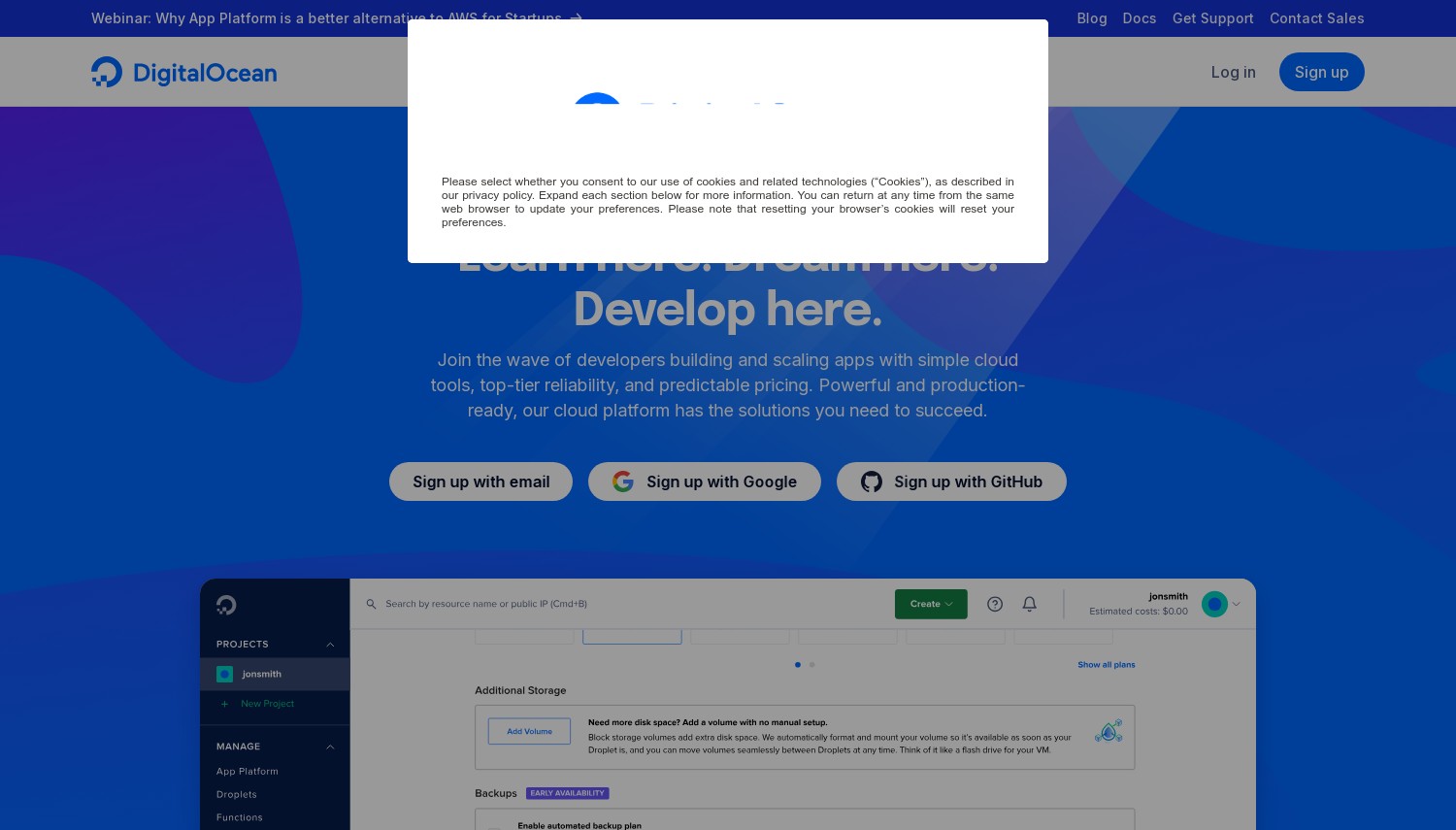
SaaS infrastructure eventually needs more than a single VM. You'll want load balancers, managed databases, object storage, maybe Kubernetes. Some providers piece together these services awkwardly. DigitalOcean built them as a coherent platform. The App Platform handles container deployment. Managed PostgreSQL and MySQL eliminate database administration. Spaces provides S3-compatible storage at predictable rates. Everything integrates through a consistent API.
The 99.99% uptime SLA matters contractually. When your SaaS promises enterprise customers specific availability, your hosting SLA becomes your ceiling. DigitalOcean's 17 data centers cover major markets, and the January 2026 billing update to per-second granularity (60-second minimum) suits SaaS economics perfectly. Spin up CI/CD runners, batch processors, or test environments and pay precisely for minutes used.
New accounts receive $200 in credits valid for 60 days. That's enough to run a substantial production workload and validate performance before committing. Against Vultr in this comparison, DigitalOcean costs slightly more at entry but delivers better documentation and ecosystem tooling. The community tutorials actually help when debugging at 2am.
Pros
- 99.99% uptime SLA (rare at this price tier)
- $200 free credits for 60 days (serious testing runway)
- Integrated platform: compute, databases, storage, Kubernetes
- Per-second billing reduces waste on short-lived workloads
Cons
- Entry shared CPU tier less suitable for production SaaS
- Dedicated CPU plans start at $63/mo
- Backups add 20-30% to Droplet cost
Pricing: Shared CPU from $4/mo (1GB RAM, 1 vCPU). Premium Droplets from $7/mo with NVMe. Dedicated CPU from $63/mo (8GB RAM, 2 vCPU). Managed PostgreSQL from $15/mo. App Platform from $5/mo per container. All include pooled egress across team.
Best for: Developer-founded SaaS teams wanting production-grade infrastructure with excellent documentation.
Skip if: You need absolute lowest costs or want managed support beyond documentation.
DigitalOcean hits the sweet spot for SaaS teams with technical founders. The platform scales from MVP to series A without migration pain, and the SLA gives you something to point customers toward.
Vultr: Best Global Footprint on a Budget
Starting at $2.50/mo | 32 data centers | Per-second billing
SaaS for international customers requires servers close to users. API latency from Virginia to Singapore kills user experience. Vultr's 32 data center locations across 19 countries exceed every provider in this comparison. Position compute near any major market without the complexity of multi-cloud architecture. The aggressive entry pricing ($2.50/mo for basic VPS) lets early-stage startups deploy globally without crushing burn rate.
The recent VX1 tier deserves attention for SaaS workloads. Vultr claims 82% better performance per dollar compared to major hyperscalers, with dedicated CPU resources, faster networking (up to 50Gbps), and instant provisioning under 15 seconds. Their free Kubernetes control plane saves the $70+/mo that AWS charges for equivalent management. Built-in DDoS protection and customizable firewalls handle security basics without additional services.
Vultr operates as pure infrastructure. You get root access and everything that implies: responsibility for updates, security hardening, and troubleshooting. Documentation exists but assumes Linux competence. The ecosystem tooling (Terraform, Ansible integrations) works well for teams with DevOps experience. Beginners will struggle. Against DigitalOcean, Vultr wins on price and locations but loses on polish and community resources.
Pros
- 32 global data centers (largest footprint in this comparison)
- Entry at $2.50/mo undercuts all competitors
- Free Kubernetes control plane (saves $70+/mo vs. AWS)
- VX1 tier claims 82% better price/performance than hyperscalers
Cons
- Unmanaged requires full server administration capability
- Interface less refined than DigitalOcean
- No free trial (pay from first deployment)
Pricing: Regular Performance from $2.50/mo (512MB RAM). High Frequency from $6/mo (1GB RAM, 3GHz+ CPUs). VX1 General Purpose from $43.80/mo. Block storage at $1/10GB. First 1TB egress free monthly, overage at $0.01/GB.
Best for: Technically capable SaaS teams needing global server presence at startup-friendly prices.
Skip if: You want managed infrastructure or extensive hand-holding.
Vultr makes sense when geography matters but budget is tight. The 32-location footprint handles international SaaS requirements without the complexity of managing multiple cloud providers. Bring your own DevOps skills.
4. Linode
 242
3.0
Neutral
Neutral
242
3.0
Neutral
Neutral



| Storage | Cpu | Ram | Bandwidth | |
|---|---|---|---|---|
| 25 GB | 1 core | 1 GB | 1 TB | View Plan |
| 50 GB | 1 core | 2 GB | 2 TB | View Plan |
| 80 GB | 2 cores | 4 GB | 4 TB | View Plan |
Linode (Akamai): Best for Predictable Billing
Starting at $5/mo | Flat-rate pricing | DDoS protection included
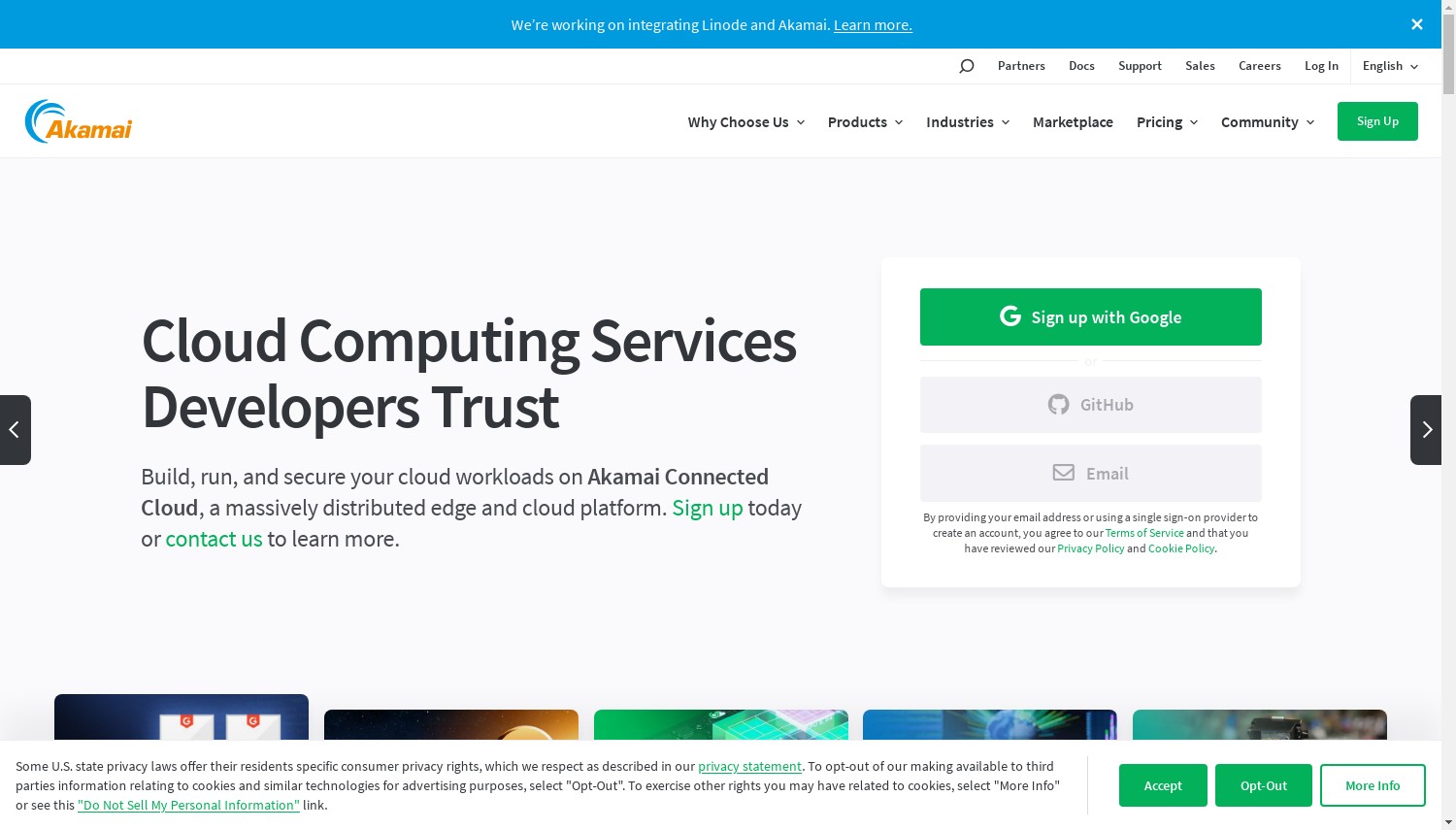
Cloud billing surprises kill SaaS unit economics. That autoscaling cluster you thought cost $200/mo suddenly invoices at $800 because of egress charges you didn't anticipate. Linode takes a different approach: flat-rate monthly pricing with generous included bandwidth. Each plan bundles compute, storage, and transfer into one predictable number. The 1GB Shared CPU plan runs $5/mo and includes 1TB transfer. No calculator required.
The 2024 Akamai acquisition brought infrastructure upgrades. DDoS protection now uses Akamai's global security network at no extra cost. Premium plans include higher NVMe throughput. The 99.99% uptime SLA matches DigitalOcean's guarantee. LKE (managed Kubernetes) provides orchestration at reasonable rates ($60/mo for HA control plane), though enterprise features cost $300/mo per cluster.
Linode works for SaaS teams wanting simpler financial planning. The flat-rate model eliminates surprise bills. The tradeoff is less granular pricing flexibility. You can resize instances up or down, but the lack of per-second billing means short-lived workloads cost more than on DigitalOcean or Vultr. For sustained production loads where predictability beats precision, the math favors Linode.
Pros
- Flat-rate billing with bundled egress (no surprise charges)
- DDoS protection included via Akamai's network
- 99.99% uptime SLA
- Managed Kubernetes from $60/mo (HA control plane)
Cons
- Hourly billing (not per-second) costs more for short tasks
- Dedicated CPU starts at $30/mo
- Fewer data centers than Vultr or DigitalOcean
Pricing: Shared CPU from $5/mo (1GB RAM, 1TB transfer). Dedicated CPU from $30/mo (4GB RAM, 4TB transfer). High Memory from $60/mo (24GB RAM). Premium plans add NVMe performance boost. Overage at $0.005/GB beyond pooled quota.
Best for: SaaS teams who value billing predictability over granular cost optimization.
Skip if: You run many short-lived workloads or need the absolute lowest entry price.
Linode rewards teams who prefer knowing exactly what hosting costs next month. The Akamai backing adds infrastructure credibility when pitching enterprise customers. The simplicity has value.
5. InMotion Hosting
 2.8k+
4.0
Positive
Neutral
2.8k+
4.0
Positive
Neutral
| Storage | Cpu | Ram | Bandwidth | |
|---|---|---|---|---|
| 30 GB | 1 core | 1 GB | 2 TB | View Plan |
| 50 GB | 2 cores | 2 GB | 3 TB | View Plan |
| 60 GB | 2 cores | 2 GB | 4 TB | View Plan |
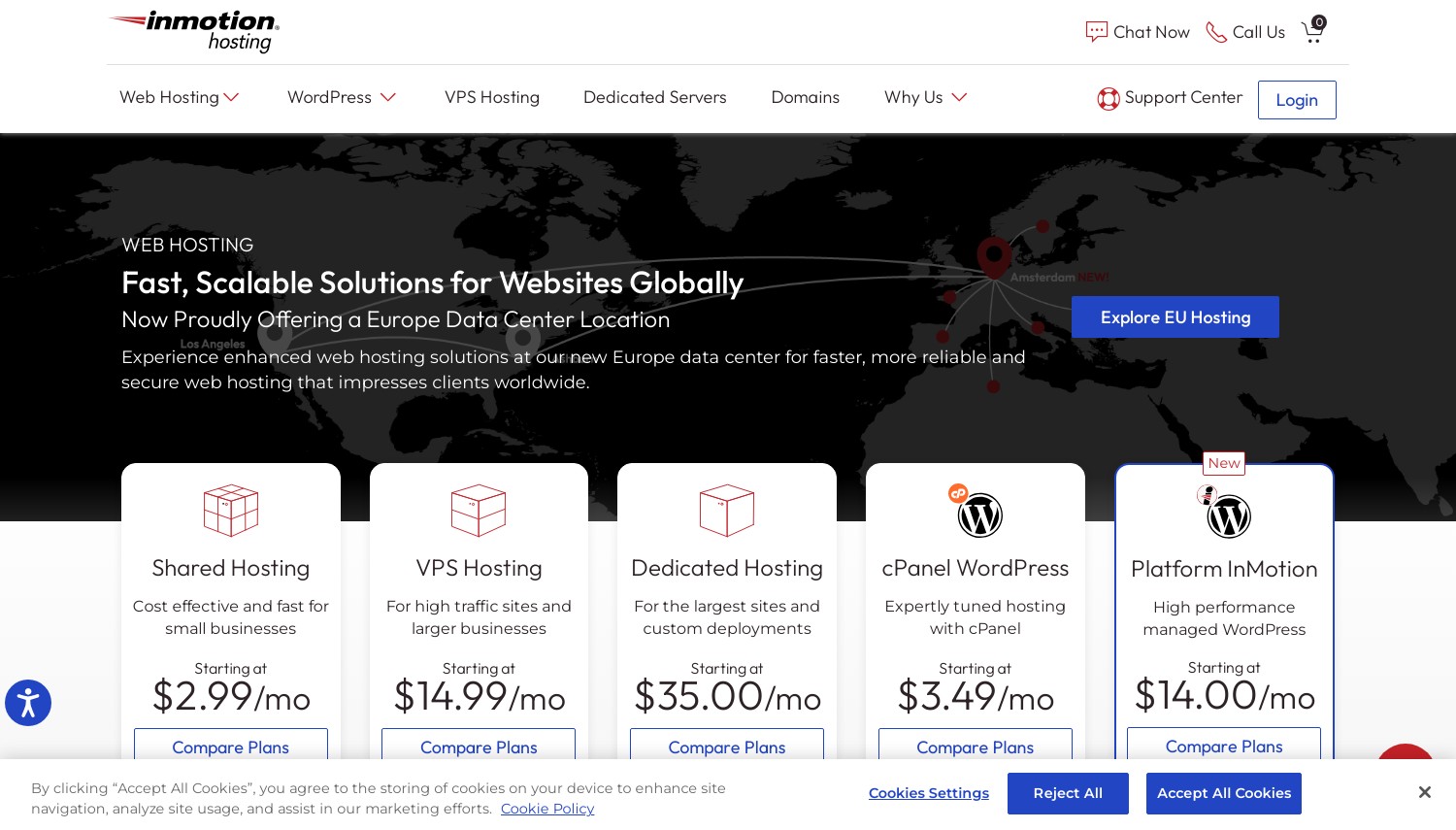
InMotion Hosting: Best for Managed VPS with Support
Starting at $14.99/mo | 90-day money-back | Professional services included
Some SaaS teams don't have anyone who wants to manage servers. The developer time spent debugging Nginx configurations or optimizing MySQL could ship product features instead. InMotion Hosting addresses this with genuinely managed VPS where their team handles server-level issues. The Premier Care tier adds direct access to senior administrators who escalate complex problems internally. You focus on application code; they handle infrastructure.
The professional services inclusion stands out. All VPS plans include 2-4 hours of Launch Assist covering SSL installations, optimization tool setup, and PCI compliance configuration. That's real consulting time typically billed at $100+/hour elsewhere. The Premier Care tier adds 300GB of automated backup storage with point-and-click restore. Monarx security monitoring watches for malware and suspicious behavior proactively.
Pricing reflects the management layer. Entry at $14.99/mo (self-managed) or $25.50/mo (with cPanel) exceeds commodity VPS providers. The 90-day money-back guarantee on 6+ month terms provides serious evaluation runway. Renewal increases apply, so calculate year-two costs before committing. Against Cloudways, InMotion offers more hands-on support but less infrastructure choice. For SaaS teams prioritizing support quality over cost optimization, the tradeoff works.
Pros
- 2-4 hours professional services included (SSL, optimization, compliance)
- 90-day money-back on 6+ month plans
- Premier Care provides senior admin escalation path
- 300GB backup storage on managed tiers
Cons
- Entry pricing higher than IaaS alternatives
- Renewal rates increase after promotional term
- Fewer data center locations than global IaaS providers
Pricing: Self-managed from $14.99/mo. cPanel VPS from $25.50/mo. Premier Care (white-glove managed) pricing on request. All include free SSL, DDoS protection, and professional services hours. Month-to-month available at higher rates.
Best for: SaaS teams wanting hands-on managed support without building internal DevOps capability.
Skip if: You're comfortable with self-managed infrastructure or prioritize cost over support.
InMotion Hosting sells peace of mind. The professional services hours alone justify entry pricing for teams who'd otherwise spend days figuring out server configuration. When your SaaS revenue depends on uptime you don't personally guarantee, managed support has value.
6. OVHcloud
 6.7k+
2.3
Neutral
Neutral
6.7k+
2.3
Neutral
Neutral


OVHcloud: Best for EU Data Sovereignty
Starting at $4.20/mo | GDPR-compliant | Unlimited traffic
Enterprise SaaS customers increasingly care where data lives. GDPR compliance isn't just checkbox exercise. European clients want European data centers operated by European companies, not US providers subject to CLOUD Act jurisdiction. OVHcloud, headquartered in France and operating their own data centers, provides genuine EU data sovereignty. For SaaS targeting European enterprise, this removes a sales objection.
The January 2026 VPS refresh offers competitive specs. New plans start at $4.20/mo with NVMe storage delivering 6x faster speeds than standard SSDs. Higher tiers reach 24 vCores, 96GB RAM, and 3 Gbps guaranteed bandwidth. Notably, all plans except Asia-Pacific locations include unlimited traffic, simplifying bandwidth planning. The VPS-1 Local Zone deployment now spans 15+ cities for reduced latency positioning.
OVHcloud's 40+ data centers span Europe extensively, with additional presence in North America, Asia-Pacific, and emerging markets. The 99.9% SLA sits slightly below DigitalOcean and Linode's 99.99% guarantees. Premium backup options with week-old restore points and manual snapshots cost extra. Against US-based providers, OVHcloud trades some platform polish for genuine GDPR compliance and EU data residency.
Pros
- EU data sovereignty (GDPR-compliant, CLOUD Act-exempt)
- Unlimited traffic on most plans (except APAC)
- NVMe storage standard with 6x SSD performance
- 40+ data centers with extensive European coverage
Cons
- 99.9% SLA (vs. 99.99% from US competitors)
- APAC locations have 1-4TB traffic caps
- Premium backup features cost extra
Pricing: VPS 2026 from $4.20/mo (2 vCores, up to 4GB RAM, NVMe). Higher tiers scale to 24 vCores, 96GB RAM with pricing on their configurator. Daily backup included free. Premium backup with snapshots available. Bandwidth 400Mbps-3Gbps depending on tier.
Best for: SaaS companies selling to European enterprise customers with data residency requirements.
Skip if: You primarily serve US/APAC markets or need the highest uptime SLAs.
OVHcloud solves a specific problem: European customers asking where their data lives. When "hosted on AWS Frankfurt" doesn't satisfy legal teams, OVHcloud's genuinely European infrastructure provides the answer. The unlimited traffic simplifies pricing for data-heavy SaaS.
7. Hostinger
 63.2k+
4.6
Positive
Positive
63.2k+
4.6
Positive
Positive

| Storage | Cpu | Ram | Bandwidth | |
|---|---|---|---|---|
| 200 GB | 2 cores | 3 GB | Unlimited | View Plan |
| 250 GB | 4 cores | 6 GB | Unlimited | View Plan |
| 300 GB | 6 cores | 12 GB | Unlimited | View Plan |
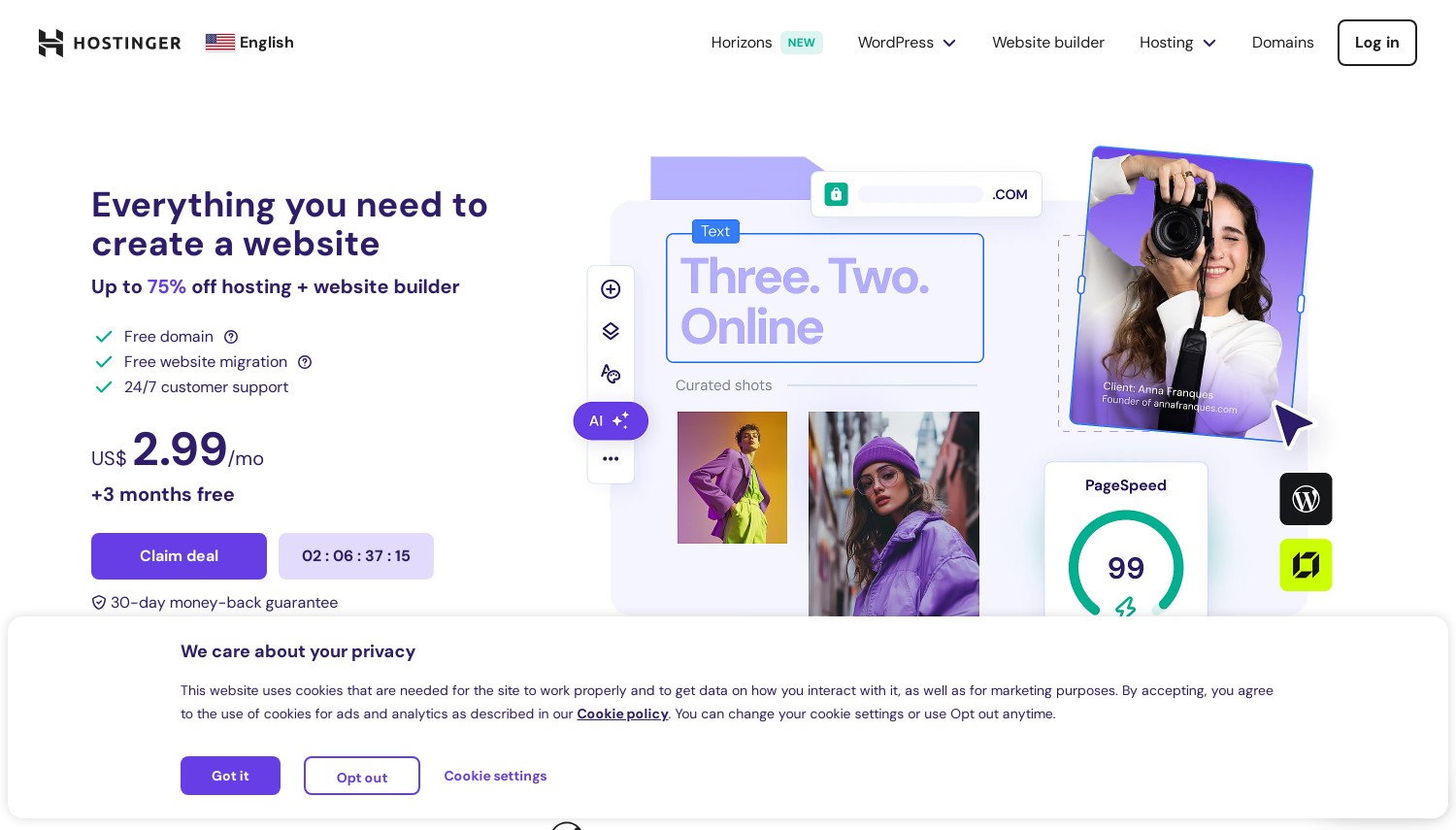
Hostinger: Best Budget Entry Point for MVPs
Starting at $4.99/mo (VPS) | AI assistant | 30-day money-back
MVP stage SaaS needs cheap hosting that doesn't embarrass you with downtime. Hostinger delivers both. Their KVM 1 VPS plan provides 4GB RAM on AMD EPYC processors with NVMe storage for $4.99/mo. That's double the RAM you'll find at most entry tiers. The visual control panel and Kodee AI assistant make server management approachable for developers who've never SSH'd into a production box.
The hPanel interface handles common tasks graphically: firewall rules, backup scheduling, OS installation. Kodee explains error messages in plain English and suggests fixes. This accessibility matters when you're a small team without dedicated ops and debugging server issues steals time from product development. Server locations span North America, Europe, Asia, and South America, letting you position closer to early users.
Pricing structure requires attention. The $4.99/mo rate demands a 48-month commitment paid upfront. Monthly billing runs $9.99/mo. When your term ends, renewal hits $9.99/mo regardless. That's roughly double promotional pricing. For MVP validation where you might pivot, the long commitment creates risk. Against Vultr's month-to-month flexibility, Hostinger trades pricing predictability for higher exit costs.
Pros
- 4GB RAM on entry plan (more generous than competitors)
- AI assistant explains issues in plain language
- AMD EPYC processors with NVMe standard
- Visual panel removes command-line barriers
Cons
- Promotional rate requires 48-month upfront payment
- Renewal at $9.99/mo doubles the promo price
- Daily backups cost additional $6/mo
Pricing: KVM 1 at $4.99/mo promo, $9.99/mo renewal (1 vCPU, 4GB RAM, 50GB NVMe, 4TB bandwidth). KVM 2 at $6.99/mo promo (2 vCPU, 8GB RAM). KVM 4 at $9.99/mo promo (4 vCPU, 16GB RAM). Cloud hosting from $6.99/mo with dedicated IP.
Best for: First-time SaaS founders who want capable infrastructure without learning server administration.
Skip if: You need month-to-month flexibility or want to avoid renewal price jumps.
Hostinger works for MVP validation when you can commit upfront. The RAM-to-cost ratio beats competitors, and the visual tools eliminate the DevOps learning curve. Calculate total 4-year cost before signing.

How to Choose SaaS Hosting
Selecting hosting for SaaS differs from picking a web server. Your infrastructure choice affects product performance, operating costs, and scalability ceiling. Here's what actually matters:
- Match infrastructure to your team's capabilities - No DevOps experience? Managed platforms like Cloudways or InMotion save founder time. Technical team? Raw infrastructure from DigitalOcean or Vultr costs less per resource.
- Evaluate uptime SLAs contractually - Enterprise SaaS customers want uptime guarantees. Your hosting SLA becomes your ceiling. DigitalOcean and Linode offer 99.99%; OVHcloud sits at 99.9%. That 0.09% difference equals 8 hours of additional allowed downtime annually.
- Consider geographic requirements - Serving global users? Vultr's 32 locations beat everyone. EU data sovereignty matters? OVHcloud provides genuine compliance. Most SaaS can start with one region and expand.
- Plan for billing granularity - Usage-based SaaS economics need matching hosting. Per-second billing (DigitalOcean, Vultr) suits variable workloads. Flat-rate (Linode) suits predictable loads and simpler accounting.
- Factor in scaling needs - MVP-stage: raw specs per dollar matter most. Growth-stage: scaling ease and integration options matter. Kamatera's precise configuration helps when you know your requirements. DigitalOcean's platform approach helps when requirements evolve.
For most SaaS startups, DigitalOcean provides the best balance of developer experience, platform completeness, and SLA guarantees. The $200 credit removes risk from evaluation. If budget is paramount, Vultr delivers capable infrastructure at the lowest entry cost. If you want someone else managing servers, Cloudways adds value proportional to your hourly rate.
Frequently Asked Questions
Can I host a SaaS application on shared hosting?
Technically yes, but you shouldn't. Shared hosting lacks the resource guarantees, scaling capability, and uptime SLAs that paying customers expect. Even basic SaaS with 100 users will hit resource limits that cause timeout errors. Start with at least VPS or cloud hosting where you control the resources.
Which hosting provider has the best uptime for SaaS?
DigitalOcean and Linode (Akamai) both offer 99.99% uptime SLAs backed by service credits. That translates to roughly 52 minutes of allowed downtime annually. Vultr provides strong informal reliability without the formal SLA guarantee. For SaaS where uptime matters contractually, prioritize providers with documented guarantees.
How much does SaaS hosting typically cost?
Early-stage SaaS with modest traffic runs $20-100/mo on VPS or cloud hosting. Growing applications with multiple services (API, workers, databases) typically spend $100-500/mo. Scaling SaaS serving thousands of concurrent users can exceed $1,000/mo. The key is matching infrastructure to actual usage, not overprovisioning "just in case."
Do I need Kubernetes for my SaaS application?
Most early-stage SaaS doesn't need Kubernetes. The orchestration complexity exceeds its benefits until you're managing 5+ services or need sophisticated auto-scaling. Start with simpler deployments (single VPS, managed platforms like Cloudways). Migrate to Kubernetes when scaling actually requires it, not because it sounds impressive.
Final Verdict
For most SaaS applications, DigitalOcean provides the optimal combination of developer experience, integrated services, and uptime guarantees. The 99.99% SLA, $200 free credits, and coherent platform (compute, databases, storage, Kubernetes) support growth from MVP through scale. Cloudways makes sense when you'd rather pay $7/mo management premium than spend founder hours on server administration. Vultr wins the budget category with $2.50/mo entry and 32 global locations for international SaaS.
Teams selling to European enterprise should seriously consider OVHcloud for genuine EU data sovereignty. Kamatera shines when your workload has unusual resource requirements that standard tiers waste money on. Hostinger offers the most RAM per dollar for MVP validation, though the 48-month commitment creates lock-in.
If you're considering VPS hosting more broadly, or need general cloud hosting beyond SaaS-specific requirements, our dedicated comparisons cover additional providers and use cases.