
Die sichersten Webhosting-Anbieter (2026): oben 10 Verglichen - DEUTSCH
Das Anti-Bot-System von SiteGround blockiert grob 670 Millionen Brute-Force-Versuche pro Tag in seinem Netzwerk. SShield von ScalaHosting behauptet, zu stoppen 99.998% von Web-Angriffen in Echtzeit. Der KI-Malware-Scanner von Hostinger wurde erwischt 95% von Testbedrohungen vor der Ausführung. Das sind keine Marketingdekorationen. Dies sind die tatsächlichen Zahlen, die Käufer wann abwägen sollten "sicheres Webhosting" wird eher zur Kaufentscheidung als zum Slogan. Shared-Hosting-Umgebungen sind nach wie vor der häufigste Angriffsvektor im WordPress-Ökosystem.
Schnelle Antwort: SiteGround gewinnt durch die reine Breite der eingebauten Verteidigungen (benutzerdefinierte WAF, KI-Anti-Bot, Tägliche Backups mit 30 Kopien). ScalaHosting gewinnt bei der Isolation dank der Echtzeitblockierung von SPanel und SShield. Hetzner Gewinne für Käufer, die eine DSGVO-Standard-europäische Gerichtsbarkeit ohne Zusatzabonnements benötigen. Für anspruchsvolle WordPress-Sites mit Budgetspielraum, WPX bündelt die Malware-Entfernung als kostenlosen Service und nicht als kostenpflichtiges Add-on.
Springe zu: SiteGround · · HostArmada · · Hostinger · · ScalaHosting · · DreamHost · · A2 Hosting · · WPX · · In Bewegung · · Hetzner · · IONIC · · So wählen Sie aus · · FAQ
Zuletzt überprüft: April 2026. Preisgestaltung, Ansprüche auf Sicherheitsmerkmale, und Verlängerungszahlen, die diesen Monat anhand der offiziellen Seiten jedes Anbieters überprüft wurden.
Wie wir diese Anbieter ausgewählt haben
Jeder Host auf dieser Liste musste auf seiner aktuellen Produktseite eine überprüfbare Liste der Sicherheitsfunktionen auf Plattformebene veröffentlichen. Wenn ein Anbieter nur erwähnt "Erweiterte Sicherheit" ohne die Komponenten zu benennen (der WAF-Anbieter, das DDoS-Abwehrsystem, der Malware-Scanner, das Backup-Aufbewahrungsfenster), es hat den Durchbruch nicht geschafft. Vages Marketing ist insbesondere in der Sicherheitskategorie ein Warnsignal.
Die Sortierung erfolgte nach drei gewichteten Kriterien. Zuerst, Was ist standardmäßig enthalten und was ist ein kostenpflichtiges Add-on?, weil ein Host, der USD berechnet 3 pro Monat für Malware-Scans ist nicht das gleiche Produkt wie eines, das es bündelt. Zweite, Aufbewahrungsberechnung für Backups: wie viele Exemplare, wie viele Tage, und ob Wiederherstellungen kostenlos sind. Dritte, Transparenz auf der DDoS-Ebene (Herstellername und welche Netzwerkschichten abgedeckt werden). Wir haben die Liste auf zehn begrenzt und drei Kompromisse akzeptiert. Wir haben keine Live-Angriffssimulationen durchgeführt. Die Verlängerungszahlen ändern sich vierteljährlich, Deshalb haben wir das bestätigte Datum notiert. Die Bewertungen des Bewertungsaggregators wurden eher als unterstützendes Signal als als primäres Ranking verwendet.
Eine Ausnahme, die es wert ist, erwähnt zu werden. Zwei bekannte Shared-Hosts überlebten die Kürzung der Plattformfunktionen nicht, da ihre Sicherheitsseiten nur aufgelistet waren "kostenloses SSL" als Sicherheitsmerkmal. SSL spielt eine wichtige Rolle 2026, keine Verteidigungsfähigkeit.
| Hosting-Anbieter | Bewertungen | Gesamtbewertung | Gesicherte gemeinsame Pläne von |
|---|---|---|---|
1  SiteGround SiteGround
|
29.1k+ |

|
$3.41 / mo. JETZT -81% |
2  HostArmada HostArmada
|
1.1k+ |
|
$1.49 / mo. -85% JETZT |
3  Hostinger Hostinger
|
63.2k+ |

|
$1.95 / mo. 80% aus |
4  ScalaHosting ScalaHosting
|
2.2k+ |
|
$2.95 / mo. -75% |
5  DreamHost DreamHost
|
7.7k+ |
|
$2.59 / mo. Blitzangebot |
6  A2 Hosting A2 Hosting
|
3.4k+ |
|
$1.95 / mo. JETZT -76% |
7  WPX-Hosting WPX-Hosting
|
3.6k+ |
|
$24.99 / mo. 80% jetzt los |
8  InMotion Hosting InMotion Hosting
|
2.8k+ |

|
$1.99 / mo. -75% |
9  Hetzner Online Hetzner Online
|
2.3k+ |

|
$1.75 / mo. |
10  IONIC | ionos.com IONIC | ionos.com
|
38.1k+ |
|
$1.00 / mo. |
1. SiteGround
 29.1k+
4.8
Positiv
Positiv
29.1k+
4.8
Positiv
Positiv








| Lager | Bandbreite | Panel | Preis | |
|---|---|---|---|---|
| 10 GB | Unbegrenzt | cPanel | $3.41 / mo. | Plan anzeigen |
| 20 GB | Unbegrenzt | cPanel | $5.69 / mo. | Plan anzeigen |
| 40 GB | Unbegrenzt | cPanel | $9.11 / mo. | Plan anzeigen |
SiteGround – Am besten für die mehrschichtige Plattformverteidigung geeignet
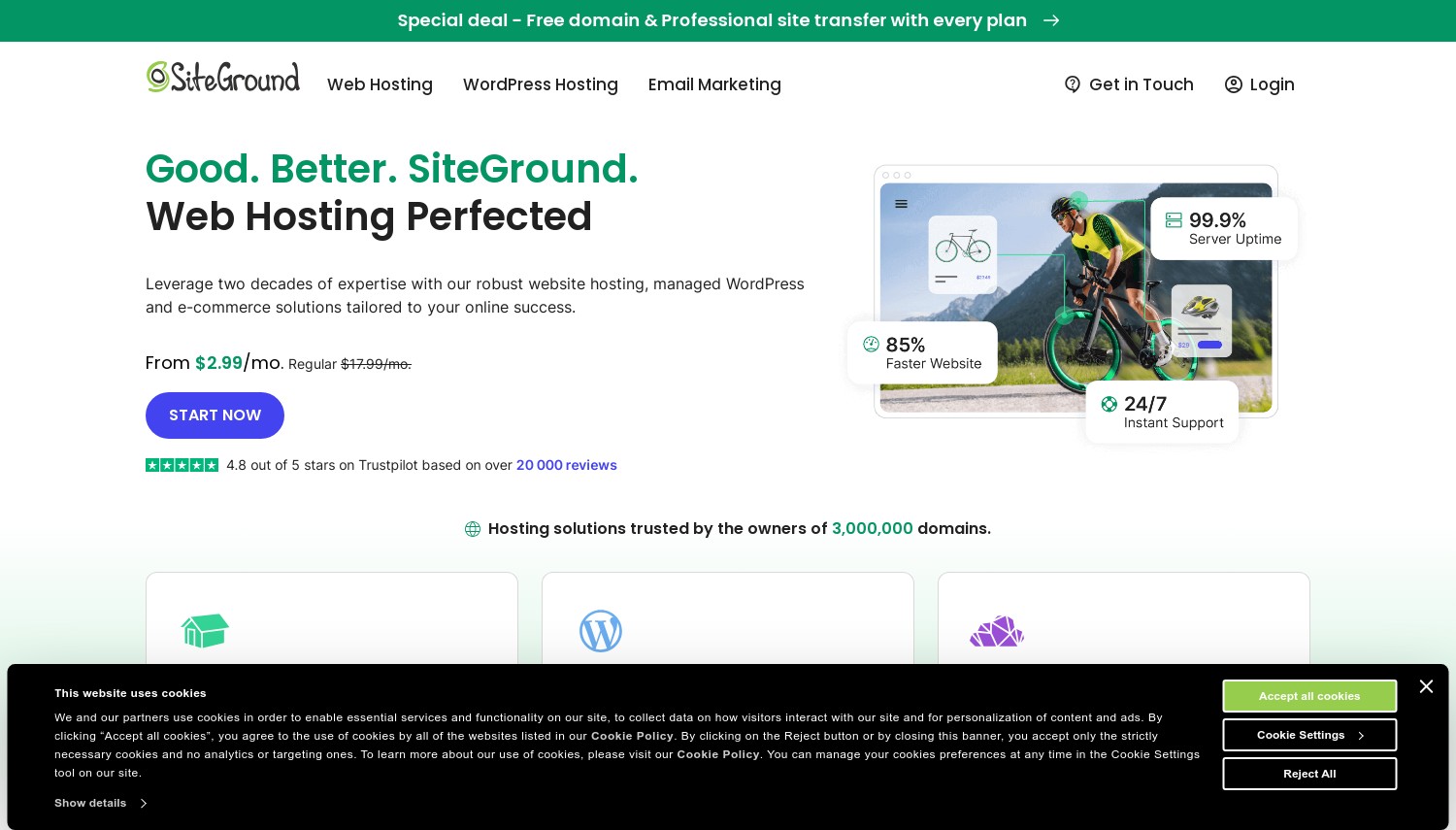
StartUp ab 2,99 USD/Monat Einführung, Erneuerung bei 17,99 USD/Monat. 10 GB Speicher, 10,000 monatliche Besuche, kostenloses SSL, tägliche Backups mit 30 Kopien bleiben erhalten, benutzerdefinierte WAF, KI-Anti-Bot, und eine kostenlose Cloudflare-CDN-Integration für jeden Plan.
Was SiteGround auszeichnet, ist nicht eine einzelne Funktion. Es ist der Stapel. SiteGround führt eine benutzerdefinierte WAF auf Serverebene aus, die neue Regeln pusht, wenn eine Schwachstelle auftritt. An der Spitze befindet sich ein KI-Anti-Bot-System, Blockieren, was das Unternehmen sagt 500,000 zu 2 Millionen Brute-Force-Versuche pro Stunde in der gesamten Infrastruktur. Ein Security Optimizer-Plugin übernimmt die WordPress-spezifische Härtung. Backups laufen täglich mit 30 einbehaltene Kopien, und Wiederherstellungen sind bei jedem Plan, einschließlich StartUp, kostenlos. Die meisten Shared Hosts dieser Preisklasse behalten drei bis sieben Sicherungskopien, nicht dreißig.
Hier sticht SiteGround ins Auge. StartUp springt vom USD um das Sechsfache 2.99 in USD 17.99 wenn das Einführungssemester endet. Das ist US Dollar 6 mehr als die Leistung von InMotion für einen Plan, der nur eine Website im Vergleich zu zehn von InMotion zulässt. Wenn Sie nur eine Site benötigen und WAF und Anti-Bot intensiv nutzen, Dieser Preis übertrifft immer noch den Einsatz der gleichen Abwehrmaßnahmen über Plugins von Drittanbietern. Wenn Sie mehrere Websites benötigen, GrowBig ist der bessere Kauf.
Vorteile:
- 30 tägliche Sicherungskopien bleibt bei jedem Plan mit kostenlosen Wiederherstellungen erhalten
- Benutzerdefinierte WAF mit aktiven Regelaktualisierungen, Keine Plugin-Installation erforderlich
- KI-Anti-Bot blockiert Brute-Force auf Serverebene, bevor WordPress die Anfrage sieht
- Das Security Optimizer-Plugin verarbeitet 2FA, Login-Limits, und Aktivitätsprotokolle
Nachteile:
- StartUp verlängert sich um 6x Einführungspreis
- Nur eine Site auf der Einstiegsebene
- 10 Der GB-Speicher ist für jede seriöse Medienbibliothek knapp
Beste für: Käufer, die Schutz auf Plattformebene wünschen, ohne mit Sicherheits-Plugins jonglieren zu müssen. Überspringen Sie, wenn: Zum Einstiegspreis benötigen Sie mehrere Standorte; Die StartUp Cloud von ScalaHosting oder das Start Dock von HostArmada sind für den gleichen Preis geräumiger.
Urteil: Wählen SiteGround wenn WAF + Anti-Bot + 30-Das Kopieren von Backups in einem Paket ist genau die Kombination, die Sie benötigen, und Sie binden sich ein Jahr lang an einen einzigen Standort. Wenn Sie mehrere Standorte oder Pauschalpreise für die Verlängerung benötigen, WPX Gewinne bei Pauschalverlängerungen und ScalaHosting gewinnt bei der Isolierung pro Standort.
2. HostArmada
 1.1k+
4.9
Positiv
Positiv
1.1k+
4.9
Positiv
Positiv




| Lager | Bandbreite | Panel | Preis | |
|---|---|---|---|---|
| 15 GB | Unbegrenzt | cPanel | $1.49 / mo. | Plan anzeigen |
| 30 GB | Unbegrenzt | cPanel | $2.47 / mo. | Plan anzeigen |
| 40 GB | Unbegrenzt | cPanel | $2.96 / mo. | Plan anzeigen |
HostArmada – Am besten für preisgünstigen Imunify360-Zugang
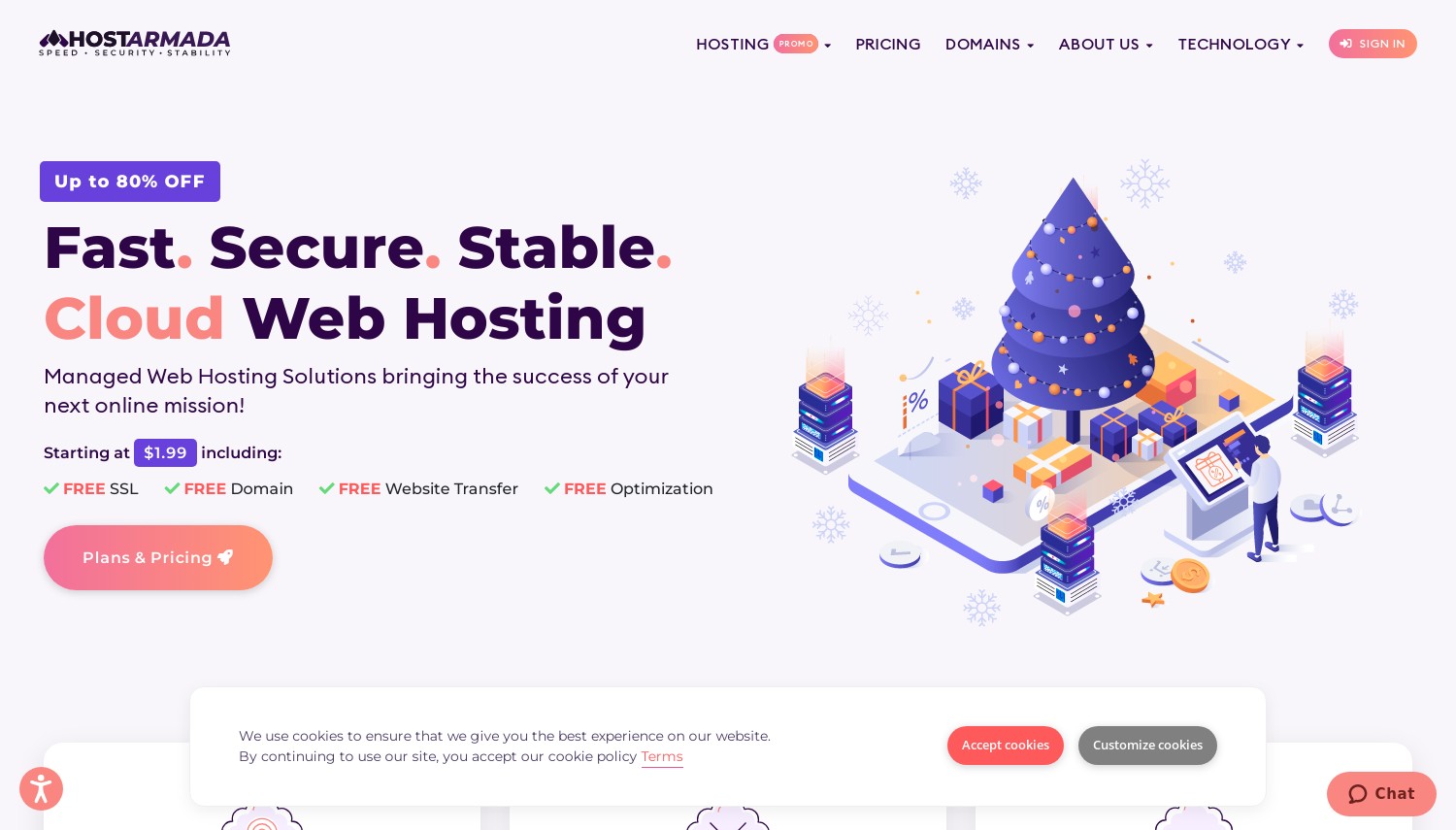
Beginnen Sie mit dem ungewöhnlichen Teil. HostArmada bündelt Imunify360 (eine kommerzielle Sicherheitssuite für Linux-Server) auf Plattformebene auf einer Einführungsstufe von 1,99 USD/Monat. Das ist günstiger als SiteGrounds StartUp und bietet Ihnen eine Malware-Engine, die die meisten Hosts nur im Rahmen verwalteter VPS-Pläne ausliefern.
Start Dock bei 1,99 USD/Monat. Intro, Verlängerung bei ca. 9,95 USD/Monat. Web Warp hebt an 16,45 USD/Monat bei Erneuerung. Die Plattform kombiniert die Malware-Erkennung von Imunify360 mit einer IP-basierten Firewall, die DDoS-Filterung und Reputationslisten für schlechte Bots übernimmt, plus eine separate WAF, die Anforderungsnutzlasten prüft. Die Sicherungen werden täglich ausgeführt, wobei sieben Kopien im Start Dock aufbewahrt werden. NVMe-Speicher ist Standard bei 15 GB bei der Einreise, welches ist 50% mehr Headroom als SiteGround 10 GB.
Ehrliche Einschränkung: HostArmada veröffentlicht keine unabhängigen Verfügbarkeitsdaten auf seiner eigenen Preisseite. Benutzerbewertungen sammeln sich an 4.7-4.8/5 auf den wichtigsten Bewertungsseiten, Das ist konkurrenzfähig, aber nicht die überprüfbare Zahl Dritter, die SiteGround oder Hostinger veröffentlichen. Wenn die Malware-Erkennung auf Plattformebene zu diesem Preis wichtiger ist als die überprüfbare Betriebszeit, Der Handel ist in Ordnung. Wenn Sie beides brauchen, Hostinger kombiniert ähnliche Preise mit öffentlichen Verfügbarkeitszahlen.
Vorteile:
- Imunify360 enthalten zu Shared-Hosting-Preisen
- Drei Sicherheitsebenen: IP-Firewall, WAF, und Malware-Engine
- 15 GB NVMe auf Einstiegsebene (1.5x SiteGrounds StartUp)
- Kostenloser Domaintransfer und 7 Tägliche Backups im Start Dock
Nachteile:
- Die Verlängerung erhöht sich auf der Einstiegsebene etwa um das Fünffache
- Keine öffentlichen Betriebszeitdaten von Drittanbietern
- Geringerer globaler Rechenzentrumsbedarf als SiteGround
Beste für: Käufer, die eine kommerzielle Malware-Suite zu Shared-Hosting-Preisen wünschen. Überspringen Sie, wenn: Sie benötigen eine überprüfbare Verfügbarkeits-SLA-Historie; Hostinger oder SiteGround veröffentlichen transparentere Betriebsdaten.
Urteil: Wählen HostArmada wenn Imunify360 das entscheidende Feature ist. Wenn Sie sonst für SiteLock bezahlen würden, Wordfence Premium, oder MalCare, Die Rechnung hier funktioniert zu Ihren Gunsten. Käufer, denen es egal ist, welche Malware-Engine läuft, sollten einen Vergleich anstellen Hostinger für KI-gesteuertes Scannen zu ähnlichen Preisen.
3. Hostinger
 63.2k+
4.6
Positiv
Positiv
63.2k+
4.6
Positiv
Positiv


| Lager | Bandbreite | Panel | Preis | |
|---|---|---|---|---|
| 100 GB | Unbegrenzt | cPanel | $1.95 / mo. | Plan anzeigen |
| 200 GB | Unbegrenzt | cPanel | $2.95 / mo. | Plan anzeigen |
| 200 GB | Unbegrenzt | cPanel | $3.49 / mo. | Plan anzeigen |
Hostinger – Bestes KI-gesteuertes Scannen zu günstigen Preisen
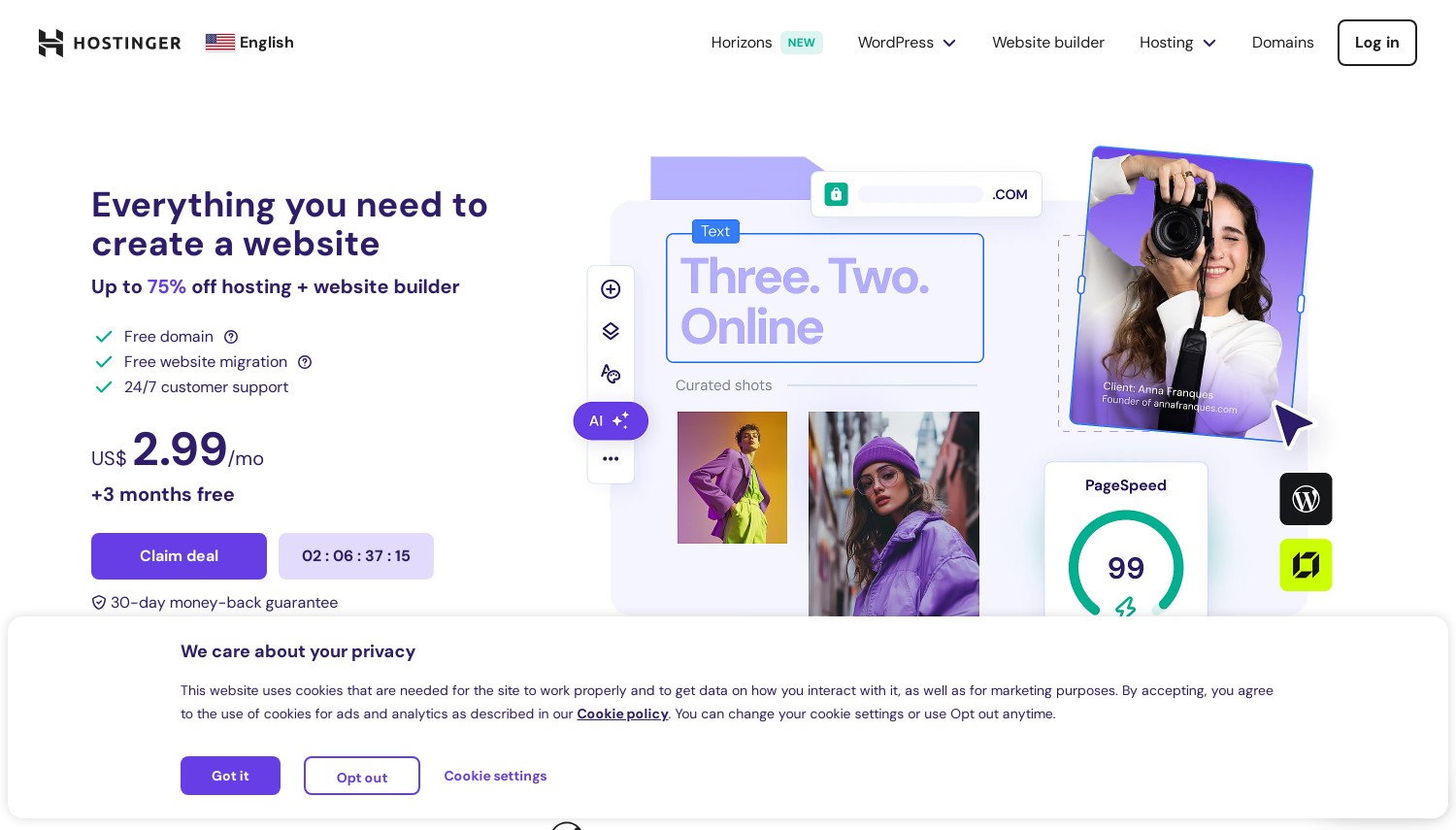
1,99 USD/Monat für eine vierjährige Vorauszahlung auf Premium, Erneuerung bei 10,99 USD/Monat. Das ist eine Verlängerungssteigerung um das 5,5-fache. Jeder Plan wird mit einer hauseigenen WAF und einem KI-gesteuerten Malware-Scanner geliefert, der Dateien in Echtzeit überwacht. Der Cloudflare-DDoS-Schutz läuft auf der Nameserver-Ebene. Kostenloses Let's Encrypt SSL ist im Paket enthalten, und Premium führt wöchentliche Backups durch (täglich auf Business und höher).
Das interessante Teil ist der Scanner. Hostinger berichtet, dass seine KI-Engine grob funktioniert 95% von Drohungen vor der Ausführung durch die Kennzeichnung von Verhaltensanomalien, nicht nur Signatur-Matches. Dieser verhaltensbasierte Ansatz ähnelt eher den Funktionen von EDR-Produkten für Unternehmen als den herkömmlichen cPanel-Antivirenscannern. Die WAF ist ein internes Plug-in und kein Plug-in eines Drittanbieters, Das bedeutet, dass Regelaktualisierungen ohne eine Administratoraktion erfolgen. Hostinger beinhaltet auch Patchstack in verwalteten WordPress-Plänen für automatisiertes CVE-Patching.
Wo Hostinger schwächer dasteht als SiteGround: Der Einstiegsplan liefert nur wöchentliche Backups, nicht täglich. Das ist eine bedeutende Lücke, wenn Sie häufig Inhalte veröffentlichen oder einen kleinen Shop betreiben. Der 5,5-fache Verlängerungssprung ist auch wichtig, wenn Sie im letzten Jahr preissensibel sind. Hetzners Wohnung 3,49 EUR/Monat Die Webhosting-Stufe mit 14-tägigen täglichen Backups ist der offensichtliche Gegenkauf für Käufer, die Überraschungen bei Verlängerungen hassen.
Vorteile:
- KI-Malware-Scanner mit Verhaltenserkennung
- Kostenloser Cloudflare-DDoS-Schutz auf der Nameserver-Ebene
- Patchstack für verwaltete WordPress-Pläne
- 100 GB SSD auf Premium, 25,000 monatliche Besuche
Nachteile:
- Premium-Schiffe wöchentliche Backups, nicht täglich
- Verlängerungserhöhung um das 5,5-fache bei Premium
- Cloudflare DDoS nur auf Nameserver-Ebene bei Einstiegsplänen
Beste für: Käufer, die eine verhaltensbasierte Malware-Erkennung zum günstigsten Einstiegspreis wünschen. Überspringen Sie, wenn: Tägliche Backups des Einstiegsplans sind nicht verhandelbar; SiteGround StartUp liefert sie standardmäßig.
Urteil: Hostinger Verdient den Platz, wenn Sie die Kosten pro Funktion auf dem KI-Scanner optimieren. Wählen SiteGround stattdessen, wenn die Backup-Aufbewahrung die Komplexität der Malware für Ihr Bedrohungsmodell übertrifft. Die beiden liegen preislich näher beieinander, als die meisten Vergleiche zugeben, Und die richtige Wahl hängt davon ab, ob Sie sich von einer unleserlichen Seite schneller erholen würden (SiteGround) oder eine eingebettete Webshell früher erkennen (Hostinger).
4. ScalaHosting
 2.2k+
4.9
Positiv
Positiv
2.2k+
4.9
Positiv
Positiv


| Lager | Bandbreite | Panel | Preis | |
|---|---|---|---|---|
| 10 GB | Unbegrenzt | cPanel | $2.95 / mo. | Plan anzeigen |
| 50 GB | Unbegrenzt | cPanel | $5.95 / mo. | Plan anzeigen |
| 100 GB | Unbegrenzt | cPanel | $9.95 / mo. | Plan anzeigen |
ScalaHosting – Am besten für die Isolierung auf Site-Ebene geeignet
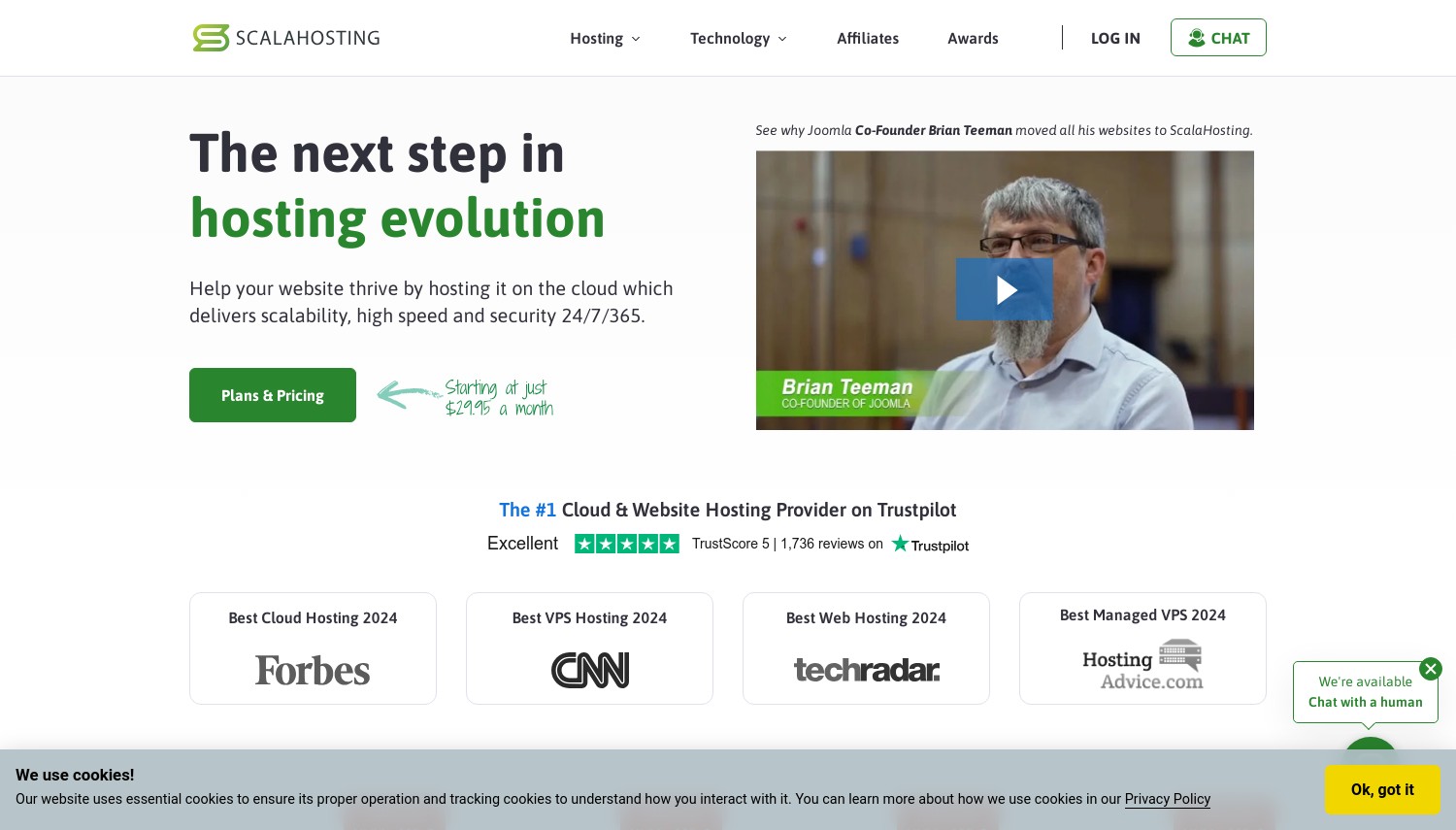
99.998%. Das ist die Blockrate, die ScalaHosting für SShield veröffentlicht, seine hauseigene Echtzeit-Sicherheits-Engine. Es ist die ungewöhnlich schwierige Zahl, die die meisten sicherheitsbewussten Käufer durch Scalas Tür lockt, weil die meisten gemeinsam genutzten Hosts sich weigern, einen quantifizierten Blockierungsprozentsatz festzulegen. Geteilt ab 2,95 USD/Monat Einführung, verwalteter VPS ab 14,95 USD/Monat beim Einstieg.
Jenseits von SShield, Der architektonische Unterschied ist wichtiger als das Marketing. Scala führt SPanel aus (sein proprietäres Bedienfeld) auf verwaltetem VPS auf eine Weise, die den Stack jedes Mandanten isoliert. Die praktische Konsequenz: Eine Kompromittierung einer benachbarten Site wirkt sich nicht wie bei standardmäßigem cPanel-Shared-Hosting über gemeinsam genutzte PHP-Prozesse auf Ihre aus. Diese Isolation ist worauf es hier eigentlich ankommt, nicht der SShield-Prozentsatz. Geteilte Pläne erhalten nicht die vollständige SPanel-Isolation, nur die SShield-Überwachungsschicht.
Ehrlicher Vergleich: zum Managed-VPS-Preis (Einführung: 14,95 USD/Monat), Scala konkurriert direkt mit Hetzners CX23 plus selbstverwaltetes Imunify360, was für einen Käufer, der mit Linux vertraut ist, zusammen näher bei 5 USD/Monat liegt. Scala gewinnt durch Händchenhalten, Hetzner gewinnt aufgrund der Rohkosten. Zum gemeinsamen Preis, Scala konkurriert mit HostArmada und SiteGround, und SShield ist in etwa das entscheidende Feature.
Vorteile:
- SShield veröffentlicht eine quantifizierte 99.998% Blockrate
- SPanel-Isolation bei verwalteten VPS-Plänen
- Kostenlose Migrationen von jedem Host, einschließlich von cPanel
- Tägliche externe Backups inklusive
Nachteile:
- Vollständige Isolation nur auf verwalteten VPS, nicht geteilt
- SPanel-Lernkurve für cPanel-Veteranen
- Geringerer globaler Rechenzentrumsbedarf als SiteGround oder Hostinger
Beste für: Besitzer von WordPress-Websites, die durch Kompromisse zwischen Nachbarn und Mietern beim Commodity-Shared-Hosting in Mitleidenschaft gezogen wurden. Überspringen Sie, wenn: Sie benötigen cPanel speziell für einen bestehenden Workflow; A2 Hosting oder HostArmada behalten cPanel.
Urteil: Kaufen ScalaHosting wenn die Isolation zwischen Mandantenstandorten die Bedrohung darstellt, die Sie lösen möchten. Wenn Sie diesen Kampf lieber mit Imunify360 auf Host-Ebene ausfechten möchten, HostArmada versendet Imunify360 günstiger. Wenn es sich bei Ihrer Website um eine einzelne WordPress-Installation handelt und Sie für den Rohpreis optimieren, Hostinger Premium gewinnt bei den Kosten pro Monat.
5. DreamHost
 7.7k+
4.6
Positiv
Positiv
7.7k+
4.6
Positiv
Positiv
| Lager | Bandbreite | Panel | Preis | |
|---|---|---|---|---|
| 50 GB | Unbegrenzt | cPanel | $2.59 / mo. | Plan anzeigen |
| Unbegrenzt | Unbegrenzt | $3.95 / mo. | Plan anzeigen |
DreamHost – Am besten für Käufer von Pauschalpreisen für Privatsphäre
Wenn Sie die Erneuerungs-Lift-Mathematik satt haben, DreamHost ist das Überdruckventil auf dieser Liste. Shared Starter ab 2,59 USD/Monat mit mehrjähriger Vorauszahlung, Erneuerung um etwa 7,99 USD/Monat statt der 5- bis 10-fachen Sprünge anderswo. Kostenloses Let's Encrypt SSL, kostenlose Domain-Privatsphäre, automatisierte tägliche Backups auf Shared Unlimited, und DDoS-Erkennung und -Abwehr, unterstützt von Arbor Peakflow SP.
Die ehrliche Version der Sicherheitsgeschichte von DreamHost: Die Plattform ist solide, aber nicht auffällig. Arbor Peakflow SP ist ein DDoS-Scrubber der Enterprise-Klasse, derselbe Anbieter, den große Tier-1-ISPs im Upstream nutzen. Das ist ein echtes Glaubwürdigkeitssignal. jedoch, Das Scannen von Malware ist auf Plattformebene nicht kostenlos. DreamShield ist das kostenpflichtige Add-on unter 3 USD/Monat pro Standort, Und beim günstigsten Starter-Plan erhalten Sie nicht einmal den kostenlosen monatlichen Scan, der in den Stufen „Growth“ und „Scale“ enthalten ist. Das ist der Handel: Flat-Verlängerungen beinhalten kostenpflichtige Sicherheitsextras.
Fairerweise ist zu sagen, dass DreamShield mit 36 USD/Jahr nach Beginn der Verlängerung immer noch günstiger ist als ein Upgrade von Hostinger Premium auf Business (Delta von 107 USD/Jahr). Für Käufer mehrerer Websites, die sonst für das Malware-Scannen auf mehreren Hosts bezahlen würden, Das Pro-Site-Modell von DreamHost kann wettbewerbsfähig bleiben.
Vorteile:
- Die Erneuerung erhöht sich etwa um das Dreifache statt um das Fünf- bis Zehnfache wie bei der Konkurrenz
- Arbor Peakflow SP DDoS-Abwehr (Anbieter der Enterprise-Klasse)
- Kostenlose Domain-Datenschutz-WHOIS-Abschirmung
- 97-Tagesgeld-zurück-Garantie, der längste auf dieser Liste
Nachteile:
- DreamShield kostet 3 USD/Monat pro Website für Malware-Scans
- Starter beinhaltet keine kostenlosen monatlichen Malware-Scans
- cPanel-Alternative (benutzerdefiniertes DreamHost-Panel) braucht Anpassung
Beste für: Käufer, denen vorhersehbare Verlängerungspreise und DDoS-Glaubwürdigkeit wichtiger sind als gebündelte Malware-Scans. Überspringen Sie, wenn: Sie möchten Sicherheit ohne Zusatzkosten; HostArmada enthält standardmäßig Imunify360.
Urteil: Wählen DreamHost wenn Sie trotzdem Malware-Scanning kaufen würden, Value-Flat-Verlängerungen, und wollen einen ernsthaften DDoS-Upstream. Wenn Sie möchten, dass alles gebündelt ist und keine Gebühren pro Standort anfallen, HostArmada gewinnt; wenn Sie DDoS der Unternehmensklasse plus europäische Gerichtsbarkeit wünschen, Hetzner gewinnt.
6. A2 Hosting
 3.4k+
4.5
Positiv
Positiv
3.4k+
4.5
Positiv
Positiv

| Lager | Bandbreite | Panel | Preis | |
|---|---|---|---|---|
| 10 GB | Unbegrenzt | cPanel | $1.95 / mo. | Plan anzeigen |
| Unbegrenzt | Unbegrenzt | cPanel | $3.95 / mo. | Plan anzeigen |
| Unbegrenzt | Unbegrenzt | cPanel | $4.95 / mo. | Plan anzeigen |
A2 Hosting (Hosting.com) – Am besten für Dual-Firewall-Traditionalisten
Dabei setzt Hostinger auf KI-Scanning und SiteGround auf seine WAF, A2 Hosting-Wetten auf die "Ewige Sicherheit" Etikette. HackScan führt eine kontinuierliche Malware-Blockierung am Netzwerkrand durch. Patchman kümmert sich um die Schwachstellenerkennung und die CMS-Patch-Automatisierung auf Betriebssystemebene. Die Architektur wird durch das Design gepaart und nicht durch Zufall gebündelt. Startup zum Einführungspreis von 2,99 USD/Monat, Erneuerung bei 10,99 USD/Monat. A2 Hosting benannte Teile seiner Geschäftstätigkeit im Jahr 2011 in Hosting.com um 2024, aber der Sicherheitsstapel wird unter demselben Namen geliefert.
Der pragmatische Wert hierbei ist der HackScan + Patchman deckt sowohl die Blockierung von Laufzeitangriffen als auch die Behebung bekannter CVEs auf veraltetem WordPress ab, Joomla, oder Drupal-Installationen. Die meisten Shared Hosts machen nur das eine oder das andere. Die duale Webanwendung + Die Netzwerk-Firewall übernimmt den Brute-Force-Schutz auf beiden Ebenen, und KernelCare sorgt dafür, dass der Kernel ohne Neustarts gepatcht wird.
Wohin A2 fährt: Der Erneuerungslift ist 3.7x Beim Start ist ein Turbo-Boost-Plan erforderlich, um auf das LiteSpeed-basierte Caching zuzugreifen, das A2 als Leistungsmerkmal vermarktet. Für einen reinen Sicherheitskäufer, der keinen Turbo benötigt, der Drive-Plan in USD 6.99 Einführung / ~USD 13.99 Erneuerung ist der sauberere Kauf. Unabhängige Verfügbarkeitstests waren in der Vergangenheit gemischt, mit zeitweiligen Verbindungsabbrüchen, die einige Bewertungsseiten gemeldet haben. Wenn die Betriebszeit Teil Ihres Sicherheitsmodells ist (es sollte sein, da Ausfallzeiten ein eigener DoS sind), SiteGround ist veröffentlicht 99.99% GRÜNER SALAT ist die konservativere Wahl.
Vorteile:
- HackScan + Patchman-Doppelabdeckung (Laufzeit + CVE)
- KernelCare für Live-Kernel-Patching
- Duale Firewall (Netzwerk + Anwendung)
- Jederzeit Geld-zurück-Garantie
Nachteile:
- Erneuerungssteigerung um etwa das 3,7-fache
- Gemischte Ergebnisse unabhängiger Verfügbarkeitstests
- Für den vollen Leistungsstapel sind Turbo-Pläne erforderlich
Beste für: Käufer, die veraltete WordPress-Installationen ausführen, die automatisiertes CVE-Patching benötigen. Überspringen Sie, wenn: Sie führen bereits einen verwalteten Update-Workflow aus; SiteGrounds WAF + Automatische Updates sind aktueller.
Urteil: Wählen A2 Hosting wenn das Patchen von Schwachstellen auf CMS-Ebene eine Bedrohung darstellt, die Sie sonst nicht automatisieren können. Wenn Ihr CMS aktuell und gut gepflegt ist, Hostinger übertrifft A2 im Preis für ähnliche Grundlinienverteidigungen.
7. WPX Hosting
 3.6k+
4.9
Positiv
Positiv
3.6k+
4.9
Positiv
Positiv
| Lager | Bandbreite | Preis | |
|---|---|---|---|
| 10 GB | 100.04 GB | $24.99 / mo. | Plan anzeigen |
| 20 GB | 199.99 GB | $49.99 / mo. | Plan anzeigen |
| 40 GB | Unbegrenzt | $99.00 / mo. | Plan anzeigen |
WPX – Bestes Premium-WordPress-Sicherheitspaket
Der Preis ist der Teil, der die Leute abschreckt, und das sollte es auch nicht. WPX Business berechnet für fünf Websites 20,83 USD/Monat pro Jahr. Das klappt 4,17 USD/Monat pro Standort, tatsächlich günstiger als die Ausführung von SiteGround GrowBig für eine Site mit einer Verlängerung von 24,99 USD/Monat. Die Preise bleiben bei Verlängerung unverändert, Keine 5-fache Überraschung.
Sicherheit ist der Punkt, an dem WPX die Premium-Managed-WordPress-Positionierung rechtfertigt. Die kostenlose und unbegrenzte Entfernung von Malware ist als Service inbegriffen, kein kostenpflichtiges Add-on. Wenn Ihre Website kompromittiert wird, Das Team von WPX bereinigt es manuell. Das ist eine echte menschliche Verpflichtung auf Serviceniveau, kein Scanner. Benutzerdefinierte WAF, kostenlose Site-Migrationen (auch als praktische Dienstleistung), 28-Tägliche Backups, Zwei-Faktor-Authentifizierung für Hosting-Konten, und eine benutzerdefinierte XDN-gestützte DDoS-Schutzschicht, die die ältere Incapsula-Integration ersetzt.
Die ehrliche Einschränkung: WPX ist nur WordPress. Wenn Sie eine Laravel-App ausführen, eine statische Hugo-Site, oder irgendetwas außerhalb von WordPress, Dieser Anbieter passt nicht. Und der Einstiegspreis sperrt Hobbykäufer auf einer einzigen Website aus, da der günstigste Businessplan immer noch mindestens 250 USD/Jahr kostet. Das ist US Dollar 226 mehr pro Jahr als DreamHost Shared, Und die Lücke rechtfertigt sich nur dann, wenn die kostenlose, unbegrenzte Malware-Entfernung einen kostenpflichtigen Bereinigungsvertrag an anderer Stelle ersetzt.
Vorteile:
- Kostenlose und unbegrenzte Malware-Entfernung als praktische Dienstleistung
- Pauschalpreise für Verlängerungen, kein 5-fach Lift
- 28-Tag tägliche Backup-Aufbewahrung
- Benutzerdefinierte XDN-DDoS-Schicht (keine Cloudflare-Abhängigkeit)
Nachteile:
- Nur WordPress
- Mindesteintrittsgebühr: 250 USD/Jahr
- Kein cPanel; Das benutzerdefinierte Dashboard muss angepasst werden
Beste für: Betreiber mehrerer WordPress-Sites, die sonst mehr als 100 US-Dollar pro Jahr für verwaltete Malware-Bereinigungsverträge bezahlen würden. Überspringen Sie, wenn: Einzelne Website mit geringem Datenverkehr oder Nicht-WordPress-Stack; SiteGround wickelt beide Fälle wirtschaftlicher ab.
Urteil: WPX Sie verdienen es, wenn Malware-Entfernung als Service einen messbaren Wert für Sie hat (Agenturen, Multi-Client-Builds, E-Commerce). Für einen einzelnen Hobbyblog, Hostinger Premium ist die rationale Wahl; für Nicht-WordPress-Workloads, Hetzner Mit selbstverwalteten Verteidigungsmaßnahmen gewinnen Sie auf Basis der Kosten.
8. InMotion Hosting
 2.8k+
4.0
Positiv
2.8k+
4.0
Positiv
 Neutral
| Lager | Bandbreite | Panel | Preis | |
|---|---|---|---|---|
| 100 GB | Unbegrenzt | cPanel | $1.99 / mo. | Plan anzeigen |
| Unbegrenzt | Unbegrenzt | cPanel | $3.79 / mo. | Plan anzeigen |
| Unbegrenzt | Unbegrenzt | cPanel | $9.79 / mo. | Plan anzeigen |
InMotion Hosting – Am besten für SLA-First-Käufer in den USA
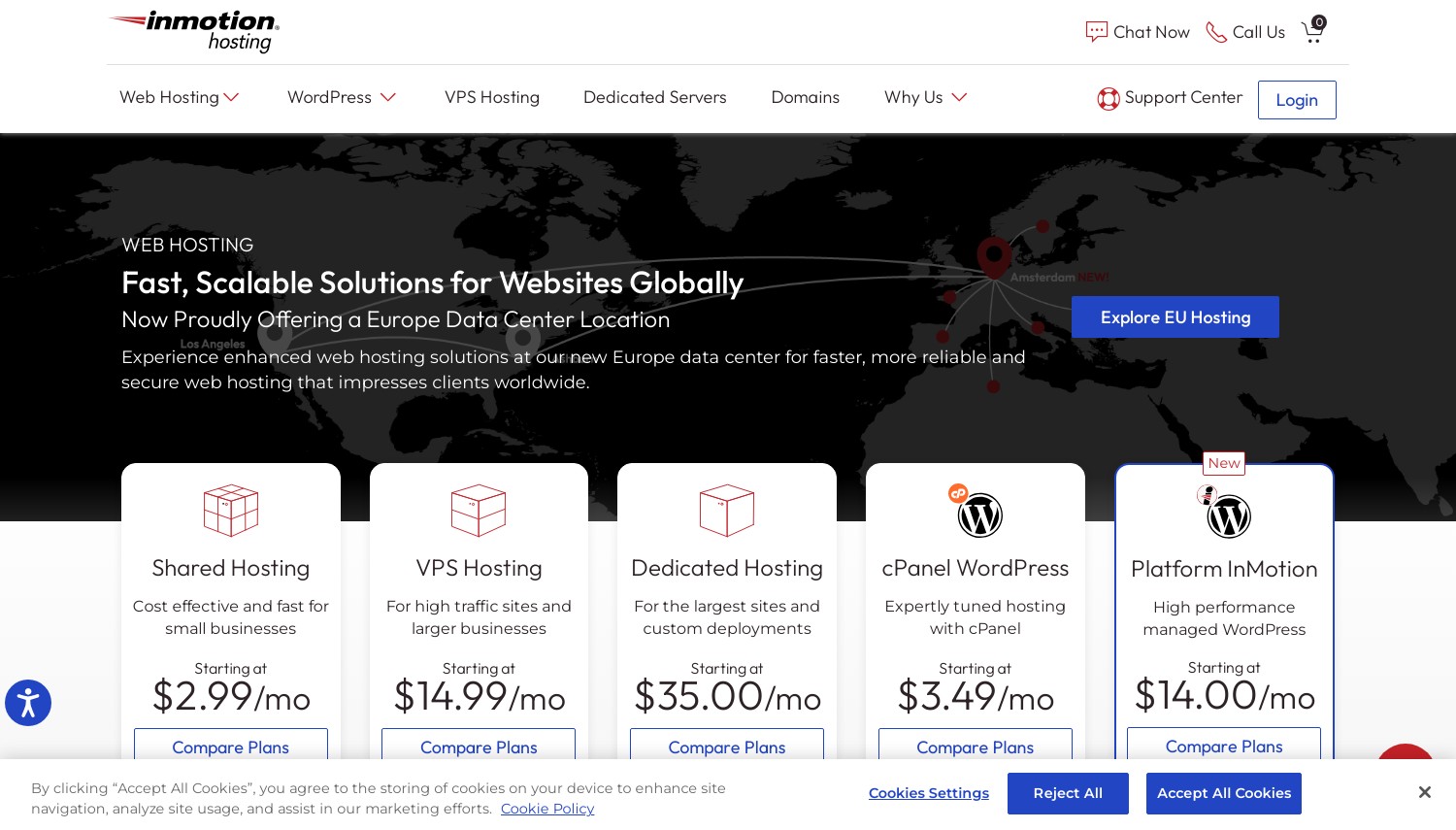
Wo Hetzner europäische Gerichtsbarkeit verkauft und Hostinger KI-Scanning verkauft, InMotion verkauft SLA-Disziplin. Einführung zum Preis von 4,99 USD/Monat, Verlängerung zum Preis von USD 13.99. Strom für 4,99 USD/Monat, Einführung, Verlängerung um 17,99 USD/Monat. Die Schlagzeile: 99.99% Verfügbarkeits-SLA, unterstützt durch veröffentlichte Kennzahlen, benutzerdefinierte WAF, die den Datenverkehr filtert, bevor er den Anwendungsserver erreicht, und Corero DDoS-Abwehr auf dedizierten Ebenen (Von der Erkennung bis zur Schadensbegrenzung dauert es weniger als 1 Sekunde, gemäß den veröffentlichten Benchmarks von Corero).
Die Positionierung von InMotion ist in einer bestimmten Hinsicht strenger als die der meisten gemeinsam genutzten Hosts. Die gemeinsame Umgebung ist durch ModSecurity-Regeln geschützt, die auf gängige WordPress- und Magento-Angriffsmuster abgestimmt sind, und der Upgrade-Pfad zu verwaltetem VPS oder dediziertem VPS behält den gleichen Sicherheitsstatus bei, ohne dass eine Neuarchitektur erforderlich ist. Für Käufer, die innerhalb eines Jahres von Shared auf VPS umsteigen möchten, dass Kontinuität wichtiger ist als der Gesamtpreis.
Die ehrliche Schwäche: Die Einstiegsverlängerung von InMotion ist US Dollar 3 höher als SiteGround (US Dollar 13.99 gegenüber USD 17.99, InMotion ist auf der Launch-Stufe bei Apple-to-Apple tatsächlich niedriger) aber Power's 17.99 sitzt tot – sogar mit SiteGround. Der Punkt ist nicht, dass InMotion billiger ist, Es geht darum, dass Sie eher für die SLA-Disziplin als für die Funktionsbreite bezahlen. Unabhängige Benchmarks bewerten den TTFB von InMotion im Mittelfeld, nicht ganz oben.
Vorteile:
- 99.99% Verfügbarkeit SLA mit veröffentlichter Zusage
- ModSecurity-Regeln für WordPress und Magento optimiert
- Bis zu 10 Websites im Power-Plan
- Corero DDoS auf dedizierten Ebenen
Nachteile:
- Erneuerungssteigerung um das 2,8- bis 3,6-fache, je nach Stufe
- Mittelklasse-Geschwindigkeits-Benchmarks vs. SiteGround / Hostinger
- Corero-DDoS ist höheren Stufen vorbehalten, nicht geteilt
Beste für: In den USA ansässige Käufer, denen SLA-gestützte Verfügbarkeitskontinuität von gemeinsam bis dediziert wichtig ist. Überspringen Sie, wenn: Sie können nicht über die gemeinsame Nutzung hinaus skalieren; Hostinger Premium ist bei gleicher Verteidigungsbasis günstiger.
Urteil: In Bewegung Gewinne für Käufer, die Betriebszeit als Teil des Sicherheitsmodells betrachten und planen, zu VPS oder dediziertem zu werden. Wenn geteilt, ist dies Ihr Endpunkt, SiteGround entspricht dem SLA zu wettbewerbsfähigen Verlängerungspreisen. Wenn rohe Budgetregeln gelten, Hostinger gewinnt.
9. Hetzner Online
 2.3k+
3.1
Neutral
Neutral
2.3k+
3.1
Neutral
Neutral

| Lager | Bandbreite | Preis | |
|---|---|---|---|
| 2 GB | 10.24 GB | $1.75 / mo. | Plan anzeigen |
| 10 GB | Unbegrenzt | $4.52 / mo. | Plan anzeigen |
| 25 GB | Unbegrenzt | $9.13 / mo. | Plan anzeigen |
Hetzner Online – Am besten für die DSGVO-Standard-europäische Gerichtsbarkeit
Wenn Ihr Bedrohungsmodell umfasst "Daten verlassen die EU," Hetzner ist die rationale Antwort auf dieser Liste. Webhosting-Pakete ab einem niedrigen einstelligen Euro pro Monat, Cloud CX23 ab 3,49 EUR/Monat (CPX22 hebt an EUR 7.99/mo on April 1, 2026). Die gesamte Hosting-Infrastruktur läuft in deutschen Rechenzentren (Falkenstein, Nürnberg) unter unmittelbarer deutscher Gerichtsbarkeit. Die Einhaltung der DSGVO ist strukturell, kein Kontrollkästchen.
Die DDoS-Schicht ist die wirklich beeindruckende technische Wahl. Hetzner setzt Nokia Deepfield Defender in seinem gesamten europäischen Rechenzentrums-Backbone ein. Das ist ein Tier-1-Schrubbsystem der Carrier-Klasse, keine Software-Firewall auf einer gemeinsam genutzten Box. Tägliche Backups bleiben erhalten 14 Tage auf verwalteten Webhosting-Stufen und werden ohne zusätzliche Gebühr gebündelt. Hetzner wurde auch nach ISO geprüft 27001 im gesamten Rechenzentrumsbetrieb.
Hetzner ist ehrlich, dass er kein Shared-Host-Konkurrent im Sinne von SiteGround ist. Auf Cloud-Servern gibt es keine interne WAF (Du bringst dein eigenes mit). Kein verwalteter Malware-Scanner (Sie installieren Imunify360 oder ClamAV selbst). Der Support läuft zuerst auf Deutsch, dann auf Englisch. Hetzner CX23 plus selbstinstalliertes Imunify360 kostet zusammen etwa 8,50 EUR/Monat und bietet Ihnen SiteGround-Tier-Verteidigung für weniger als die Verlängerung von ScalaHosting. Der Beruf ist Systemadministratorarbeit.
Vorteile:
- DSGVO-Standard: deutsche Gerichtsbarkeit, Keine Bedenken hinsichtlich der Datenübertragung
- Nokia Deepfield Defender DDoS im Netzwerk-Backbone
- 14-Tag tägliche Backup-Aufbewahrung auf Webhosting-Stufen
- ISO 27001-geprüfte Rechenzentren
Nachteile:
- Keine interne WAF auf Cloud-Servern (BYO)
- Selbstverwaltetes Malware-Scannen auf Cloud-Ebenen
- Der Support hat deutschsprachige Priorität
Beste für: Käufer mit Sitz in der EU, Datenschutzorientierte Projekte, und Entwickler können Imunify360 problemlos selbst installieren. Überspringen Sie, wenn: Sie möchten ein vollständig verwaltetes Paket; SiteGround oder HostArmada halten mehr in der Hand.
Urteil: Wählen Hetzner wenn europäische Gerichtsbarkeit und DDoS im Backbone wichtiger sind als schlüsselfertige verwaltete Verteidigungsmaßnahmen. Wenn die Schlüsselfertigkeit wichtiger ist, SiteGround ist der richtige Anruf. Wenn Sie eine verwaltete und EU-Gerichtsbarkeit wünschen, ohne Ihre eigenen Operationen durchführen zu müssen, IONIC mischt beides zu höheren Preisen.
10. IONOS | ionos.com
 38.1k+
4.3
Positiv
Positiv
38.1k+
4.3
Positiv
Positiv


| Lager | Bandbreite | Panel | Preis | |
|---|---|---|---|---|
| Unbegrenzt | Unbegrenzt | cPanel | $1.00 / mo. | Plan anzeigen |
| 10 GB | Unbegrenzt | cPanel | $4.00 / mo. | Plan anzeigen |
| 100 GB | Unbegrenzt | cPanel | $6.00 / mo. | Plan anzeigen |
IONOS – Am besten für georedundante Betriebszeit
IONOS spielt das Budget-Spiel im Frontend (1 USD/Monat im ersten Jahr bei Essential, Anheben auf ungefähr 8 USD/Monat bei Standardverlängerung) aber das eigentliche Sicherheitsargument liegt in der Architektur. Jeder Shared-Hosting-Plan läuft über zwei physisch getrennte Rechenzentren 60 km voneinander entfernt mit automatischem Failover. Wenn eine Seite dunkel wird, der andere antwortet innerhalb von Sekunden. Das ist standardmäßig Georedundanz, keine bezahlte Stufe.
Die Verteidigungsschicht fügt DDoS Protect hinzu (verwaltete Ebene 3 / Schicht 4 Filtern und Scrubben als Standarddienst). Kostenloses Wildcard-SSL wird auf Essential und höher ausgeliefert. Tägliche Backups sind gebündelt. Die SiteLock-Integration kommt auf der Ultimate-Stufe (kostenpflichtiges Add-on für niedrigere Tarife). EU-basiert und DSGVO-konform out of the box, mit US-Rechenzentrumsoptionen für Käufer, die lieber in den USA hosten möchten.
Der Handel ist ehrlich. Die erweiterte Malware-Entfernung von SiteLock ist nicht im Lieferumfang von Essential enthalten, und der Funktionsumfang der Einstiegsebene ist im Vergleich zu SiteGround StartUp dünn. Für einen einzelnen kleinen Standort, der in erster Linie von der Georedundanzgarantie profitiert, IONOS Essential ist die günstigste Möglichkeit, diese spezielle Funktion auf dieser Liste zu kaufen. IONOS Essential für 8 USD/Monat Verlängerung liegt bei ungefähr USD 3 günstiger als der USD von Hostinger Premium 10.99 und USD 10 günstiger als der USD von SiteGround StartUp 17.99. Wenn Ihnen Failover egal ist, Hostinger Premium bietet mehr Funktionen.
Vorteile:
- Georedundantes Hosting standardmäßig über zwei Rechenzentren verteilt
- DDoS-Schutz (L3/L4) gebündelt ohne Opt-in
- Kostenloses Wildcard-SSL für Essential und höher
- EU-basiert und DSGVO-konform
Nachteile:
- Die fortgeschrittene SiteLock-Malware ist auf niedrigeren Ebenen kostenpflichtig
- Die Erneuerung steigt bei Essential etwa um das Achtfache
- Nur Plesk-Bedienfeld, keine cPanel-Option
Beste für: Käufer, die gezielt Aktiv-Aktiv-Failover zu Shared-Hosting-Preisen wünschen. Überspringen Sie, wenn: Failover ist nicht Teil Ihres Bedrohungsmodells; Geben Sie das gleiche Geld für Hostinger oder SiteGround aus, um umfangreichere Verteidigungsfunktionen zu erhalten.
Urteil: IONIC erhält einen Platz, wenn georedundantes Failover das entscheidende Feature ist. Wenn ein Failover für Ihr Risikoprofil irrelevant ist, Hostinger gewinnt auf Basis der reinen Feature-Anzahl und SiteGround gewinnt bei der Aufbewahrung von Backups.
So wählen Sie sicheres Webhosting (Entscheidungsbaum)
Wogegen muss sich Ihre Website tatsächlich verteidigen?? Wählen Sie nicht anhand der Funktionscheckliste aus. Wählen Sie nach Bedrohungsprofil. Vier konkrete Käuferszenarien decken die meisten sicherheitsbewussten Hosting-Entscheidungen ab.
Arbeitsbelastung: WordPress-Site mit mäßigem Verkehr und zahlenden Kunden, Budget unter 200 USD/Jahr. → SiteGround GrowBig (Einführung: 7,99 USD/Monat, US Dollar 29.99 Erneuerung). Die 30-Kopien-Backup-Aufbewahrung plus aktive WAF-Regelaktualisierungen ist das richtige Verteidigungspaket für eine kleine E-Commerce- oder Mitgliederseite. Überspringen Sie Hostinger Premium hier, da die wöchentlichen Backups auf der Einstiegsebene das Wiederherstellungspunktfenster über das hinaus erweitern, was eine Transaktionssite absorbieren kann. Überspringen Sie das A2-Hosting-Laufwerk, da seine Turbo-Upgrades über den USD hinausgehen 200 schnell.
Geschichte: Die Website wurde bereits zuvor kompromittiert und Sie möchten die Bereinigung nicht noch einmal durchführen. → WPX-Geschäft (20,83 USD/Monat jährlich, fünf Standorte). Das entscheidende Merkmal ist die kostenlose, unbegrenzte Malware-Entfernung als manueller Dienst und nicht als Scanner. Die wiederkehrenden 250 USD/Jahr sind günstiger als zwei Notfall-Reinigungsverträge. Überspringen Sie günstigere Hoster, auch wenn diese Imunify360 anbieten. Der Unterschied zwischen "Der Scanner hat etwas gefunden" und "Das Team des Gastgebers wird das Problem für Sie beheben" ist der Teil, der zählt, wenn Sie bereits Tage durch einen Hack verloren haben.
Zuständigkeit: EU-Kundendaten, Keine Flexibilität bei in den USA ansässigen Anbietern. → Hetzner Webhosting in Deutschland (niedriger einstelliger EUR/Monat) plus selbstinstalliertes Imunify360, wenn Sie Sysadmin-Aufgaben ausführen können, oder IONOS Essential mit dem Ultimate-Stufen-Upgrade für einen vollständig verwalteten europäischen Stack. Überspringen Sie Hostinger und SiteGround, wenn die Compliance-Prüfung Anbieter mit Hauptsitz in den USA ablehnt. Allein die Kosten für die rechtliche Prüfung sind höher als die Hosting-Preisdifferenz.
Budget: Mehrere WordPress-Sites mit geringem Traffic, Kein Budget für Managed Services. → DreamHost geteilt (US Dollar 2.59 Einführung, ~USD 7.99 Erneuerung) plus DreamShield für 3 USD/Monat pro Website, die Sie tatsächlich scannen möchten. Dank der Pauschalpreise für Verlängerungen bleibt das Budget für das zweite Jahr vorhersehbar. Überspringen Sie ScalaHosting in diesem Umfang, da die Preise für verwaltete VPS für WordPress im Hobbybereich nicht gerechtfertigt sind.
Ein nicht offensichtlicher Tipp: Wenn Ihr lokaler Computer der Veröffentlichungsendpunkt für eine dieser Sites ist, Die Abwehrmaßnahmen des Hosts helfen nicht gegen Malware, die von Ihrem Laptop in Ihr CMS gelangt. Führen Sie ein seriöses Anti-Malware-Tool auf dem Gerät aus, z Spionageabwehr regelmäßig auf der Veröffentlichungsarbeitsstation, insbesondere vor der Bereitstellung von Themes oder Plugins, die von außerhalb des offiziellen Repositorys stammen. Serverseitige WAFs fangen keine Webshell ab, die Sie selbst hochgeladen haben.
Häufig gestellte Fragen
Ist Shared Hosting tatsächlich sicher genug für eine Website eines kleinen Unternehmens??
Für eine Broschürenseite oder eine kleine WordPress-Installation ohne Zahlungsabwicklung, Modernes Shared Hosting ist wirklich sicher. SiteGround, Hostinger, und HostArmada führen alle WAFs auf Plattformebene aus, die die häufigsten Angriffstypen blockieren, bevor sie Ihre Anwendung erreichen. Das Risiko verschiebt sich, wenn Sie mit Zahlungsdaten umgehen, Kunden-PII speichern, oder Plugins aus nicht verifizierten Quellen ausführen. An diesem Punkt, Der Upgrade-Pfad ist normalerweise verwalteter VPS (ScalaHosting, Hetzner Cloud) statt eines anderen gemeinsamen Plans. Für einen tieferen Vergleich, wann ein Upgrade sinnvoll ist, sehen Shared vs. VPS-Hosting.
Welcher Hosting-Anbieter verfügt standardmäßig über den stärksten DDoS-Schutz??
Für rohe DDoS-Angriffe auf Netzwerkebene, Hetzner gewinnt, weil der Nokia Deepfield Defender über das gesamte Backbone läuft, nicht nur auf einzelnen Servern. Speziell für DDoS auf Anwendungsebene auf Shared Hosting, SiteGrounds KI-Anti-Bot-System (Blockierung von 500.000 bis 2 Millionen Versuchen pro Stunde) und Hostingers Die Cloudflare-Integration ist die zwei stärkste Option. WPX verwendet ein benutzerdefiniertes XDN-basiertes System, das nicht von Cloudflare abhängig ist. Weitere Informationen zu DDoS-spezifischen Einkaufskriterien, sehen günstiges Hosting mit DDoS-Schutz.
Wie viel soll ich bezahlen "sichern" Web-Hosting?
Ungefähr USD 3-5 pro Monat zum Einführungspreis kauft seriöse Verteidigungsmaßnahmen auf Plattformebene (WAF, tägliche Backups, DDoS, kostenloses SSL). Unter 2 USD/Monat, Sicherheitsfunktionen werden zunehmend eingeschränkt: wöchentliche statt tägliche Backups, kein Malware-Scanner, Nur grundlegende Firewall-Regeln. Über 15 USD/Monat, Sie zahlen entweder für verwaltete Dienste wie die praktische Entfernung von Malware durch WPX oder für die Isolierung auf VPS-Ebene. Für die tatsächlichen langfristigen Kosten ist der Verlängerungspreis wichtiger als der Einführungspreis. Planen Sie für Verlängerungen bei 3x bis 8x Intro bei den meisten Anbietern außer DreamHost und WPX.
Zählt kostenloses SSL als Sicherheitsmerkmal??
Im 2026, Nein. Kostenloses SSL ist eine Grundvoraussetzung, keine Verteidigungsfähigkeit. Jeder Host auf dieser Liste liefert kostenloses Let's Encrypt oder Wildcard-SSL. SSL verschlüsselt den Datenverkehr zwischen Besucher und Server, Dies schützt zwar vor Abhören, unternimmt aber nichts gegen das Hochladen von Malware, Brute-Force-Anmeldeversuche, SQL-Injektion, oder DDoS. Wenn auf der Sicherheitsseite eines Hosts nur SSL erwähnt wird, Betrachten Sie das als Warnsignal.
Ist SiteGround allein aus Sicherheitsgründen den Verlängerungspreis wert??
Ja, wenn Sie sonst für Wordfence Premium bezahlen würden (119 USD/Jahr), MalCare (99 USD/Jahr), oder ein ähnliches kostenpflichtiges WordPress-Sicherheits-Plugin. SiteGrounds gebündelte WAF, KI-Anti-Bot, und tägliche Backups mit 30 Kopien ersetzen diese Plugins auf Plattformebene. Die Verlängerung kostet 17,99 USD/Monat ca. 216 USD/Jahr, Das ist wettbewerbsfähig, wenn Sie ein Sicherheits-Plugin für 119 USD/Jahr und ein Backup-Plugin für 50 USD/Jahr kündigen. Wenn Sie ohnehin keine kostenpflichtigen Sicherheits-Plugins verwenden, Der Preis von SiteGround macht im Vergleich zu HostArmada oder Hostinger keinen Sinn mehr.
Kann ein Hosting-Anbieter tatsächlich verhindern, dass meine WordPress-Seite gehackt wird??
Kein Host kann jeden Angriff verhindern, und jeder Anbieter, der Ansprüche geltend macht 100% Schutz ist Verkaufsmarketing. Was gute Gastgeber leisten können, ist enger, als das Marketing vermuten lässt. Blockieren Sie automatisierte Angriffe auf Plattformebene (SiteGround, Hostinger, ScalaHosting macht das alles). Bekannte CVEs automatisch patchen (A2 Hosting Patchman, Hostinger Patchstack). Verkürzen Sie die Wiederherstellungszeit durch häufige Backups (SiteGrounds 30 Kopien führen hierher). Die menschlichen Faktoren (schwache Admin-Passwörter, veraltete Themen aus lückenhaften Quellen, wiederverwendete Anmeldeinformationen) Sitzen Sie draußen, was Hosting lösen kann.
Spielt die Einhaltung der DSGVO eine Rolle, wenn sich meine Kunden hauptsächlich in den USA befinden??
Es ist wichtig, ob Sie EU-Besucher haben und Daten über Cookies sammeln, Formen, oder Analytik. Der sauberste Weg, die DSGVO-Haftung zu beseitigen, besteht darin, in der EU bei einem Anbieter zu hosten, in dessen Gerichtsbarkeit die DSGVO standardmäßig durchgesetzt wird. Das sind Hetzner und IONOS auf dieser Liste. In den USA ansässige Hosts können in der Praxis immer noch DSGVO-konform sein, erfordern jedoch eine explizite Konfiguration von Datenverarbeitungsvereinbarungen, EU-Standardvertragsklauseln, und (Abhängig von Ihrem Prüfer) eine Data Privacy Framework-Zertifizierung.
Endgültiges Urteil
SiteGround ist die Standardempfehlung für sicherheitsbewusste WordPress-Käufer, die den umfassendsten gebündelten Schutz wünschen, ohne ihren eigenen Stack verwalten zu müssen. ScalaHosting gewinnt für die Isolation der Mieter. Hetzner Siege für europäische Gerichtsbarkeit und DDoS auf Backbone-Niveau. WPX verdient seine Prämie, wenn die verwaltete Malware-Entfernung als Service einen echten Wert hat. HostArmada ist die preisgünstige Wahl von Imunify360. Hostinger gewinnt bei den Rohkosten pro Feature durch KI-Scannen. DreamHost erhält den Platz, wenn die Pauschalpreise für die Verlängerung nicht verhandelbar sind. A2 Hosting deckt die CVE-Patching-Lücke ab. In Bewegung bedient SLA-Disziplinkäufer. IONIC Bietet georedundantes Failover zu günstigen Preisen.
Für den Käufer, der eine Antwort statt zehn möchte: Die Standardeinstellung ist SiteGround GrowBig für eine einzelne High-Stakes-WordPress-Site, oder Host Armada Web Warp wenn Budgetregeln und Imunify360 Ihren Malware-Engine-Einstellungen entsprechen.
Für einen breiteren Hosting-Kontext, siehe entsprechende Leitfäden. Das bestes Shared Hosting Die Zusammenfassung deckt Leistungs- und Kostenaspekte für dieselbe Anbieterkategorie ab. Das Cloud-Hosting-Vergleich deckt den Upgrade-Pfad ab, wenn die gemeinsame Isolation nicht ausreicht. Das Hosting-Finder-Tool Filtert nach Funktionsanforderungen, wenn eine Liste nicht mit Ihrem Stack übereinstimmt.