
5 Best Anonymous Web Hosting Providers (2026 Deals)
Anonymous (or more accurately: privacy-first) web hosting is a solid option if you want to reduce personal exposure while running a website. In practice, “anonymous hosting” usually means some combination of:
- Crypto payments (to avoid tying hosting charges to a personal bank card)
- Domain privacy / private WHOIS (to keep registration details off public records)
- Privacy-friendly onboarding (minimal verification unless fraud signals trigger it)
- Security hardening like DDoS protection (so your site stays up when attention spikes)
Important reality check: Most mainstream hosting providers still require some account details for billing, abuse prevention, and legal compliance. Even if a host accepts crypto, that doesn’t automatically make you “untraceable.” For genuinely sensitive projects, you’ll want to combine hosting choices with operational privacy (separate email, careful account hygiene, and a registrar that supports privacy well).
Quick Comparison (2026)
Best “Crypto-Friendly” Pick: Ultahost (supports cryptocurrency payments)
Best Mainstream Value with Crypto: Hostinger (wide crypto payment support)
Best Domain Privacy Value: Namecheap (strong domain privacy plus crypto funding)
Privacy Caveat Picks: HostArmada and AccuWebHosting (not truly anonymous payments / may require verification)
- web hosting speed and uptime reliability matter more for “anonymous” sites than most people expect, downtime creates attention.
- customer support becomes critical when you need fast mitigation (DDoS, abuse complaints, migrations).
- pricing transparency (renewals and limits) matters because long-term cost creep is common in hosting.
So, which providers are the best “anonymous-friendly” hosts right now? Below are five options, ranked with a buyer-intent lens (speed, reliability, onboarding friction, support quality, and realistic anonymity).
| Hosting Provider | Reviews | Overall Rating | Starts from |
|---|---|---|---|
1  Ultahost Ultahost
|
854 |

|
$1.80 / mo. Flash Sale -40% |
2  Hostinger Hostinger
|
63.2k+ |
|
$1.95 / mo. 80% Off |
3  HostArmada HostArmada
|
1.1k+ |

|
$1.49 / mo. -85% NOW |
4  Namecheap Namecheap
|
19k+ |

|
$1.48 / mo. -71% NOW |
5  AccuWebHosting AccuWebHosting
|
242 |
|
$1.99 / mo. FX VPS -33.40% |
1. Ultahost
 854
4.6
Positive
Positive
854
4.6
Positive
Positive










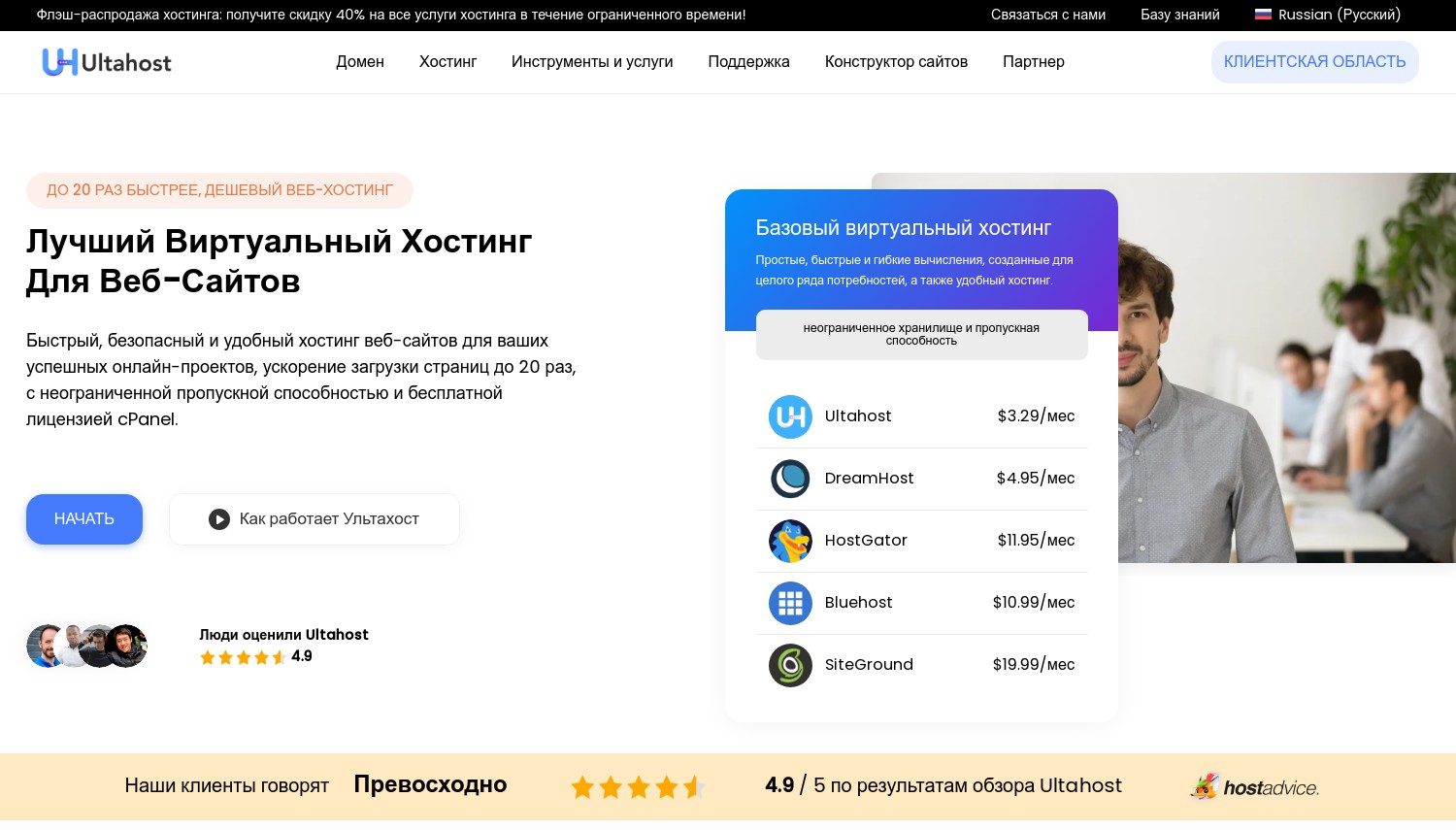
Ultahost - Fast Anonymous-Friendly Hosting (Pricing from $3.80/month)
Overall Rating: 4.6 / 5
Key Features at a Glance:
- Cryptocurrency payments supported
- Shared to VPS to Dedicated upgrade path
- Security features plus DDoS options
- 24/7 support channels
Best For: Buyers who want crypto payments plus an easy path from shared hosting to VPS.
Starting Price: $3.80/month (promos vary)
Quick Verdict: One of the better “anonymous-friendly” picks here because crypto payments are clearly supported—but your real-world anonymity still depends on account hygiene and plan choice.
- Pros
- Cryptocurrency payments are supported (useful for privacy-minded buyers)
- 99.99% uptime guarantee (provider claim; still worth verifying with your own monitoring)
- Good performance options across tiers (shared, VPS, dedicated)
- 30-day money-back guarantee
- Cons
- Promo pricing is typically “new customer” oriented; renewals may be higher
- Feature depth can overwhelm beginners if you jump straight into VPS
Ultahost is the closest thing in this list to what most people mean by anonymous web hosting: it explicitly supports crypto payments and documents the process. From a buyer’s perspective, that removes the biggest friction point (billing traceability) while still giving you mainstream hosting ergonomics.
Where it performs well in real use: Ultahost is typically chosen for speed-oriented hosting stacks (NVMe plans, scalable tiers). If you’re running WordPress hosting for a publication-style site, the ability to scale up without changing providers (shared to VPS) is the practical benefit.
Support reality: For anonymity-minded projects, support isn’t just “nice to have.” You may need fast help if your site gets attacked or reported. Ultahost positions itself around multiple support channels and fast resolution workflows (verify in your own trial window).
See the full review: Ultahost review.
2. Hostinger
 63.2k+
4.6
Positive
Positive
63.2k+
4.6
Positive
Positive


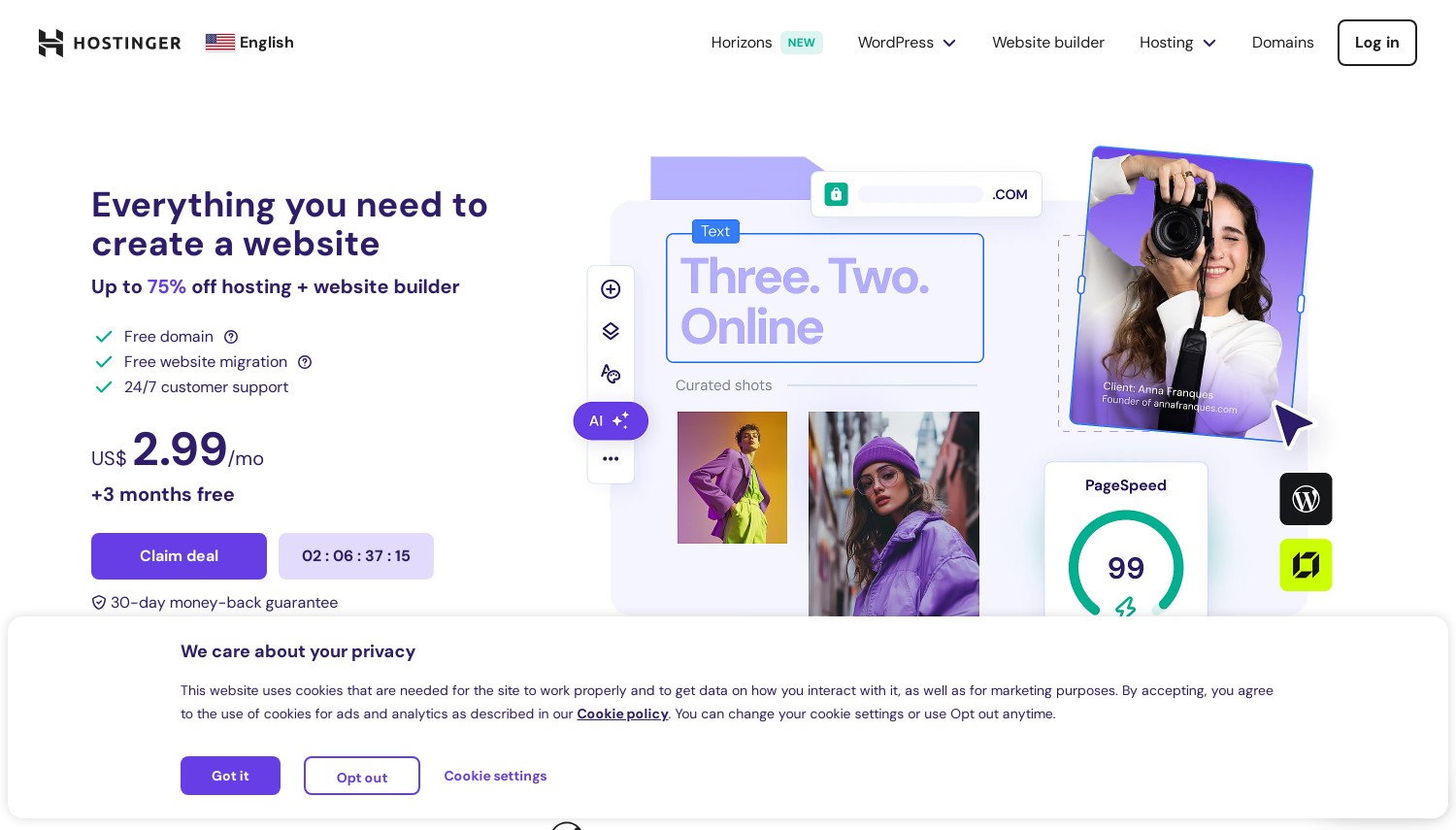
Hostinger - Best Overall and Accepts Cryptocurrency (pricing from $2.99)
Overall Rating: 4.6 / 5
Key Features at a Glance:
- Supports a wide range of cryptocurrency payments
- Beginner-friendly dashboard plus fast setup
- Global data centers for lower latency
- Good upgrade path (shared to cloud to VPS)
Best For: Buyers who want a mainstream “best web hosting provider” feel, but still want crypto payment support.
Starting Price: $2.99 (renewals often higher depending on term)
Quick Verdict: Great balance of usability, speed, and pricing transparency compared to many budget hosts—with strong crypto payment support as a privacy bonus.
- Pros
- 99.9% uptime guarantee supports baseline reliability
- Accepts a wide range of cryptocurrencies
- Free domain and SSL on select plans (varies by promo/term)
- Global data center footprint for performance optimization
- Scales well as traffic grows (upgrade path is clear)
- Cons
- No phone support (chat/tickets dominate)
- Backup features can vary by plan—verify what’s included before checkout
Hostinger is often the “safe” pick when you want privacy options but still want a highly polished user experience. For many buyers actively comparing providers, the deciding factor isn’t just web hosting speed—it’s the daily management feel: dashboard clarity, SSL setup, WordPress installs, staging tools, and how quickly you can recover if something breaks.
On the anonymity side, Hostinger supports a wide range of cryptocurrencies for payments. That’s a meaningful advantage over providers that market privacy but only accept cards.
Read more: Hostinger review.
3. HostArmada
 1.1k+
4.9
Positive
Positive
1.1k+
4.9
Positive
Positive


HostArmada - Best DDoS Protection “Privacy-First” Hosting (Pricing from $2.49/mo)
Overall Rating: 4.8 / 5
Key Features at a Glance:
- DDoS protection plus security-focused stack
- Cloud SSD hosting (performance-leaning shared plans)
- 45-day money-back guarantee
- Beginner-friendly management and support
Best For: Privacy-conscious site owners who want stability and mitigation (but don’t need crypto payments).
Starting Price: $2.49/month (promo tiers vary)
Quick Verdict: Strong security posture and uptime-focused experience—but it’s not “anonymous payments” hosting since it supports card/PayPal, not crypto.
Pros
- Competitive intro pricing for a security-forward stack
- 45-day money-back guarantee lowers risk for migrations
- Good DDoS and “always-on” protection story (useful if your content attracts attention)
- Fast-enough shared hosting performance for WordPress and small sites
Cons
- No crypto payments (card plus PayPal only), so payment anonymity is limited
- Renewal prices can be meaningfully higher than promos (common in shared hosting)
- Entry plan storage caps can feel tight for media-heavy sites
In real buyer terms: HostArmada is less about “anonymous hosting” and more about privacy-first hosting that stays online under stress. If your project could face traffic spikes or hostile attention (for example: controversial reporting or activism), uptime reliability and DDoS protection matter as much as privacy. This is where HostArmada tends to justify its pricing.
One important limitation for anonymity-focused buyers: HostArmada’s official payment options are credit/debit cards and PayPal, which means your payment trail is not anonymous. If crypto-at-checkout is a must-have, skip to Ultahost or Hostinger below.
Read the full review here: HostArmada review.
4. Namecheap
 19k+
4.2
Positive
Positive
19k+
4.2
Positive
Positive
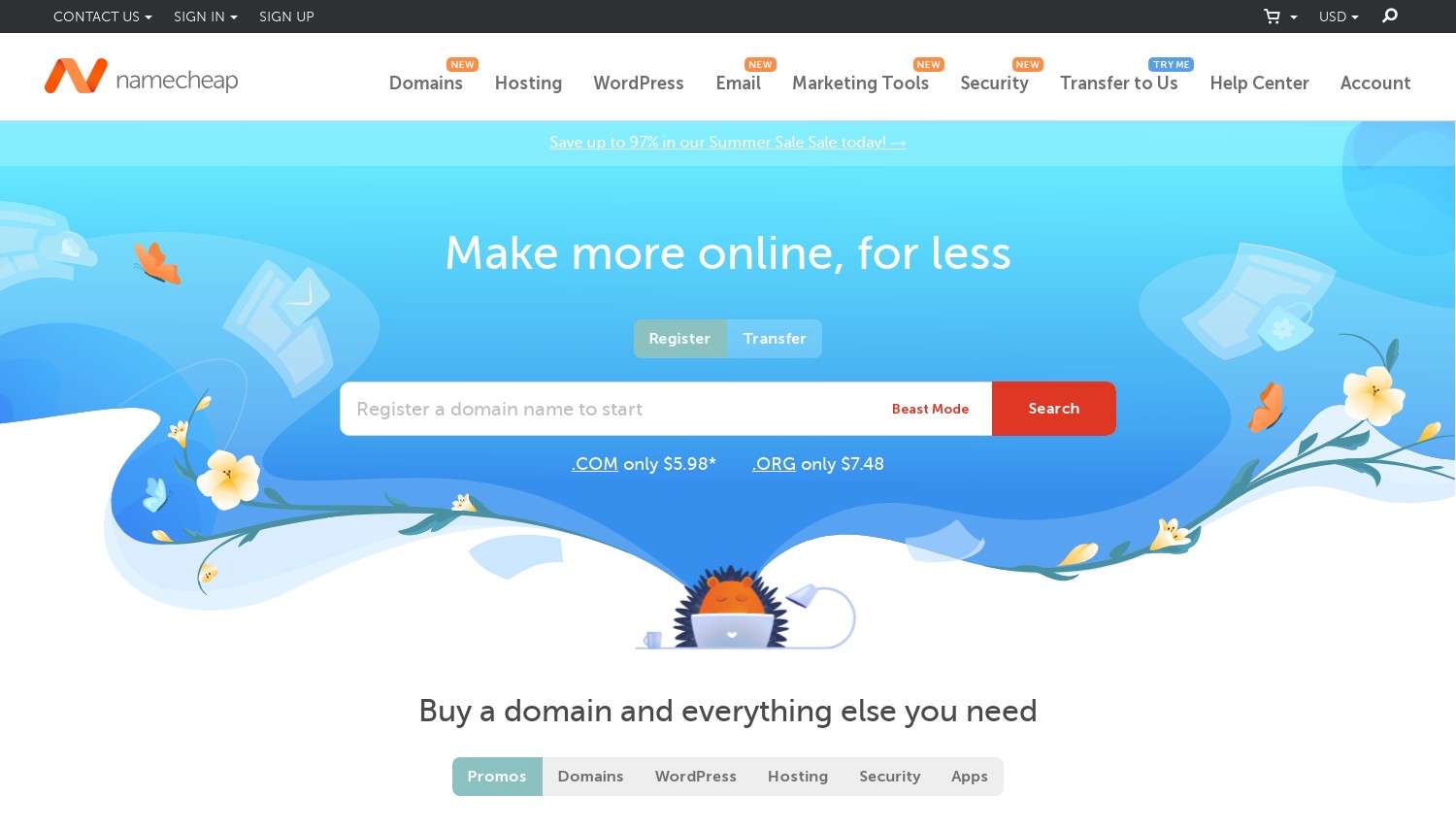
Namecheap - Free Domain Privacy (Pricing from $1.48/month)
Overall Rating: 4.4 / 5
Key Features at a Glance:
- Strong domain privacy positioning (WHOIS privacy focus)
- Crypto-supported payments (via account funds/top-up flow)
- Good “all-in-one” convenience (domains plus hosting)
- Security extras: DNS tools, 2FA options
Best For: People who care about domain privacy first, and want an easy domain plus hosting bundle.
Starting Price: $1.48/month (varies by promo/term)
Quick Verdict: A practical privacy pick for domain plus hosting buyers—just note crypto payments may require topping up account funds rather than direct checkout.
Pros
- Extremely competitive pricing for entry-level sites
- Strong privacy culture and domain tooling (good for reducing WHOIS exposure)
- Supports cryptocurrency payments (commonly via account-funding/top-up flow)
- Solid security posture for everyday users (2FA and related controls)
Cons
- Performance can be “fine, not elite” depending on plan and workload
- Not the best fit for high-traffic or high-complexity hosting needs
Namecheap earns its spot here mostly because anonymity doesn’t start with hosting—it starts with domain identity exposure. If your registrar leaks your details in public records, the hosting choice matters less. Namecheap supports crypto, but it commonly works through a “deposit/top-up then spend” pattern rather than always being a clean direct crypto checkout.
For small WordPress hosting projects, this can be a good compromise: keep domain privacy tight, keep costs low, and only upgrade hosts if performance becomes a bottleneck.
Full review: Namecheap review.
5. AccuWebHosting

 242
4.4
Positive
Positive
242
4.4
Positive
Positive

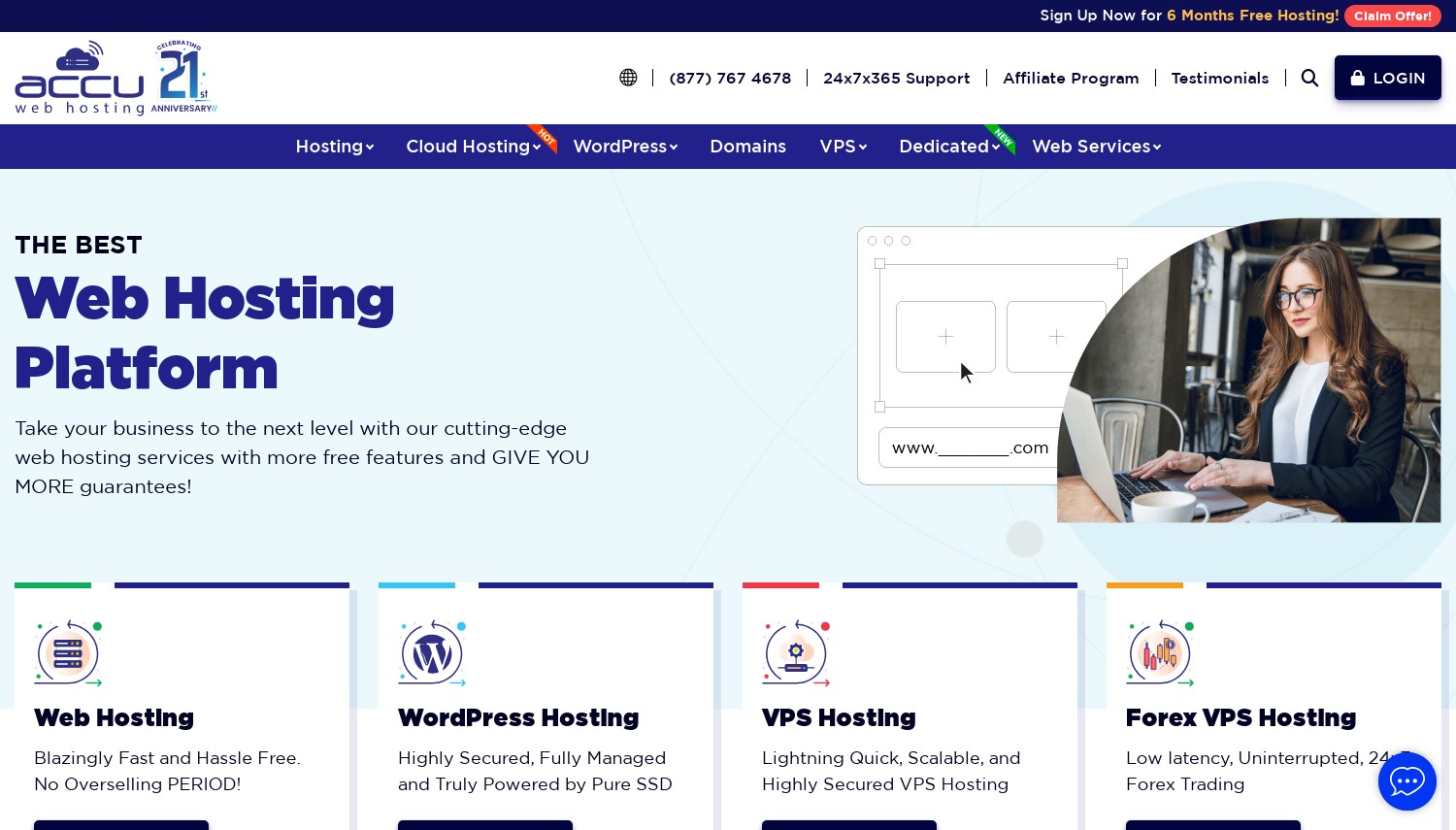
AccuWebHosting - Reliable Hosting, But Not Anonymous Payments (Pricing from $2.99)
Overall Rating: 3.9 / 5
Key Features at a Glance:
- Broad plan selection (shared, VPS, dedicated, Windows hosting)
- Free SSL plus backup options (plan-dependent)
- High stated uptime targets (verify independently)
- Security and monitoring options
Best For: Buyers prioritizing traditional reliability—not buyers who require crypto payments or minimal verification.
Starting Price: $2.99
Quick Verdict: Solid provider in many contexts, but it’s a weak match for “anonymous hosting” because it currently states it does not accept crypto and may request identity verification in some cases.
- Pros
- Competitive pricing for entry tiers
- Large catalog of hosting products (useful if you need Windows hosting options)
- Backup/security options that can work well for business sites (verify per plan)
- Cons
- States it doesn’t accept Bitcoin/crypto at the moment
- May request government-issued ID for verification in some cases
AccuWebHosting is included here because many readers still compare it during “anonymous hosting” searches—usually for its plan variety and business-style reliability. But if your priority is anonymity, two friction points matter:
- Crypto payments: AccuWebHosting states it does not accept Bitcoin or other crypto currently.
- Verification risk: It may request government-issued identity proof for order verification (either as standard for new clients or when orders are flagged).
If you’re building a standard business site and anonymity is not the core requirement, AccuWebHosting can still be a reasonable choice. But if you want anonymous-friendly onboarding, you’ll likely be happier with Ultahost or Hostinger.
Read more: AccuWebHosting review.
HowToHosting.Guide Selected Ultahost Reviews
 Trustpilot User
from Indonesia
Trustpilot User
from Indonesia
 Trustpilot User
from Peru
Trustpilot User
from Peru
 Trustpilot User
from Pakistan
Trustpilot User
from Pakistan

How to Set Up Anonymous-Friendly Hosting (Step-by-Step)
1) Separate your identity from the basics
- Create a dedicated email address used only for hosting/admin accounts.
- Use a password manager plus unique passwords.
- Enable 2FA wherever available.
2) Pick the right “privacy layer” first: domain and DNS
- Buy your domain with privacy enabled (domain privacy / WHOIS protection).
- Consider using separate DNS from your host if you want to reduce linkage.
3) Choose payment strategy
- If you need reduced payment traceability, choose a host that clearly supports crypto (Ultahost / Hostinger).
- If crypto is optional and stability is the priority, HostArmada can be a security-first option (but payments won’t be anonymous).
4) Migrate safely (where screenshots help)
- Screenshot: DNS records before you change anything (A/AAAA/CNAME/MX).
- Screenshot: WordPress backups/export screens and plugin lists.
- Table: Old host vs new host settings (PHP version, caching, SSL, CDN).
Final Verdict: Who These “Anonymous Hosting” Picks Are Best For
- If crypto payments are a must: choose Ultahost or Hostinger (crypto supported).
- If you want strong domain privacy plus low cost: Namecheap is a practical registrar plus hosting bundle, with crypto supported via account funding flows.
- If you expect attacks/traffic spikes and want security-first hosting: HostArmada is compelling—but understand it’s not “anonymous billing” hosting.
- If anonymity is the core requirement: avoid AccuWebHosting for this use case due to lack of crypto support and potential verification steps.
Decisive takeaway: For most buyers, “anonymous hosting” comes down to crypto payments plus solid uptime reliability plus responsive customer support. If you need that mix, Ultahost or Hostinger are the most aligned picks in this lineup—while Namecheap is the privacy-strong domain companion that keeps your public footprint smaller.
Why the Right Web Hosting Provider is Crucial for Your Website's Success
Choosing the right web hosting provider is more than just finding a place to host your website; it's about ensuring the success and reliability of your online presence. A provider with high uptime scores (ideally 99.5%+), predictable performance, and responsive customer support helps you avoid the two biggest real-world failures: downtime and slow recovery when something breaks.
Security measures like DDoS protection, SSL certificates, and secure infrastructure reduce operational risk, especially for projects that may attract attention. In short: privacy is a strategy, not a checkbox, and the best web hosting provider for “anonymous-friendly” use is the one that keeps your site fast, stable, and supportable while minimizing exposure.
Summary: Selecting the Ideal Anonymous Hosting Provider for 2026
Focus on providers that match your threat model and your workflow. If you need anonymity in billing, pick hosts that support cryptocurrency payments. If your priority is reducing public identity exposure, prioritize domain privacy and careful DNS/account practices. Combine that with strong uptime reliability and support, and you’ll have an online setup that’s both resilient and privacy-conscious.