
On This Page: [hide]
Building a website no longer requires coding skills, a web developer, or even much time. Drag-and-drop platforms have turned what once took weeks into an afternoon project. The numbers prove this shift: over 282 million people have registered Wix accounts alone, and approximately 72% of new websites now use builder platforms rather than custom development.
Key numbers for 2026: The website builder market reached $2.3 billion in 2025 and will hit $2.6 billion this year. Wix controls 45% of the builder market, with Squarespace at 18% and GoDaddy at 10%. AI-powered builders represent the fastest-growing segment, projected to reach $6.3 billion globally by year’s end. Small businesses drive adoption, with 63% of new business websites created using builder platforms.
Last reviewed: February 2026. Statistics sourced from company reports, BuiltWith, W3Techs, and industry research firms.
Market Size: A $2.6 Billion Industry Still Growing
Different research firms offer varying estimates of the website builder market, but all point in the same direction: consistent growth with no slowdown in sight. The variation comes from how each firm defines website builders. Some count only pure drag-and-drop platforms. Others include e-commerce focused tools, WordPress page builders, and hybrid solutions.
Business Research Insights projects the market at $2.0 billion in 2024, growing to $3.7 billion by 2033 at a 7.0% compound annual growth rate. Research and Markets takes a more expansive view, placing the 2025 market at $4.90 billion and projecting $9.71 billion by 2032 at a 10.25% CAGR. Mordor Intelligence estimates $3.06 billion in 2025, growing to $7.67 billion by 2031 at 16.58% CAGR.
What drives these differences? Scope. Narrower definitions counting only hosted DIY builders produce smaller figures. Broader definitions including SaaS e-commerce platforms and page builder plugins push numbers higher. The growth trajectory matters more than the exact figure: regardless of methodology, every major research firm expects the market to at least double within the next decade.
North America commands 38.25% of market revenue, making it the largest regional market for website builders. Asia-Pacific shows the fastest growth at an 18.76% CAGR between 2026 and 2031, driven by small business digitization in India, Southeast Asia, and emerging markets. Cloud-based solutions account for 81% of 2025 revenue, with desktop software representing a shrinking minority.
Wix: The Market Leader with 282 Million Registered Users
Wix has built the largest user base in the website builder industry. The platform reports over 282 million registered users globally, adding roughly 45,000 new accounts every day. That sounds massive, but here’s what matters: only about 11% of those users actually pay for premium plans. The conversion numbers tell the real story of how website builders monetize.

Those paying customers translate to 6.2 million premium subscriptions generating $1.76 billion in revenue for 2024. That marks a 13% year-over-year increase and the company’s first year of full GAAP profitability. Revenue projections suggest Wix will exceed $2 billion by the end of 2025.
Among active websites, Wix powers approximately 8 million to 8.5 million live sites. The platform captures 45% of the website builder market globally when looking only at DIY builder platforms. In the broader CMS market that includes WordPress, Shopify, and traditional platforms, Wix holds 3.6% share according to W3Techs, making it the third most popular CMS after WordPress (63.7%) and Shopify (5.7%).
Geographic distribution reveals strong concentration. The United States leads with 1.1 million Wix websites, followed by the United Kingdom (485,000), Brazil (232,000), and Germany (202,000). North America generates 59% of Wix’s revenue and represents its fastest-growing market with 11% growth rate. Small businesses make up 79% of all active Wix sites globally.
The e-commerce numbers have grown substantially. Wix powers approximately 3.5 million active online stores worldwide, generating more than $12 billion in annual sales through the platform. Wix-powered stores report a 33% average increase in revenue year-over-year, though this likely reflects growth among newer stores rather than consistent gains across the board.
Squarespace: Premium Positioning with 4.3 Million Subscriptions
Squarespace has carved out a distinct position in the website builder market. Rather than competing on price or user volume, the platform focuses on design quality and premium market positioning. The strategy shows in the numbers: Squarespace commands 39% of the top 10,000 websites using website builders, compared to just 12% for Wix in that high-traffic segment.

According to Q1 2026 data, Squarespace reported 4.3 million unique subscriptions, representing a 6.2% increase from the same period last year. The company has achieved sequential subscription growth for 24 consecutive quarters. Revenue reached $1.06 billion in 2024, with current annual recurring revenue sitting at $1.4 billion. Projections suggest annual revenue approaching $1.32 billion for 2025-2026.
Each Squarespace subscription generates an average of $233.36 per year in revenue, a figure that reflects higher pricing than mass-market competitors. The platform powers approximately 2.96 million live websites according to BuiltWith, with an additional 1.8 million inactive sites bringing the total to 4.79 million websites created on the platform. About 76% of these websites are registered in the United States.
Market share data places Squarespace at roughly 2% to 3% of all websites globally and 3% of the CMS market. In the website builder segment specifically, Squarespace holds 17-18% market share, making it the second most popular builder worldwide. The platform maintains a strong e-commerce presence with 14.67% market share among e-commerce software platforms, ranking third in that category.
Squarespace went private in 2024 through a private equity transaction. The company employs 1,760 full and part-time workers, with 1,530 based in the United States. Geographic revenue remains concentrated: 71% comes from U.S. customers, though the company targets reaching 30% non-U.S. revenue by 2026.
GoDaddy and Weebly: The Other Major Players
GoDaddy Website Builder holds third position in the global market. BuiltWith data shows the platform powering approximately 2.6 million websites, representing 11-12% of the website builder segment. In the United States specifically, GoDaddy ranks second behind Squarespace among website builders. Over 3.2 million companies have adopted GoDaddy Website Builder, with 70.42% of customers located in the United States (approximately 2.1 million).

GoDaddy’s strength comes from bundling. The company’s domain registration dominance, with over 81 million domains under management, creates a natural funnel toward its builder product. Users purchasing domains receive offers to build websites immediately, eliminating the friction of selecting a separate platform. This integration strategy differs from standalone builders that must acquire customers independently.
Weebly occupies a smaller niche following its 2018 acquisition by Square. The platform holds about 3% website market share, powering nearly 728,000 websites globally. Recent data shows some decline: active Weebly e-commerce websites dropped from 45,852 in Q1 2024 to 37,934 by March 2025. This trajectory suggests Square is focusing Weebly resources on e-commerce integration rather than general website building.
Here’s why competitive positioning matters. Wix and Squarespace operate as standalone website builders first. GoDaddy bundles building into a broader web presence package. Weebly has pivoted toward point-of-sale integration and small business commerce. Each targets slightly different customer needs despite overlapping capabilities.
Shopify: E-Commerce Builder Powerhouse
Shopify blurs the line between website builder and e-commerce platform. The company powers over 5.5 to 5.8 million live stores globally, making it the dominant force in online retail infrastructure. In 2024, Shopify merchants processed $292.3 billion in gross merchandise volume, a 24% increase over the previous year’s $235.9 billion. The platform surpassed $1 trillion in cumulative GMV during 2024.

Financial performance has been remarkable. Shopify reported $8.88 billion in revenue for 2024, with 26% year-over-year growth. Q3 2025 showed even stronger momentum: 32% growth in both revenue and GMV, with international revenue expanding 33% alone. Revenue projections suggest Shopify will exceed $12 billion annually by 2026.
Market share data positions Shopify as the second-largest e-commerce platform globally with 10.56% share. In the United States, Shopify commands 30% of the e-commerce platform market, leading WooCommerce (18%) and Wix Stores (15%). Among high-traffic websites, Shopify holds 28.8% market share. Canada shows even stronger dominance at 31% market share.
The scale of Shopify’s reach extends beyond store counts. Over 875 million consumers purchased from Shopify stores in 2024. The platform sees 176.5 million monthly visitors and 5.88 million daily active users worldwide. Black Friday Cyber Monday 2025 generated a record $14.6 billion in merchant sales, a 27% increase from 2024, with peak sales reaching $5.1 million per minute.
Mobile dominates Shopify usage: 79% of traffic comes from mobile devices. The platform employs over 8,100 staff. Its market capitalization exceeded $180 billion in January 2026, reflecting investor confidence in continued e-commerce growth. If you’re comparing VPS options for Shopify development environments, our VPS hosting comparison covers infrastructure options.
WordPress: The CMS Giant That’s Not Really a Builder
WordPress requires separate discussion because it occupies a unique position. The platform powers 42.8% to 43.5% of all websites globally, representing over 590 million sites. That makes it far larger than any website builder. But WordPress itself isn’t a drag-and-drop builder in the traditional sense.
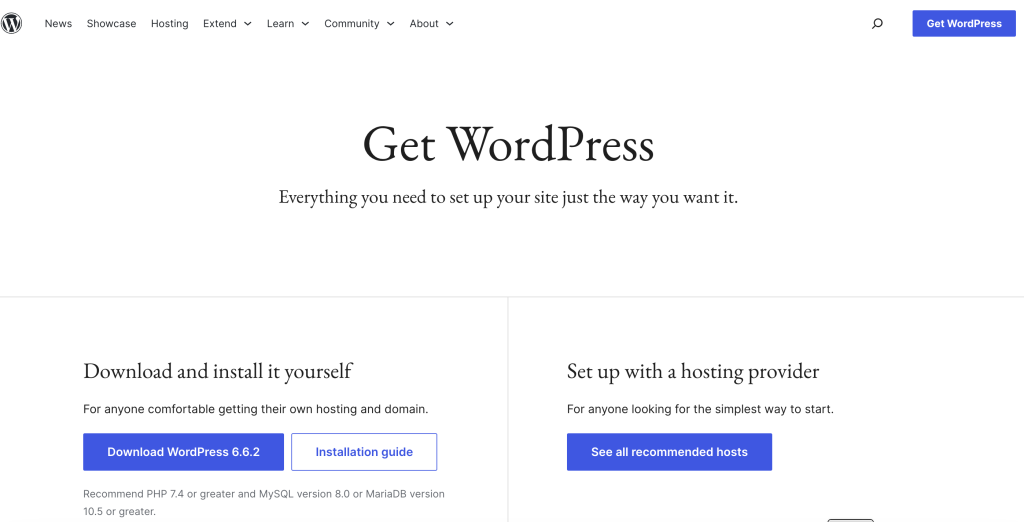
The distinction matters. WordPress is a content management system requiring installation, hosting selection, theme configuration, and plugin management. Site builders like Wix and Squarespace handle all infrastructure invisibly. Users never configure databases, manage security updates, or choose hosting providers. WordPress demands more technical involvement, even with page builder plugins installed.
WordPress growth has plateaued. The platform gained just 0.1% market share between January 2021 and early 2026, compared to explosive growth from 27.3% in 2017 to 43.6% in 2025. The HTTP Archive’s 2025 Web Almanac describes this as a shift “from a focus on expansion to one on stabilization,” a sign of market saturation rather than competitive displacement.
When competing directly with website builders for non-technical users, WordPress often loses. Platforms like Wix and Squarespace promise faster setup times and zero technical knowledge requirements. New website creators increasingly choose these simpler solutions rather than learning WordPress’s theme and plugin ecosystem. For users who do want WordPress, our managed WordPress hosting guide covers options that reduce technical complexity.
AI Website Builders: The Fastest-Growing Segment
Artificial intelligence has transformed website building in ways that seemed theoretical just three years ago. The AI website builder market reached $3.17 billion in 2023 and is growing at 25.80% CAGR, projecting to $31.5 billion by 2033. Other estimates place 2025 revenue at $5.0 billion, rising to $6.3 billion in 2026 and $7.9 billion in 2027.
Adoption numbers have accelerated rapidly. 68% of small businesses globally used AI-assisted tools for web creation in 2024. Over 20 million websites worldwide are now built using AI-based website builders. Among businesses with mature AI strategies, 70% use AI-powered tools for website creation, positioning it as a necessity rather than an option.
Developer and designer adoption runs even higher. More than 81% of developers report increased productivity when using AI tools in their workflows. According to survey data, 93% of web designers have used an AI tool to assist in design-related tasks within the past three months. Half of all designers now use AI to create complete page layouts and designs.
The 2026 DORA Report found that 90% of software developers have adopted AI tools. The Stack Overflow developer survey shows 51% of professional developers use AI tools daily. This integration extends beyond website building into the entire development workflow, but website creation represents one of the most visible consumer-facing applications.
Traditional website builder companies are responding. 68% of established website builder platforms plan to integrate AI features by 2026. 41% of web developers expect their role to shift toward more strategic tasks by 2027 as AI handles routine implementation work. North America holds 39-40% of the AI website builder market, with India showing a 63% increase in AI builder usage among SMEs during 2023-2024.
Small Business Adoption: 73% Now Have Websites
Small business website statistics reveal both the opportunity and the limits of website builder growth. According to 2025 data, 73% of small businesses in the United States have a website. That leaves 27% without any web presence, representing both a market opportunity and a segment that may never adopt.
Among businesses that do have websites, approximately 32% use DIY website builders rather than hiring developers or agencies. Nearly 69% of new small businesses establish websites within their first year, and builder platforms capture around 63% of these new business websites. About 70% of small and medium enterprises adopt website builders due to increasing e-commerce needs and smartphone usage.
The primary purposes for small business websites break down clearly. Roughly 24% say the main purpose is showcasing products and services. About 17% enable customers to purchase directly through the site. Another 14% built their sites primarily for SEO and search visibility. These use cases align well with website builder capabilities.
Mobile optimization influences platform selection for approximately 52% of users, while integrated marketing tools drive engagement decisions for nearly 44%. These priorities explain why all major builders now emphasize responsive design and marketing automation as core features rather than add-ons.
Cost considerations matter enormously for small businesses. Website builders typically cost $0 to $50 monthly for basic functionality. Compare that to professional web development, where small business sites range from $2,000 to $8,000, or hiring a freelance designer at $1,500 to $4,000. The cost differential of 10x to 100x explains why builders dominate the small business segment. For small businesses considering shared hosting with WordPress instead, costs run slightly higher but remain far below custom development.
Pricing and Cost Statistics
Website builder pricing has converged around similar tiers across platforms. DIY SaaS website builders typically charge $15 to $50 per month for standard websites, or $30 to $300 per month for full-featured e-commerce stores. Using a website builder, total annual costs range from $50 to $500 including premium templates and plugins.
For context, professional website development costs range dramatically higher. Freelance professional web designers charge $30 to $150 per hour depending on skill and location. Project-based pricing puts simple websites at $1,000 to $5,000 and complex sites at $5,000 to $20,000 or more. Boutique agencies may charge $6,000 to $12,000 for small business projects.
At the enterprise level, costs scale further. Enterprise builds run $20,000 to $100,000 or more depending on complexity. Competent, experienced web developers charge $100 to $125 per hour in 2026. Ongoing maintenance, updates, and hosting add $100 to $500 annually, or roughly 15-30% of the initial build cost each year.
Bottom line: the value proposition becomes clear when comparing total costs. A small business website built with Wix or Squarespace runs approximately $200 to $400 per year all-in. A comparable professionally-built WordPress site might cost $3,000 to $5,000 upfront plus $500 to $1,000 annually for hosting and maintenance. Over three years, the builder saves $3,000 to $5,000 compared to professional development.
This cost structure explains why website builders dominate among budget-conscious users while professional development remains viable for businesses with specific requirements or larger budgets. The trade-off involves customization flexibility and ownership, not just price.
Mobile Traffic: 64% of Web Traffic Is Mobile
Mobile traffic statistics directly impact website builder priorities. As of early 2026, mobile devices account for 62% to 64% of global web traffic, with desktop at roughly 35% and tablets making up the remaining 2-3%. This distribution has shifted dramatically from near-parity just five years ago.
Regional variations show even more pronounced mobile dominance in developing markets. Africa leads all regions with 79.12% mobile traffic share. Nigeria reaches 86.2%, India 80.31%, and Sudan tops the list at 89.56%. Developed economies show lower mobile shares: Germany at 42.4%, Japan at 36.6%, and the United States at 47.3%. North America recorded the largest year-over-year increase at 11.25 percentage points, reaching 56.75% mobile traffic share.
These statistics explain why responsive design became table stakes for website builders. Every major platform now generates mobile-optimized sites by default. Testing on desktop first then adjusting for mobile has reversed: mobile-first design now represents best practice, and builders increasingly offer mobile editing interfaces alongside desktop tools.
Mobile commerce statistics add commercial urgency. Mobile devices account for 74% of all online shopping visits. Mobile commerce sales reached $2.51 trillion in 2025, a 21.25% increase from the previous year, with projections of $2.4 trillion in 2026 growing at 9.5% annually through 2034. Mobile is projected to drive 44.2% of all U.S. retail e-commerce sales in 2025.
Conversion rates still favor desktop, however. Desktop users convert at 3.9% compared to 2.85% for mobile users. Mobile apps perform better at 3.5% conversion rate. Cart abandonment reaches 84.8% on mobile versus 74.3% on desktop. These figures suggest mobile drives discovery and browsing while desktop often closes sales, making responsive multi-device experiences essential.
E-Commerce Website Statistics
The e-commerce segment deserves specific attention given how many website builders focus on online selling capabilities. Global e-commerce reached $6.419 trillion in 2025, with forecasts of $6.88 trillion in 2026 representing 7.2% year-over-year growth. Some projections suggest the market exceeding $8.1 trillion by 2026 depending on methodology.
The number of e-commerce websites worldwide has exploded. By 2025, e-commerce websites around the world number approximately 28 million, with new sites launching daily. About half of these are based in the United States. GrowthDevil reports nearly 14 million online stores in the United States alone, representing 50% of all e-commerce sites worldwide.
Platform market share among e-commerce sites shows clear leaders. Over 80% of e-commerce sites use open-source or SaaS platforms. WooCommerce leads globally with 37% market share and 6.5 million active stores. Shopify holds 21% of the global platform market with over 4 million merchants. Wix and Squarespace collectively account for over 20% of small business e-commerce sites. Magento (Adobe Commerce) powers 200,000 or more active stores, mainly in enterprise segments.
The buyer side of e-commerce continues expanding. There are 2.77 billion online shoppers globally as of 2025, meaning 33% of the world’s population shops online. This figure is projected to reach 2.86 billion in 2026. China leads with 904.6 million online shoppers, while the United States has 288.45 million online buyers.
Social commerce represents an emerging channel crossing into website builder territory. Social commerce sales in the United States will break the $100 billion barrier in 2026 (up from $85 billion in 2025). Globally, social commerce is projected to hit $2.9 trillion by 2026. Website builders are integrating social selling features to capture this growth.
Future Trends: What the Data Suggests for 2026-2030
Several trends emerge from analyzing current statistics and growth trajectories. AI integration will continue accelerating across all major platforms. AI-assisted website builders are projected to account for 25% of new platform developments by 2027. 84% of e-commerce businesses already rank AI as their highest priority, and nearly 70% of e-commerce companies will employ AI solutions by 2026.
The market will continue growing but face segmentation. Pure website builders like Wix and Squarespace will compete against e-commerce focused platforms like Shopify, AI-native builders, and traditional CMS solutions with page builder plugins. No single platform will dominate all use cases. Instead, users will increasingly select tools optimized for their specific needs.
Geographic expansion will drive growth. Asia-Pacific’s 18% CAGR far outpaces North American and European growth rates. India’s 63% increase in AI builder adoption among SMEs suggests emerging markets will adopt newer technology faster than established markets. Website builders targeting these regions will capture disproportionate growth.
Pricing pressure will continue. The DIY builder segment has established $15-50/month as standard pricing. Competition and AI automation may push these prices lower while increasing feature sets. Premium positioning like Squarespace’s strategy will remain viable but face competition from feature-rich lower-cost alternatives.
Integration will matter more than standalone features. Builders that connect smoothly with payment processing, marketing automation, analytics, and AI tools will outcompete those offering isolated capabilities. The winners won’t necessarily be the best website builders but rather the best integrated web presence platforms.
Frequently Asked Questions
What is the most popular website builder in 2026?
Wix leads the website builder market with 45% market share among DIY builder platforms and over 282 million registered users globally. The platform powers approximately 8 million active websites. In the broader CMS market that includes WordPress and Shopify, Wix ranks third with 3.6% overall market share. Squarespace holds second place among pure builders with 17-18% market share, while GoDaddy Website Builder ranks third at 11-12%.
How much does it cost to build a website with a website builder?
DIY website builders typically cost $15 to $50 per month for standard websites, with annual totals ranging from $50 to $500 including any premium templates or add-ons. E-commerce functionality increases costs to $30 to $300 monthly depending on features and transaction fees. Compare this to professional web development ranging from $1,500 to $10,000 for small business sites. Website builders cost roughly 10x to 100x less than hiring professional developers.
How many small businesses use website builders?
Approximately 32% of small businesses with websites use DIY website builders rather than custom development. Among new small businesses establishing their first website, builder platforms capture roughly 63% of the market. 73% of U.S. small businesses have websites overall, with the remaining 27% having no web presence. About 70% of small and medium enterprises adopt website builders due to cost savings and ease of use.
Are AI website builders taking over the market?
AI website builders represent the fastest-growing segment with a 25.80% CAGR, but they haven’t yet displaced traditional builders. The AI builder market reached $5.0 billion in 2025 and is projected to hit $6.3 billion in 2026. 68% of small businesses globally used AI-assisted tools for web creation in 2024, and 68% of traditional website builder companies plan to integrate AI features by 2026. Rather than replacement, expect AI capabilities to become standard features across all platforms.
Summary: Website Builder Market at a Glance
The website builder industry in 2026 represents a mature but still-growing market. Total market size ranges from $2.3 billion to $4.9 billion depending on methodology, with all estimates projecting continued growth through 2030 and beyond. Wix leads with 45% market share and 282 million registered users, followed by Squarespace (18%) and GoDaddy (11%).
AI builders are the fastest-growing segment at 25.80% CAGR. Small businesses drive adoption, with 63% of new business websites using builder platforms. Mobile now accounts for 64% of web traffic, making responsive design non-negotiable. E-commerce capabilities have become essential as the global e-commerce market approaches $7 trillion.
The cost advantage remains compelling: $200-400 annually for builders versus $3,000-10,000 for professional development. This economic reality ensures website builders will continue dominating the small business and personal website segments while professional development remains viable for complex or enterprise requirements.
For users evaluating web presence options, the choice increasingly depends on specific needs rather than one-size-fits-all recommendations. E-commerce focused users should consider Shopify. Design-conscious creators often prefer Squarespace. Budget-conscious small businesses gravitate toward Wix. Those wanting maximum control choose WordPress with cloud hosting. The market’s fragmentation ensures viable options across use cases.