
Sur cette page: [cacher]
WordPress will auto-recover from this error after exactly 10 minutes. La plupart des propriétaires de sites découvrent cela à leurs dépens, après avoir paniqué pendant les neuf premiers. La solution la plus rapide est manuelle: delete the .maintenance file in your site’s root folder. Aucune attente requise.
Réponse rapide: Trouvez le .dossier d'entretien dans votre dossier racine WordPress et supprimez-le. Utiliser FTP, votre gestionnaire de fichiers d'hébergement, ou une commande WP-CLI si vous avez accès au terminal. Le site revient à la seconde où le fichier disparaît.
Dernière révision: avril 2026. Méthodes vérifiées par rapport à WordPress 6.8+ et testé sur cPanel, Plesk, hPanel, et DirectAdmin.
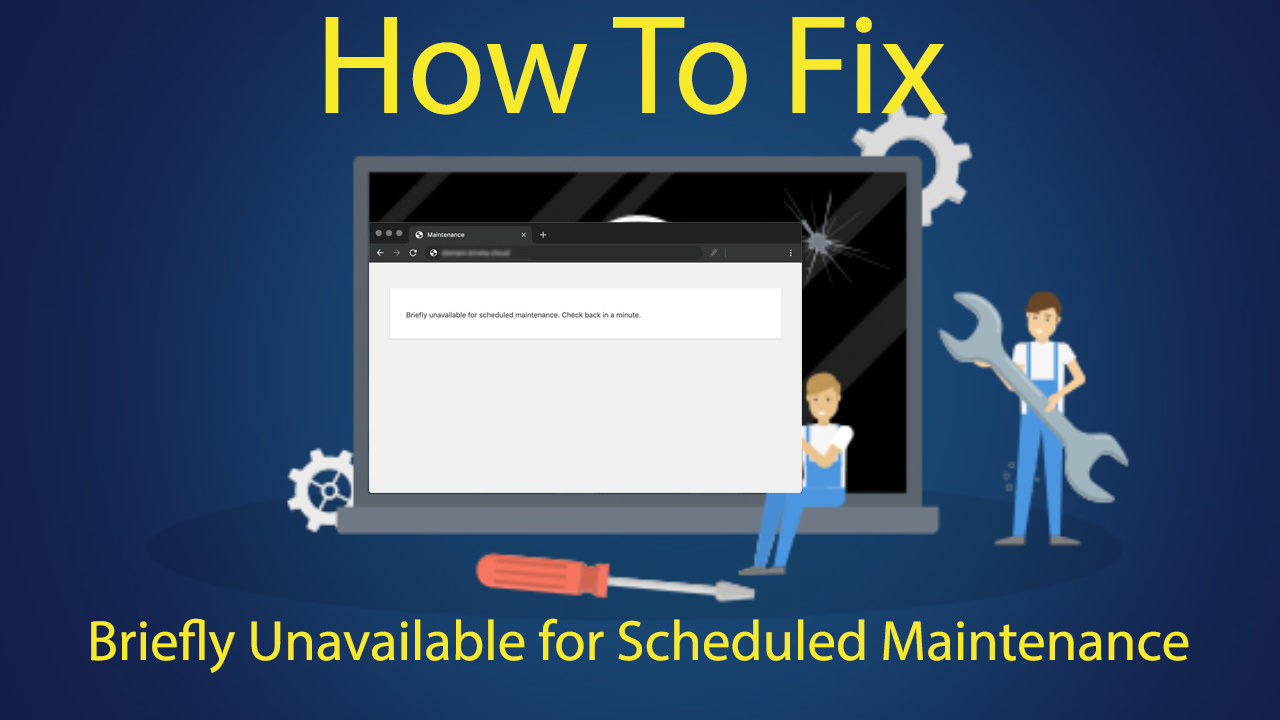
Que se passe-t-il réellement (Et pourquoi ce n'est pas vraiment une erreur)
WordPress supprime un fichier caché appelé .entretien dans le dossier racine de votre site à chaque fois qu'il met à jour le noyau, un plugin, ou un thème. Ouvrez-le dans un éditeur de texte et vous verrez exactement une ligne de PHP: <?php $mise à niveau = 1714208400;. Ce numéro est l'horodatage Unix du début de la mise à jour.. WordPress le lit à chaque chargement de page pour décider de diffuser votre site ou le message de maintenance. Pendant que le fichier est actif, chaque requête renvoie HTTP 503 (service non disponible), c'est pourquoi le robot d'exploration de Google et la plupart des moniteurs de disponibilité gèrent l'erreur avec élégance sans signaler votre site comme étant indisponible..
Dans des conditions normales, le fichier dure cinq à quinze secondes. WordPress l'écrit au moment où une mise à jour commence et le supprime à la fin de la deuxième mise à jour. Vous ne le verrez probablement jamais.
Voici la partie que la plupart des guides de réparation ignorent: Le noyau de WordPress vérifie cet horodatage à chaque chargement de page et contourne automatiquement le message de maintenance s'il est supérieur à 10 vieux de quelques minutes. Le site récupère tout seul au bout de 10 minutes, même si le fichier existe toujours. Le contrôle exact réside dans le wp_is_maintenance_mode() une fonction, et la constante est codée en dur. Donc, si vous êtes arrivé ici quelques minutes après l'apparition de l'erreur, la suppression du fichier est le chemin le plus rapide pour revenir en ligne. Si ça fait une heure et que tu es toujours coincé, quelque chose d'autre ne va pas: une couche de cache, Bord CDN, ou le cache du navigateur sert probablement la page de maintenance à partir du stockage. Effacez-les avant de commencer à toucher des fichiers.
Mais les mises à jour échouent. Beaucoup. L'onglet du navigateur se ferme à mi-mise à jour. Le serveur expire sur un hôte partagé lent. Tu as frappé “Tout mettre à jour” avec 14 plugins en file d'attente, et l'un d'eux renvoie une erreur PHP fatale. Le fichier .maintenance est écrit, la mise à jour s'interrompt, et rien ne le nettoie jamais. Le site reste hors ligne (ou partiellement hors ligne) jusqu'à ce que vous supprimiez le fichier vous-même.
Déclencheurs courants dans les rapports du monde réel
- Mise à jour groupée de plusieurs plugins ou thèmes à la fois sur un hébergement partagé
- Fermer le navigateur ou perdre votre connexion Internet en cours de mise à jour
- Un plugin avec une erreur fatale PHP arrêtant la séquence de mise à jour
- Délais d'attente du serveur sur les hôtes avec des délais d'exécution stricts (souvent 30 secondes ou moins)
- Manque d'espace disque ou de mémoire PHP lors de la mise à jour
- Mises à jour automatiques déclenchées alors qu'une autre mise à jour est déjà en cours
Si vous êtes arrivé ici à partir d'un de ces scénarios, le correctif réel prend environ 60 secondes. Choisissez la méthode ci-dessous qui correspond à l'accès dont vous disposez.
Méthode 1: Supprimez le fichier .maintenance à l’aide de FTP
La plupart des correctifs se produisent ici. FTP fonctionne sur chaque hôte, que vous ayez accès au shell, accès au tableau de bord, ou ni l'un ni l'autre. Vous n'avez besoin que d'un client FTP et des informations d'identification que votre hôte vous a envoyées par e-mail lors de votre inscription..
Ce dont vous aurez besoin
- Un client FTP (FileZilla, Cyberduck, ou WinSCP, tout fonctionne)
- Vos identifiants FTP/SFTP d'hébergement (hôte, Nom d'utilisateur, mot de passe, Port)
- About two minutes (less if your FTP client is already open, which it should be for any WordPress site you actually run)
Les étapes
- Open your FTP client and connect to your site. Most modern hosts use SFTP on port 22, not classic FTP on port 21. Check your hosting welcome email if you’re not sure.
- Navigate to your WordPress root directory. This is the folder containing wp-config.php, wp-admin, contenu wp, et wp-comprend. On most shared hosts it’s called public_html or www.
- Look for a file named .maintenance. Files starting with a dot are hidden by default. In FileZilla, Cliquez sur Serveur, then Force Showing Hidden Files. In Cyberduck, press Cmd+Shift+R (Mac) or Ctrl+Shift+R (les fenêtres).
- Right-click the .maintenance file and select Supprimer.
- Refresh your site in a new browser tab. It should load normally.
Don’t see the file at all? Your site might have already cleared it but cached the maintenance page. Effacez le cache de votre navigateur et la sortie stockée de tout plugin de mise en cache, puis rafraîchissez.
Méthode 2: Utilisez votre gestionnaire de fichiers d'hébergement
Aucun client FTP installé? La plupart des panneaux de contrôle d'hébergement vous permettent de supprimer des fichiers directement depuis le navigateur. Le chemin exact varie selon le panneau, alors voici comment cela fonctionne sur les quatre plus courants.
cPanel
- Connectez-vous à cPanel
- Ouvrir Gestionnaire de fichiers
- Cliquez sur Paramètres (en haut à droite), cocher Afficher les fichiers cachés (fichiers de points), puis enregistrez
- Accédez à public_html
- Cliquez avec le bouton droit sur .maintenance et choisissez Supprimer
Plesk
- Connectez-vous à Plesk
- Cliquez sur Des dossiers dans la barre latérale gauche
- Ouvrir httpdocs (ou la racine du document pour votre domaine)
- Cliquez sur l'icône d'engrenage et activez Afficher les fichiers cachés
- Sélectionnez .maintenance et cliquez sur Supprimer
hPanel (Hostinger)
- Connectez-vous à hPanel
- Ouvrir Gestionnaire de fichiers
- Activer Afficher les fichiers cachés dans les paramètres
- Accédez à public_html
- Cliquez avec le bouton droit sur .maintenance et choisissez Supprimer
DirectAdmin
- Connectez-vous à DirectAdmin
- Ouvrir Gestionnaire de fichiers sous Informations système & Des dossiers
- Activer Afficher les fichiers cachés dans la barre d'outils
- Accédez à public_html
- Cochez .maintenance et cliquez sur Supprimer
Le fichier lui-même est identique sur tous les panneaux. Même PHP sur une ligne, même poignée d'octets. Vous le recherchez simplement dans quatre interfaces différentes. Quel que soit le panneau que vous utilisez, le résultat est le même: fichier disparu, site retour.
Méthode 3: Une commande WP-CLI (Pour les développeurs)
Accès SSH et WP-CLI installés? C'est la solution la plus rapide de la page. SSH dans, passez à votre répertoire WordPress, et courir:
wp mode maintenance désactiver
Tu verras “Succès: Mode maintenance désactivé.” C'est toute la procédure. Le fichier .maintenance est supprimé et votre site est de nouveau en ligne.
La commande wp maintenance-mode livrée avec WP-CLI 2.6, donc toute installation actuelle le prend en charge. Si vous obtenez un “commande introuvable” message, votre hébergeur n'a probablement pas installé WP-CLI globalement. Utiliser la méthode 1 ou 2 au lieu.
Kinsta, Moteur WP, Rocket.net, et Pressable sont tous livrés avec WP-CLI préinstallé et l'exposent via leur terminal de tableau de bord ou leur panneau d'outils. Aucune clé SSH requise. D'autres fournisseurs dans notre hébergement WordPress géré aux États-Unis le rassemblement se comporte de la même manière. Si vous payez pour WordPress géré, ce correctif de 30 secondes est la véritable raison.
Méthode 4: SSH sans WP-CLI
Vous avez un accès SSH mais pas de WP-CLI? Deux commandes le gèrent:
cd /chemin/vers/votre/wordpress
rm .maintenance
C'est toute la solution. Le chemin ressemble à /home/username/public_html sur les hôtes de style cPanel et /var/www/html ou /var/www/yoursite.com sur la plupart des configurations VPS.
La plupart des hôtes partagés désactivent SSH par défaut. Si votre terminal renvoie “Connexion rejetée” ou “Permission refusée,” votre plan d'hébergement n'inclut pas l'accès au shell. Soit vous le demandez au support (certains hébergeurs l'activent à la demande) ou revenez à la méthode 1 ou 2.
Si rm signale que le fichier n'existe pas, courir cs - elle et vérifie ce qu'il y a réellement. Parfois, le fichier apparaît avec un nom légèrement modifié (comme .maintenance.old) d'une tentative précédente à moitié réussie. Supprimez la variante que vous trouvez.
Quand le fichier .maintenance revient sans cesse
Here’s an annoying scenario: you delete the file, rafraîchir, the site loads, you celebrate, et 15 seconds later the error returns.
This means an automatic update is still running in the background, repeatedly creating the file. Or a stuck cron job is firing the same broken update every minute.
Three things to check:
- Disable WordPress auto-updates temporarily by adding this line to wp-config.php: définir(«AUTOMATIC_UPDATER_DISABLED», vrai);
- Check wp-content for a .maintenance file there too. It’s less common, but it does happen.
- Courir wp cron event list and look for anything firing every minute or every five minutes. Disable suspicious events with wp cron event delete.
Seeing PHP errors in the maintenance message itself, or in wp-content/debug.log? That’s a different problem. A plugin update probably broke something. Vous devrez désactiver le plugin incriminé en renommant son dossier dans wp-content/plugins, puis mettez-le à jour manuellement via le tableau de bord une fois le site chargé.
Comment éviter que cette erreur ne se reproduise
Le correctif en lui-même est simple. Il est plus utile d’éviter la situation en premier lieu.
Mettre à jour une chose à la fois
WordPress vous permet de sélectionner 30 plugins et cliquez sur Mettre à jour. Ne le faites pas. Si l'un d'entre eux génère une erreur fatale ou répond à une requête de base de données lente, tout le lot échoue et le fichier .maintenance reste. Mettre à jour les plugins un par un, rafraîchir entre chaque, et vous verrez rarement cette erreur à nouveau.
Exécuter les mises à jour depuis le bureau, pas mobile
Expiration du délai des navigateurs mobiles, changer d'onglet, et je perds la connexion plus souvent. Si WordPress tue le processus de mise à jour avant qu'il ne soit terminé, le fichier .maintenance reste en place. Utilisez un navigateur de bureau sur une connexion stable. Conseils ennuyeux. Évite de vrais maux de tête.
Sauvegarder avant de mettre à jour
N'empêche pas directement l'erreur, mais ça fait le suivant 20 des minutes beaucoup plus calmes lorsqu'une mise à jour casse quelque chose. UpdraftPlus, BlogVault, et BackWPup fonctionnent tous sur des niveaux gratuits. Ou utilisez la sauvegarde automatisée quotidienne de votre hébergeur s'il en possède une. Restaurer à partir du dernier bon instantané si un correctif prend plus de temps que la restauration.
Choisissez un hébergement qui gère bien les mises à jour
Les hébergeurs bon marché provoquent cette erreur plus souvent que les hébergeurs WordPress gérés, et la raison est un numéro: max_execution_time. Les plans partagés avec budget sont généralement définis par défaut 30 secondes. Sièges partagés de niveau intermédiaire 60. Les hébergeurs WordPress gérés comme Kinsta et WP Engine sont livrés avec 300. La différence est importante lorsque vous mettez à jour un plugin qui exécute une migration de base de données: 30 les secondes échouent régulièrement à mi-chemin, 300 se termine confortablement. Si l'erreur revient semaine après semaine, l'hôte est le problème, pas WordPress. Notre comparaison d'hébergement mutualisé signale les fournisseurs avec des limites PHP raisonnables.
Les sites plus grands dépassent complètement les forfaits partagés. UNE VPS WordPress vous donne des ressources dédiées, votre propre délai d'attente PHP, et assez de mémoire pour mettre à jour 20 plugins sans casser. Le même site qui échoue lors d'une mise à jour une fois par semaine sur un forfait partagé à 3 USD/mois se met souvent à jour parfaitement sur un VPS à 15 USD/mois..
Utiliser la mise en scène pour les mises à jour risquées
Un site de test est un clone de votre site en ligne sur lequel vous testez les mises à jour avant de les mettre en production.. La plupart des hébergeurs gérés incluent la mise en scène en un clic dans leurs plans. Testez d'abord la mise à jour du plugin. Si ça casse la mise en scène, tu sais qu'il faut le réparer avant de risquer la production. Beaucoup Constructeur WordPress IA les plates-formes intègrent désormais également la mise en scène dans leur niveau gratuit.
Questions fréquemment posées
Combien de temps dure “Brièvement indisponible pour la maintenance planifiée” en fait dernier?
Dans des conditions normales, 5 à 15 secondes. WordPress écrit le fichier .maintenance lorsque les mises à jour commencent et le supprime dès leur fin.. Après exactement 10 minutes, WordPress contourne automatiquement le message même si le fichier est toujours là, puisque le noyau traite tout ce qui est plus ancien comme une mise à jour ayant échoué. Toujours coincé dans le passé 10 minutes? It’s almost always a caching layer holding the old response. Clear cache first, then delete the file manually if needed.
Où se trouve le fichier .maintenance?
Always in your WordPress root directory, alongside wp-config.php and the wp-admin folder. On most shared hosts that’s public_html or www. On VPS setups it’s usually /var/www/html or /var/www/yoursite.com. The file is hidden because it starts with a dot, so enable “Afficher les fichiers cachés” in your FTP client or File Manager before you go looking.
Puis-je contourner le message de maintenance sans supprimer le fichier?
Sorte de. Adding a query string to your URL won’t help, since the maintenance check runs server-side. But if you have admin access, navigate directly to /wp-admin/upgrade.php and run the upgrade routine. Sometimes that completes the stuck update and removes the file naturally. Pour la plupart des gens, deleting the file directly is faster and more reliable.
La suppression de .maintenance va-t-elle casser mon site?
Non. Le fichier n'existe que lors des mises à jour. Le supprimer empêche WordPress d’afficher la page de maintenance. Mais si la mise à jour réelle était incomplète, votre vrai problème est le plugin ou le thème cassé qui a déclenché le délai d'attente. Vérifiez votre site après la suppression. Si vous voyez une erreur différente comme un écran blanc ou une erreur PHP fatale, la mise à jour n'est jamais terminée. Vous devrez restaurer manuellement le plugin incriminé ou le mettre à jour à nouveau à partir d'un état propre..
Pourquoi cela arrive-t-il sur certains sites et jamais sur d'autres?
Deux facteurs en décident: combien de plugins vous mettez à jour à la fois, et à quel point le délai d'attente PHP de votre hôte est généreux. Un site avec 5 les plugins sur un hôte géré avec un délai d'attente de 300 secondes ne rencontrent presque jamais cette erreur. Un site avec 40 les plugins sur un hôte partagé à petit budget avec un délai d'attente de 30 secondes le frappent constamment. Si vous avez déplacé des hôtes et que le problème a disparu, c'était l'ancien hôte depuis le début.
Cette erreur affecte-t-elle le référencement?
Si ça dure sous 10 minutes, non. Le robot d'exploration de Google réessaye les pages qui répondent avec HTTP 503 (c'est ce que WordPress envoie lors de la maintenance), et quelques minutes d'arrêt ne feront pas bouger le classement. Si l'erreur s'étend sur des heures ou des jours, vous pourriez voir une baisse temporaire des pages mises en cache jusqu'au retour du robot. Résolvez-le rapidement et les classements seront rétablis en un jour ou deux.
Existe-t-il un plugin qui empêche automatiquement cette erreur?
Des plugins comme WP Maintenance Mode et Maintenance vous permettent de contrôler l’écran de maintenance, mais ils n'empêchent pas le problème sous-jacent de fichier bloqué. L'erreur se produit avant qu'un plugin puisse s'exécuter, puisque WordPress vérifie .maintenance tout en haut de chaque demande. La prévention concerne le flux de travail de mise à jour et la qualité de l'hôte, pas un plugin que vous installez.
Dernières pensées
“Brièvement indisponible pour la maintenance planifiée” est le message d'erreur le plus trompeur de WordPress. Il n'y a pas de planning. Il n'y a pas d'entretien. Il existe un fichier PHP d'une seule ligne qui aurait dû être supprimé trois millisecondes après la fin de la mise à jour., et une minuterie de 10 minutes que le noyau utilise de toute façon pour se creuser. Une fois que tu auras compris ça, le réparer est un travail de 60 secondes.
Événement ponctuel? Supprimez le fichier et continuez votre journée. Le voir tous les mardis après les mises à jour automatiques? Le problème est en amont. Le motif est presque toujours l'une des trois choses suivantes: un seul plugin qui expire toujours, un hôte avec une limite PHP de 30 secondes, il n'augmentera pas, ou un calendrier de mise à jour automatique exécuté pendant que les utilisateurs sont toujours sur le site.
Pour les sites où la disponibilité est le produit réel, un hébergeur qui gère les mises à jour en toute sécurité récupère la différence de prix en quelques mois. Une fois ce correctif derrière vous, notre guide de migration WordPress gratuit guide le passage à un hôte avec des délais d'attente PHP appropriés et WP-CLI préinstallé sans perdre un seul visiteur dans le processus.