
On This Page: [hide]
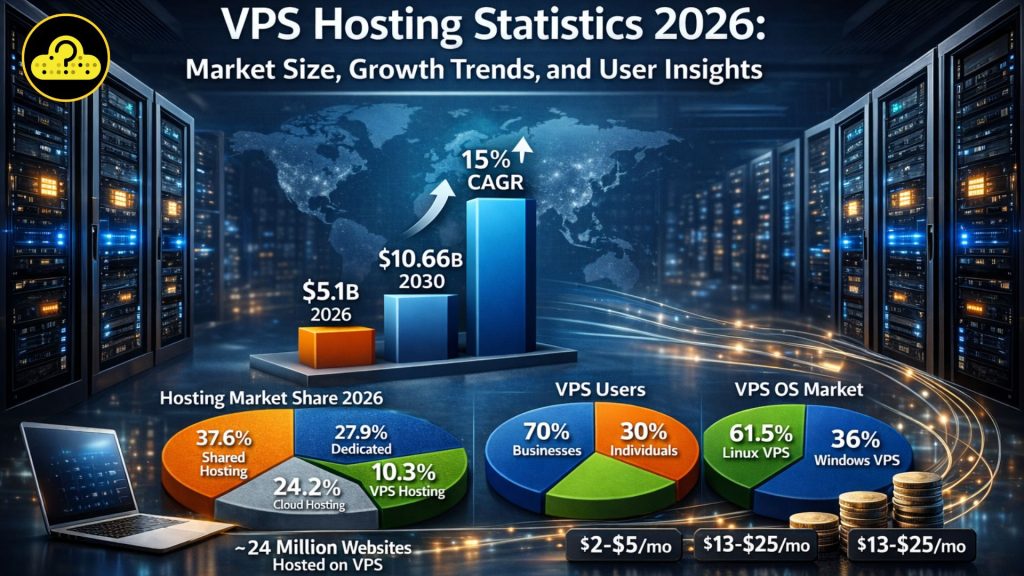
The VPS hosting market hit $5.1 billion in 2026. That’s not a typo. What started as a niche solution for tech-savvy users has become the fastest-growing segment in web hosting. Over 24 million websites now run on virtual private servers worldwide.
This article breaks down the latest VPS hosting statistics for 2026. We cover market size, regional adoption, performance benchmarks, pricing trends, and what’s driving businesses to ditch shared hosting. All data comes from market research reports, industry analyses, and hosting provider disclosures verified in January 2026.
Last updated: January 2026. All statistics verified from primary sources.
Key Takeaways
- The global VPS hosting market reached $5.1 billion in 2026, growing at a CAGR (compound annual growth rate) of 15.2%
- Managed VPS dominates with 68.4% market share, though unmanaged solutions are catching up fast
- Businesses account for 70% of VPS usage, with SMEs (small and medium enterprises) driving the fastest adoption
- Linux holds 61.5% of the VPS operating system market, with Windows at 35-36%
- NVMe storage (a faster type of SSD) delivers 4-6x better performance than traditional SSDs
- Asia Pacific shows the highest growth rate at 18.9% CAGR, though North America still leads in total revenue
VPS Market Size and Growth
The numbers tell a clear story: VPS hosting is where the industry is headed.
Current Market Value
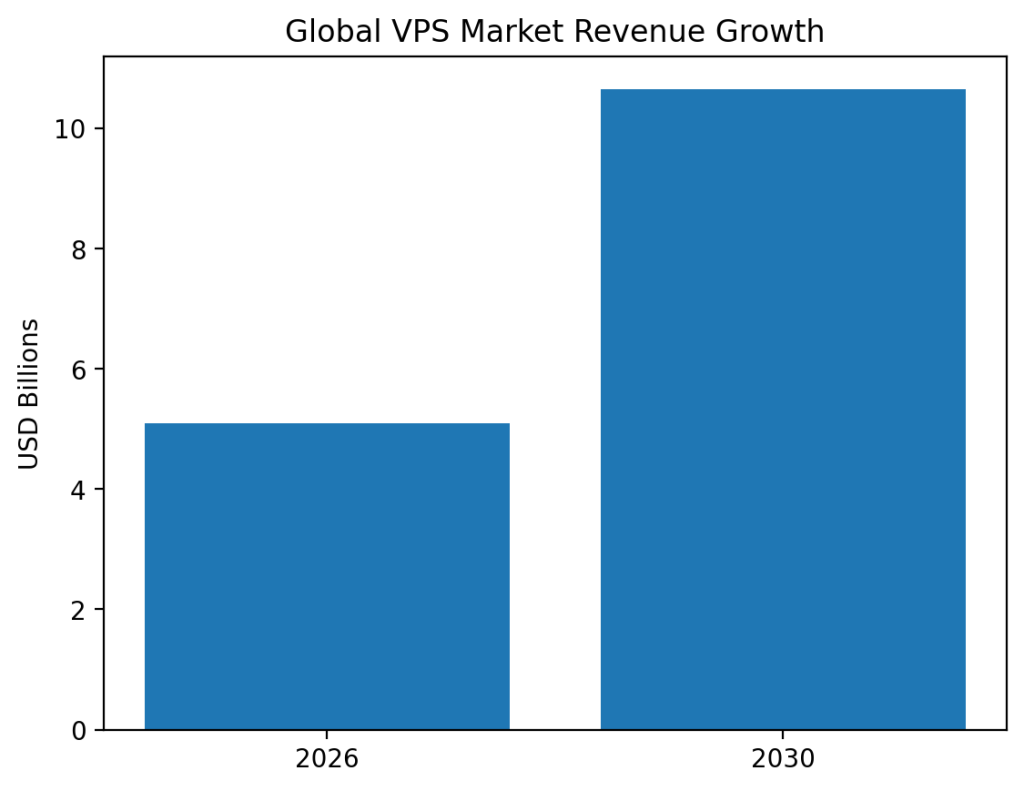
The global VPS hosting market reached $5.1 billion in 2026. Projections put it at $10.66 billion by 2030, more than doubling in just four years. For context, the entire web hosting industry sits at $149.30 billion in 2025, meaning VPS captures roughly 10.3% of the total market.
Why the growth? Three factors stand out:
- Cost efficiency: VPS bridges the gap between cheap shared hosting and expensive dedicated servers
- Scalability: Businesses can add resources on demand without migrating to new infrastructure
- Security: Isolated environments reduce the risks that come with shared hosting
Growth Rate Projections
The VPS market is expanding at a CAGR between 11.9% and 16.2%, depending on the research methodology. Here’s how different segments compare:
- Overall VPS market: 15.2-15.5% CAGR through 2030
- Managed VPS: 16.5% CAGR, the fastest-growing segment
- Linux VPS: 16.7% CAGR, outpacing Windows
- Healthcare vertical: 19.7% CAGR, the fastest-growing industry segment
These rates far exceed the broader web hosting market growth of 17.35%, signaling a clear shift in how businesses approach hosting.
VPS vs Other Hosting Types
Market share tells the competitive story:
- Shared hosting: 37.64% of the hosting market (projected to reach $70.6 billion by 2026)
- Dedicated hosting: 27.9% market share ($29.6 billion by 2026)
- VPS hosting: 10.3% market share, but expected to capture 25.38% of new purchases in 2025
- Cloud hosting: Growing alongside VPS as hybrid solutions gain traction
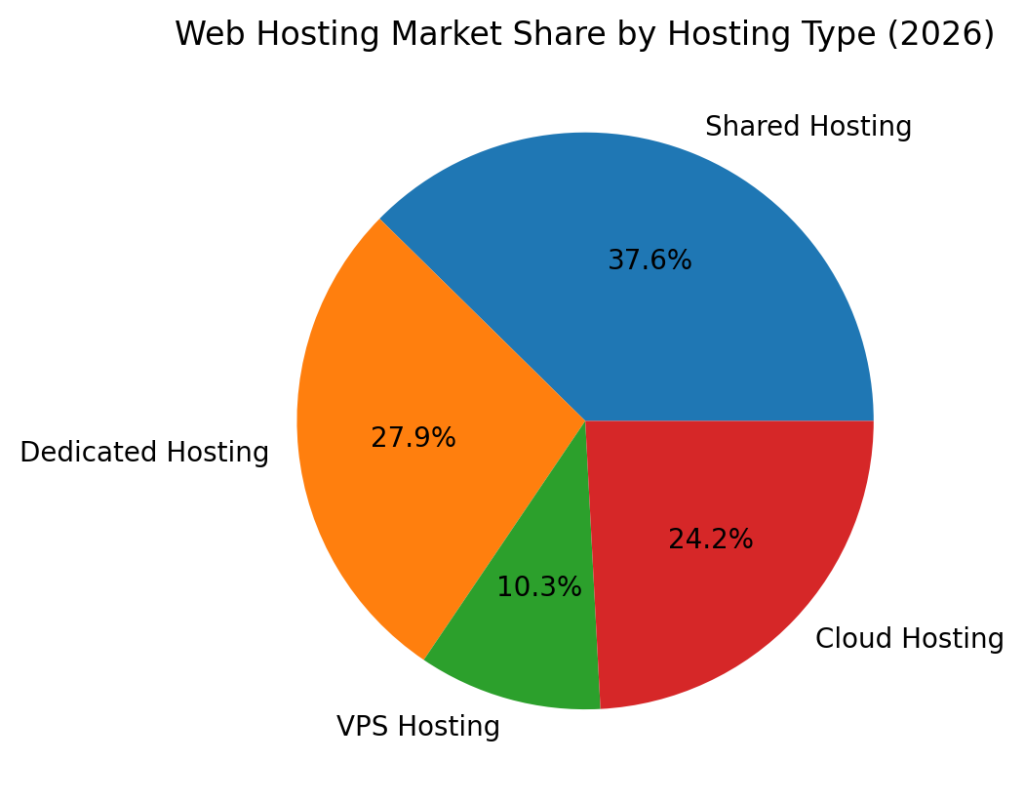
The trend is unmistakable. While shared hosting still dominates in raw numbers, VPS is capturing a disproportionate share of new customers, especially among businesses outgrowing their starter plans.
Regional Adoption Rates
VPS adoption varies dramatically by geography. Where you are shapes what hosting options dominate.
North America
North America leads the VPS market with 41.25% of global market share. The region benefits from:
- Dense concentration of tech companies and startups
- Advanced data center infrastructure
- High cloud adoption rates among enterprises
- 51% of all web hosting providers are based in the United States
The U.S. alone generates $70.1 billion in web hosting revenue, more than any other country. This dominance extends to VPS, where American businesses and hosting providers set market trends.
Asia Pacific
Asia Pacific is the growth story. The region shows a projected CAGR of 18.9% for VPS adoption, the highest globally. Several factors drive this:
- Expanding SME sector: Small businesses in India, China, and Southeast Asia are rapidly digitalizing
- Ecommerce boom: Online retail growth demands reliable, scalable hosting
- Improved internet penetration: More businesses coming online for the first time
- Government support: Many Asian governments actively promote virtualized data center adoption
China accounts for 32% of regional VPS deployments. India’s VPS market grew at 12.1% CAGR from 2020-2024, now accelerating to 18.8% through 2035. Experts predict Asia Pacific will generate the largest volume of VPS-related revenue within the next few years, overtaking North America.
Europe
Europe maintains strong VPS adoption, driven by:
- Strict data protection regulations like GDPR (the EU’s General Data Protection Regulation) pushing businesses toward controlled hosting environments
- Established hosting providers like Hetzner and OVHcloud
- High awareness of data sovereignty issues
German hosting companies, in particular, have built reputations for reliability and value, attracting users across the EU and beyond.
Emerging Markets
Africa and Latin America represent the next frontier. Both regions show:
- Rapidly improving internet infrastructure
- Growing ecommerce sectors
- Increasing awareness of hosting options beyond basic shared plans
Latin America’s ecommerce sector is especially active, contributing to rising VPS demand as online retailers seek better performance and security.
Performance and Speed Statistics
Raw speed is where VPS proves its value. The performance gap between VPS and shared hosting is measurable and significant.
VPS vs Shared Hosting Speed
VPS-hosted websites load 15-35% faster than those on shared hosting. This difference stems from:
- Dedicated resources: Your CPU, RAM, and storage aren’t competing with other users
- Isolated environment: Traffic spikes on neighboring sites don’t affect your performance
- Better server configuration: VPS allows custom optimization for your specific applications
For context, Google’s research shows that 53% of mobile users abandon sites that take longer than 3 seconds to load. The speed advantage VPS provides directly impacts user retention and conversion rates.
NVMe vs Traditional SSD Performance
Storage technology dramatically affects VPS performance. NVMe (Non-Volatile Memory Express) has become the standard for premium VPS hosting:
- Read speeds: NVMe reaches approximately 3 GB/s compared to 550 MB/s for SATA SSDs
- High-end NVMe: Some drives achieve 7,000 MB/s, twelve times faster than SATA
- IOPS (input/output operations per second): NVMe delivers 500,000-800,000 IOPS versus 90,000-100,000 for SATA SSDs
- Latency: 10-20 microseconds (NVMe) versus 100-150 microseconds (SATA)
Real-world impact? Database queries run 75% faster. Web applications handle 3x more concurrent requests. Page load times drop noticeably. Businesses using NVMe VPS report 64% faster database query execution and 78% reduced application loading times.
Uptime Benchmarks
Uptime guarantees vary by provider and plan tier:
- Standard guarantee: 99.9% uptime (allows 8.76 hours downtime per year)
- Premium guarantee: 99.99% uptime (allows 52.56 minutes downtime per year)
- Real-world average: Shared hosts average 99.7% uptime (about 26 hours downtime yearly)
The financial stakes are high. Downtime costs small businesses $137-$427 per minute. For ecommerce sites during peak shopping periods, those numbers climb much higher. VPS’s better uptime directly translates to reduced business risk.
SEO Impact
Page speed is a confirmed Google ranking factor. Faster VPS hosting contributes to:
- Better Core Web Vitals scores
- Lower bounce rates from impatient visitors
- Higher user engagement metrics that search engines track
- Improved crawl efficiency for search engine bots
While hosting alone won’t guarantee top rankings, slow hosting can definitely hurt them. For a deeper comparison, see our shared hosting vs VPS hosting guide.
Security Statistics
Security concerns drive many VPS migrations. The isolated environment offers protection that shared hosting simply can’t match.
DDoS Protection
Distributed Denial of Service (DDoS) attacks flood servers with malicious traffic, taking sites offline. VPS providers have responded with increasingly robust protections:
- Standard protection: Most VPS providers include 1-10 Gbps DDoS mitigation by default
- Advanced tiers: Premium options scale to 100+ Gbps
- Enterprise solutions: Some providers absorb attacks exceeding 400 Gbps
- Network capacity: Major providers like OVHcloud maintain 17 Tbps network surplus for attack absorption
Common attack types include volumetric attacks (UDP floods, ICMP floods), protocol attacks (SYN floods, Slowloris), and application layer attacks (HTTP floods, DNS query floods). Modern DDoS protection addresses all three categories.
Cybersecurity Context
Global cybercrime damages reached $10.5 trillion annually in 2025. High-risk industries for attacks include:
- Ecommerce: High-traffic sites are attractive targets since downtime has greater impact
- Gaming: Real-time interactions make disruption immediately noticeable
- Finance: Sensitive data makes financial sites prime targets
- Healthcare: Patient data and critical systems require maximum protection
VPS’s isolation from other users provides fundamental security benefits that shared hosting lacks. Each virtual server operates independently, meaning security breaches affecting one user don’t compromise others on the same physical machine.
Compliance Considerations
Industries with strict data protection requirements increasingly choose VPS:
- Healthcare organizations maintaining HIPAA (Health Insurance Portability and Accountability Act) compliance
- Financial services meeting PCI DSS (Payment Card Industry Data Security Standard) requirements
- European businesses adhering to GDPR regulations
- Government contractors following specific security frameworks
VPS provides the control needed to implement required security measures, something shared hosting environments rarely allow.
Pricing and Cost Analysis
VPS pricing spans a wide range depending on resources, management level, and provider.
Average VPS Costs in 2026
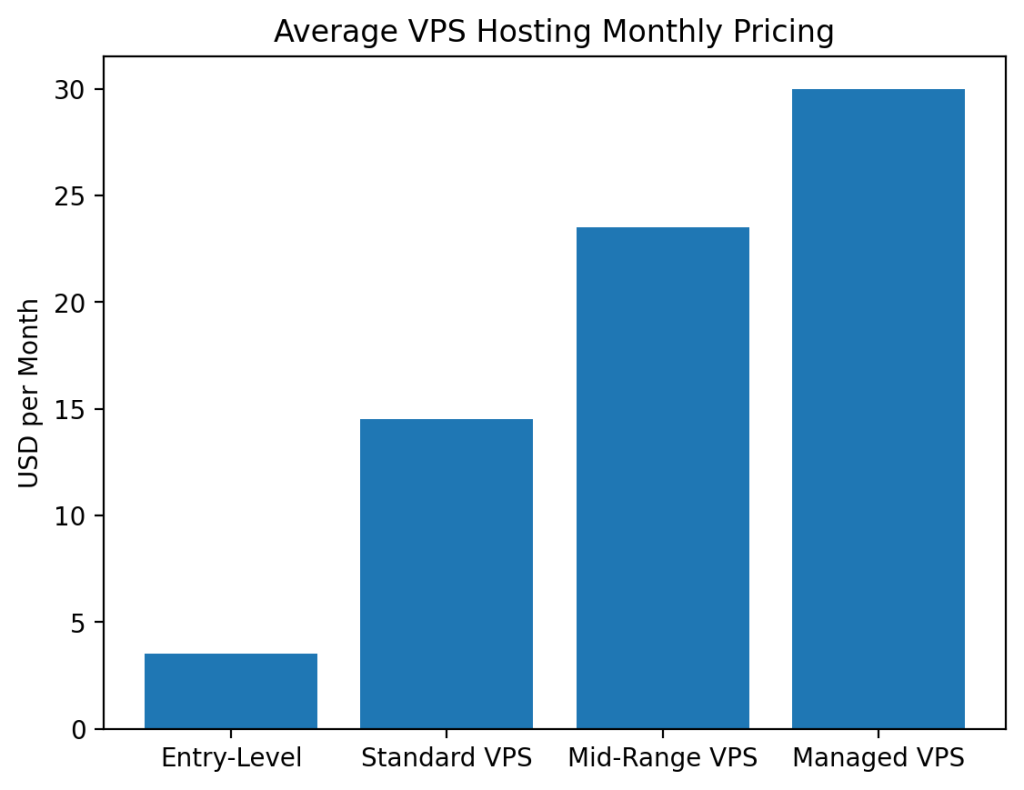
- Entry-level VPS: $2-5/month (promotional rates requiring annual commitment)
- Standard entry-level: $13-16/month (regular pricing)
- Mid-range VPS: $22-25/month
- Overall range: $10-100/month for most VPS plans
Provider examples at entry level:
- IONOS: Starting at $1-2/month
- Hostinger: From $1.99/month
- InterServer: $3/month for basic plan
- Hosting.com: $4.99/month with annual commitment
Important caveat: promotional prices often require 12-36 month commitments and renew at higher rates. Budget based on regular pricing, not introductory offers.
Managed vs Unmanaged Pricing
The management level significantly affects cost:
- Unmanaged VPS: Cheaper, but you handle all server administration, updates, security patches, and troubleshooting
- Managed VPS: Higher monthly cost, but the provider handles maintenance, security, monitoring, and support
Managed services dominate with 68.4% market share because most businesses prefer outsourcing technical responsibilities. The higher cost translates to reduced internal IT burden and faster issue resolution.
Factors Affecting Price
- Resources: More CPU cores, RAM, and storage increase costs
- Storage type: NVMe costs more than SATA SSD
- Data center location: US and European hosting typically costs more than Asian alternatives
- Bandwidth: High-traffic sites may pay for additional transfer
- Backup and recovery: Automated backup services often cost extra
- Control panel: Licensed panels like cPanel/Plesk add monthly fees
Value Comparison
Compared to dedicated servers starting at $80-150/month, VPS offers substantial cost savings while providing similar isolation and control. For businesses outgrowing shared hosting but not ready for dedicated hardware, VPS hits the sweet spot.
User Demographics and Preferences
Who uses VPS hosting? The user base has expanded well beyond its early tech-focused adopters.
Business vs Individual Users
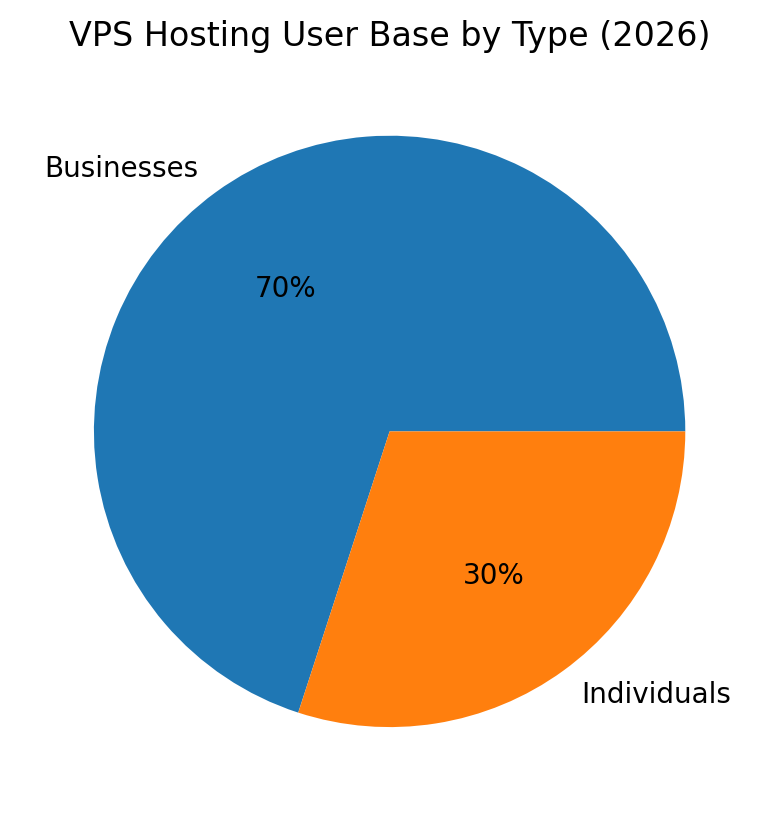
- Businesses: 70% of VPS hosting usage
- Individual users: 30% of VPS hosting usage
- Enterprise clients: Generate 90% of web hosting industry revenue overall
Business users prioritize performance, security, and customer support. They’re willing to pay for higher-tier plans that guarantee reliability. Individual users often choose VPS for personal projects, development environments, or small-scale websites where they want more control than shared hosting provides.
SME Adoption
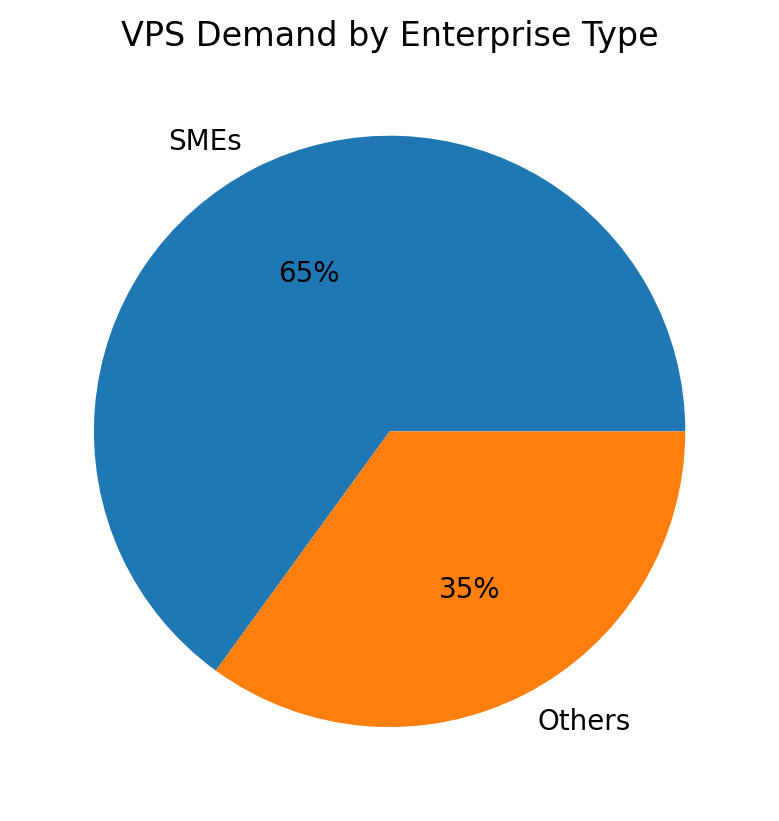
Small and medium enterprises represent the fastest-growing VPS segment:
- SMEs show 12% CAGR in VPS adoption, faster than the overall market
- Over 65% of VPS demand comes from SMEs
- SMEs increased cloud hosting usage by 28% year-over-year
- 40% of total hosting requirements come from small businesses
The drivers? Cost-conscious SMEs find VPS delivers enterprise-level features at prices they can afford. Digital transformation initiatives push more small businesses online, and VPS provides the performance needed for modern web applications.
Industry-Specific Usage
Certain industries show especially high VPS adoption:
- Ecommerce: VPS handles the database-intensive queries that platforms like WooCommerce and Magento demand. Generic shared plans can’t keep up, leading to slow checkouts and cart abandonment.
- Tech startups: Need scalable infrastructure that grows with them
- SaaS companies: Require reliable hosting for their applications
- Digital agencies: Host multiple client sites on VPS for better resource allocation
- Healthcare: The highest CAGR at 19.7%, driven by compliance requirements and data sensitivity
Managed Services Preference
The trend toward managed VPS continues strengthening:
- Managed VPS captures 68.4% of market revenue
- Businesses prefer outsourcing technical responsibilities to focus on core operations
- Enhanced security features in managed plans attract risk-conscious organizations
- 24/7 support availability matters more as businesses rely heavily on online presence
Smaller hosting providers are capitalizing on this trend by focusing on managed services with user-friendly control panels, differentiating from hyperscalers that cater primarily to technical users.
Operating System Market Share
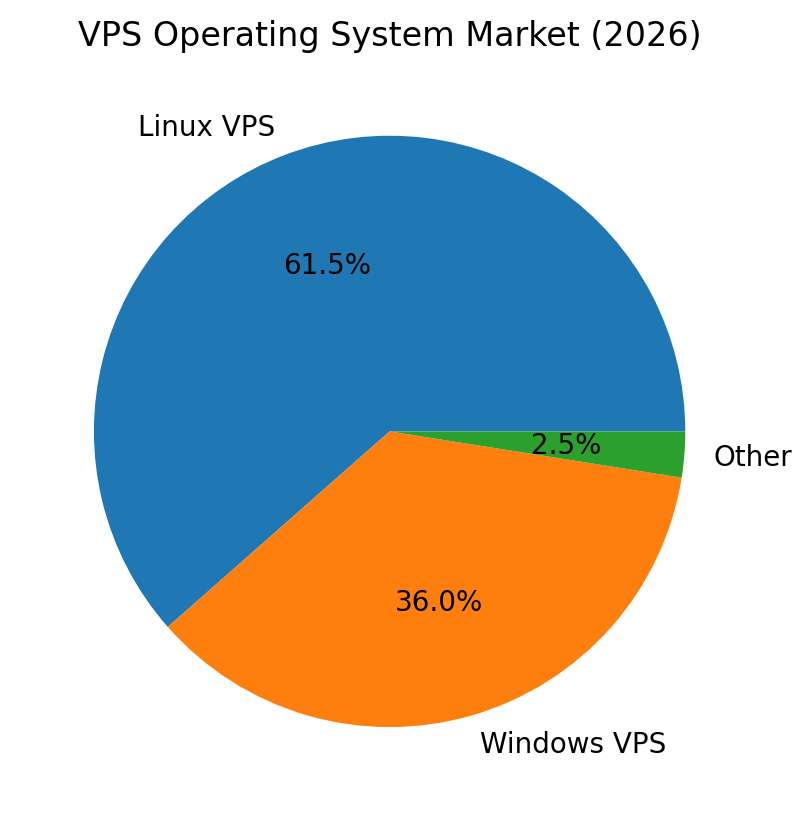
The Linux vs Windows debate in VPS hosting isn’t really a debate. The numbers are clear.
Linux Dominance
- Linux VPS: 61.5% of market share
- Windows VPS: 35-36% of market share
- Linux CAGR: 16.7%, outpacing the overall market
Why Linux leads:
- Cost: Linux is open-source and free, allowing providers to offer cheaper VPS plans
- Flexibility: Open-source nature enables extensive customization
- Developer tools: Docker, Kubernetes, and most modern DevOps tools run natively on Linux
- Performance: Linux generally uses fewer resources than Windows Server
Ubuntu leads among Linux distributions at 28% of user preference, reflecting its balance of user-friendliness and server capabilities.
Windows VPS Use Cases
Windows VPS maintains its 35-36% share through specific use cases:
- .NET applications: Microsoft’s development framework requires Windows
- Active Directory: Enterprise environments using Microsoft authentication
- Legacy software: Windows-only applications that can’t be migrated
- Industry-specific needs: Legal, finance, and manufacturing sectors often have Windows-dependent workflows
Rising Windows Server license costs are pushing some users toward Linux alternatives where possible, but the platform remains essential for Microsoft-ecosystem organizations.
Leading VPS Providers
The VPS market includes hyperscalers, specialized VPS companies, and budget-focused providers.
Enterprise Cloud Leaders
- Amazon Web Services (AWS): 31% market share among major cloud providers, powering 5.1% of all websites globally
- Microsoft Azure: 25% market share, strong with enterprise Windows workloads
- Google Cloud: 10% market share, leading among top 1 million websites
These hyperscalers dominate enterprise cloud but may be overkill for smaller VPS needs. Their pricing models can become expensive for straightforward VPS use cases.
VPS Specialists
Companies focusing specifically on VPS hosting:
- Hostwinds: Consistently ranked for configurable, scalable VPS environments
- Kamatera: Known for flexible cloud VPS with global data centers
- Hostinger: Massive user base, budget-friendly unmanaged VPS
- Liquid Web: Strong database performance, premium managed hosting
- DigitalOcean: Developer-focused, polished user experience
Value Leaders
- Hetzner: German provider offering exceptional performance per dollar, data centers in Germany, Finland, US, and Singapore
- IONOS: Entry-level VPS from $2/month with solid capabilities
- InterServer: Competitive pricing with experienced leadership team
Regional Players
- Alibaba Cloud: Dominant in Asia Pacific, strong choice for businesses targeting Asian markets
- OVHcloud: European leader with extensive infrastructure
The competitive landscape includes over 330,000 web hosting companies globally, though VPS-focused providers number far fewer. Competition drives innovation and keeps prices reasonable for consumers.
VPS Hosting Trends for 2026
Several technological and market trends are reshaping VPS hosting.
AI Integration
Artificial intelligence is transforming VPS management:
- Predictive scaling: AI analyzes traffic patterns and suggests resource adjustments before issues occur
- Automated security: AI-powered DDoS protection learns and adapts to new threat patterns in real-time
- Performance optimization: Machine learning algorithms optimize server configurations automatically
- Intelligent monitoring: AI systems predict failures before they happen
Many teams are moving beyond traditional VPS management toward AI-managed cloud platforms that handle scaling, monitoring, and optimization automatically.
Green Hosting
Sustainability concerns are influencing hosting decisions:
- Users increasingly prefer data centers powered by renewable energy
- Carbon-neutral hosting options are becoming standard offerings
- Energy-efficient hardware reduces both environmental impact and operating costs
ARM-Based Servers
ARM processors (like Ampere Altra) are entering the VPS market:
- Similar performance at lower energy consumption
- Reduced costs passed to customers
- Growing software compatibility
ARM-based VPS options are becoming mainstream, offering an alternative to traditional x86 architecture.
Edge Computing
VPS is expanding beyond traditional data centers:
- Edge VPS processes data closer to end users
- IoT (Internet of Things) applications benefit from reduced latency
- Content delivery improves with geographically distributed VPS instances
GPU-Enabled VPS
By 2026, expect more VPS offerings with dedicated GPU capacity:
- AI and machine learning workloads
- Video processing and rendering
- Scientific computing
- Game server hosting
This allows businesses to run high-performance workloads without expensive on-premise hardware.
Developer-First Features
Future VPS hosting emphasizes:
- Full API access for automation
- Git integrations
- CI/CD (continuous integration/continuous deployment) workflow support
- Container orchestration capabilities
Future Market Projections
Looking beyond 2026, VPS hosting shows no signs of slowing.
Market Size Projections
- 2026: $5.1-6.4 billion
- 2030: $10.66 billion (projected)
- 2033: Continued expansion as cloud adoption increases
The broader web hosting market is expected to reach $355.81 billion by 2029, with VPS capturing an increasing percentage of that total.
Growth Drivers
Several factors will sustain VPS growth:
- Ecommerce expansion: Online retail continues growing globally, demanding reliable hosting
- Remote work: Distributed teams need accessible, scalable infrastructure
- Digital transformation: More businesses moving operations online
- Cloud migration: Traditional on-premise infrastructure shifting to cloud-based solutions
- SME digitalization: Small businesses becoming more tech-savvy
Regional Outlook
- Asia Pacific: Will likely overtake North America in total VPS revenue
- North America and Europe: Maintain steady growth with mature markets
- Africa and Latin America: Emerging as new growth frontiers
Technology Evolution
Expect continued innovation in:
- AI-driven management and optimization
- Tighter integration with development workflows
- More granular resource allocation
- Improved security automation
- Greater customization options
Summary
VPS hosting in 2026 represents a maturing but rapidly growing market segment. The $5.1 billion industry continues expanding at double-digit growth rates, driven by businesses seeking better performance, security, and control than shared hosting provides, without dedicated server costs.
Key trends shaping the market include AI integration, sustainability concerns, and the rise of managed services. SMEs are adopting VPS faster than any other segment, while Asia Pacific emerges as the highest-growth region.
For businesses evaluating hosting options, the statistics point clearly toward VPS as a compelling middle ground. The performance gains, security improvements, and scalability benefits justify the higher costs compared to shared hosting for any serious web presence.
Whether you’re running an ecommerce store, managing a SaaS application, or hosting high-traffic websites, VPS hosting provides the foundation for reliable, fast, and secure online operations.
Frequently Asked Questions
How big is the VPS hosting market in 2026?
The global VPS hosting market reached approximately $5.1 billion in 2026, representing about 10.3% of the total web hosting market. The market is growing at a CAGR of 15.2% and is projected to reach $10.66 billion by 2030.
Is VPS faster than shared hosting?
Yes. VPS-hosted websites load 15-35% faster than those on shared hosting. The improvement comes from dedicated resources (CPU, RAM, storage) that aren’t shared with other users. VPS with NVMe storage can be even faster, with database queries running up to 75% quicker.
What percentage of websites use VPS hosting?
Over 24 million websites globally use VPS hosting. VPS accounts for approximately 10.3% of the total web hosting market and is expected to capture 25.38% of new hosting purchases in 2025, reflecting its growing popularity among both businesses and individuals.
Which is more popular, Linux or Windows VPS?
Linux dominates with 61.5% of the VPS market share compared to Windows at 35-36%. Linux’s popularity stems from its open-source nature, lower licensing costs, and native support for modern development tools like Docker and Kubernetes. Windows VPS remains essential for .NET applications and Microsoft-dependent environments.
How much does VPS hosting cost on average?
VPS hosting ranges from $2-100/month depending on resources and management level. Entry-level promotional plans start at $2-5/month with annual commitments, while standard pricing averages $13-16/month for basic plans and $22-25/month for mid-range options. Managed VPS costs more but includes support, security, and maintenance.
What industries use VPS hosting most?
Ecommerce, tech startups, SaaS companies, and healthcare show the highest VPS adoption. Healthcare has the fastest growth rate at 19.7% CAGR, driven by strict compliance requirements. Ecommerce businesses prefer VPS because shared hosting can’t handle the database-intensive queries of platforms like WooCommerce without slowing checkout speeds.